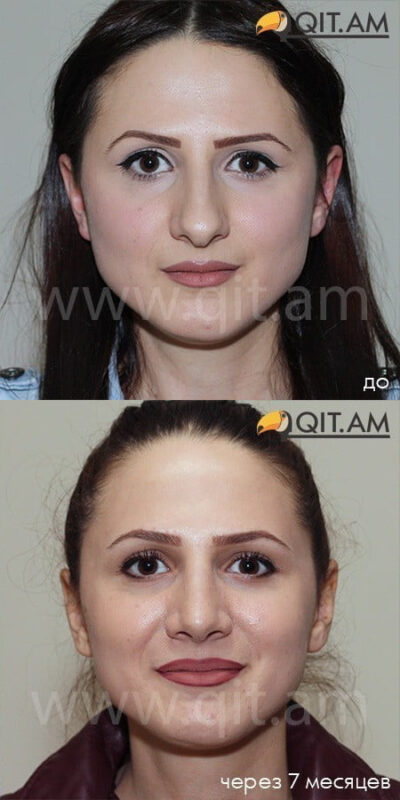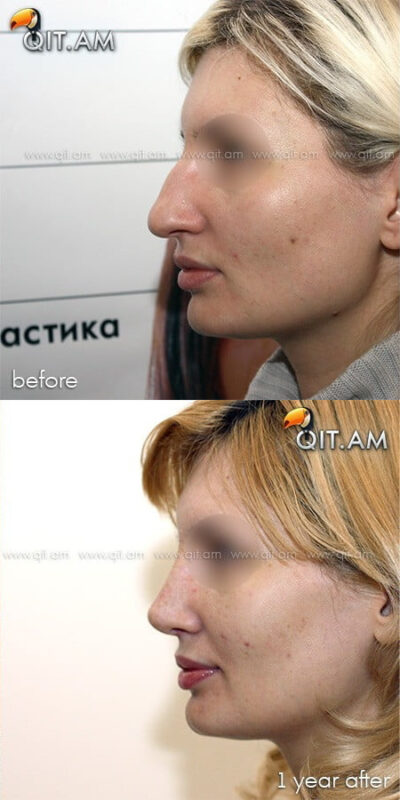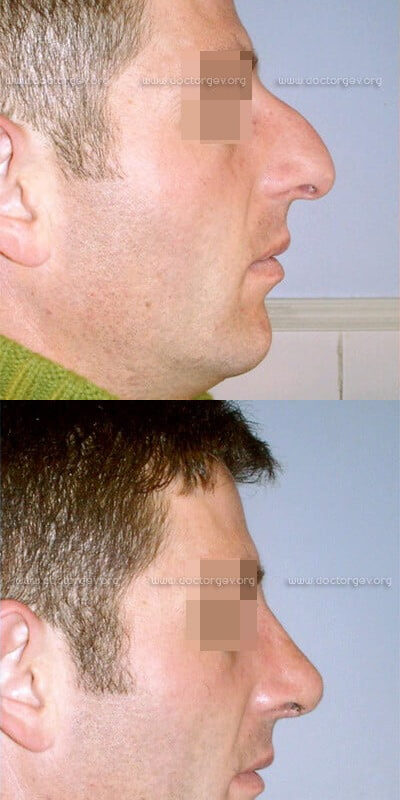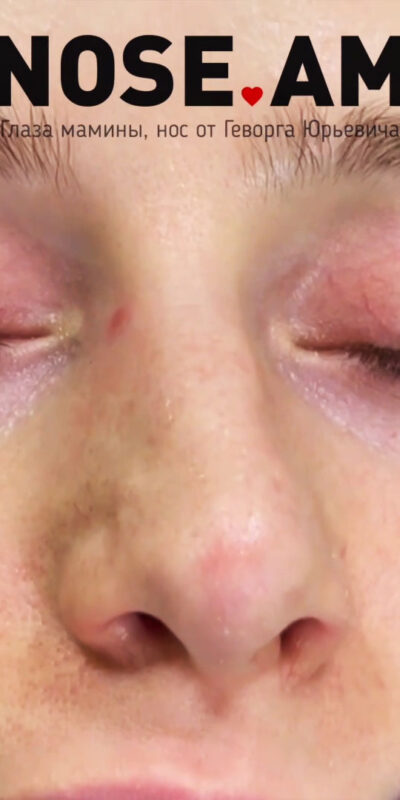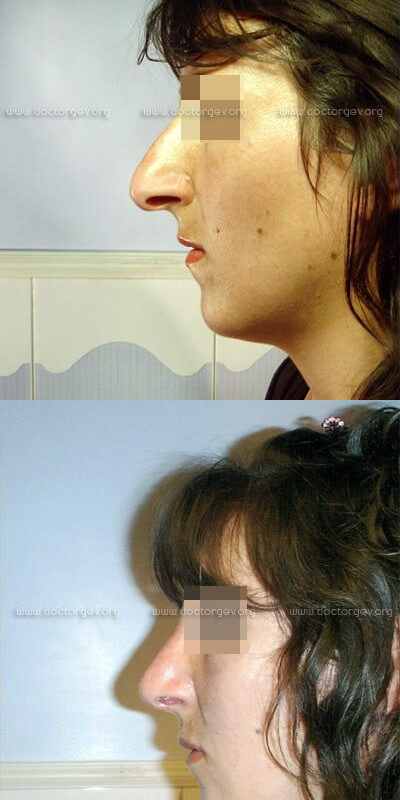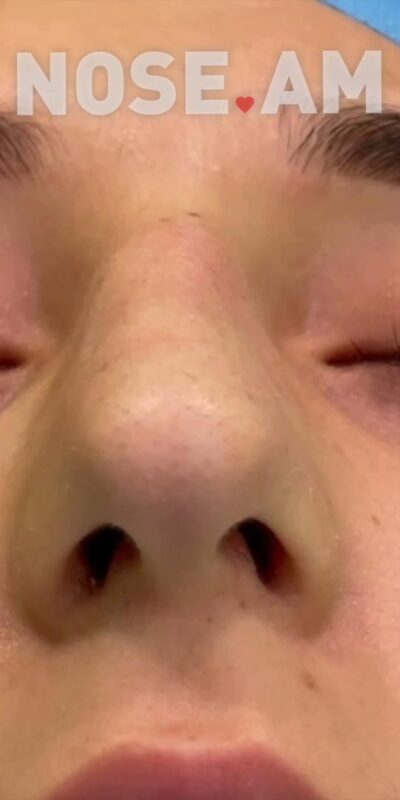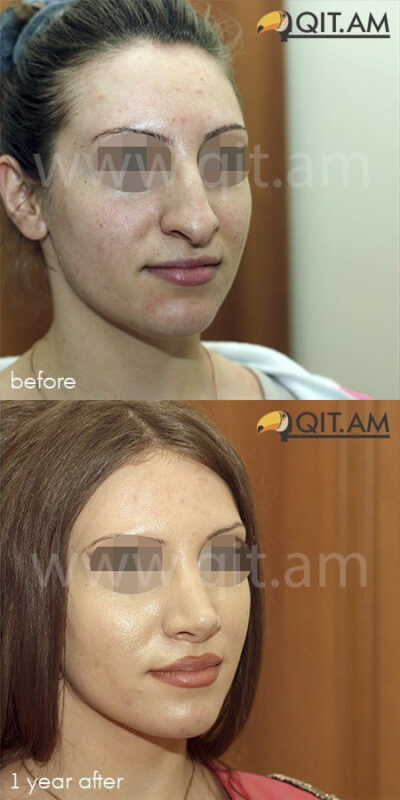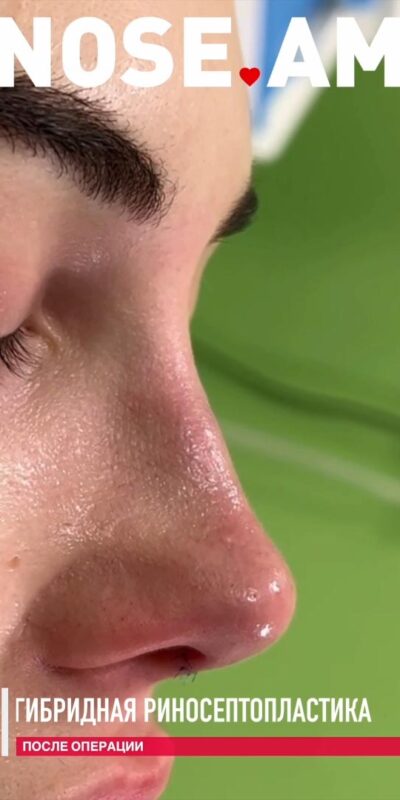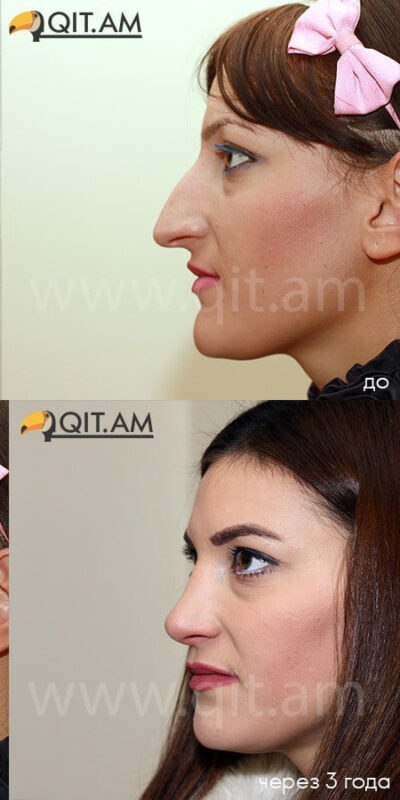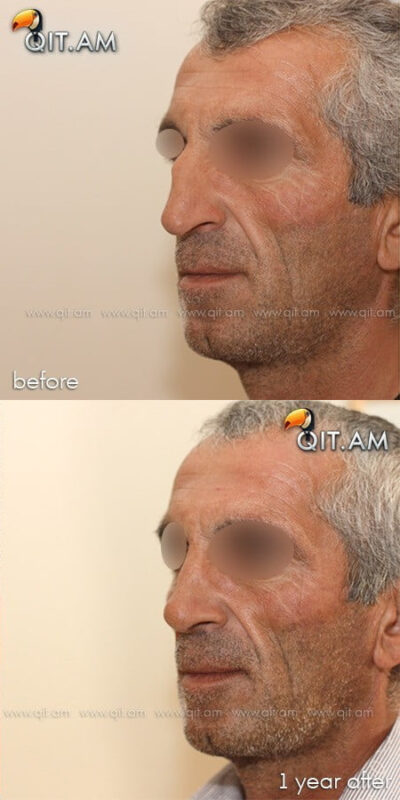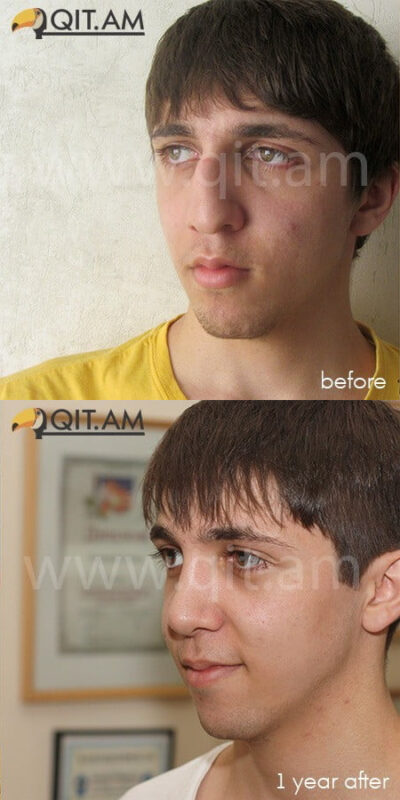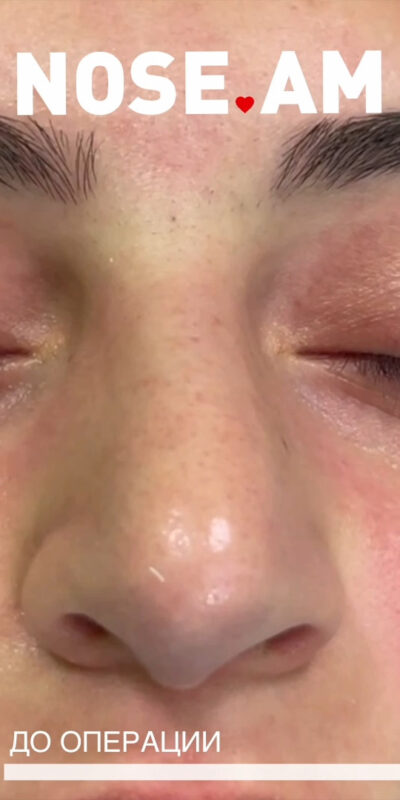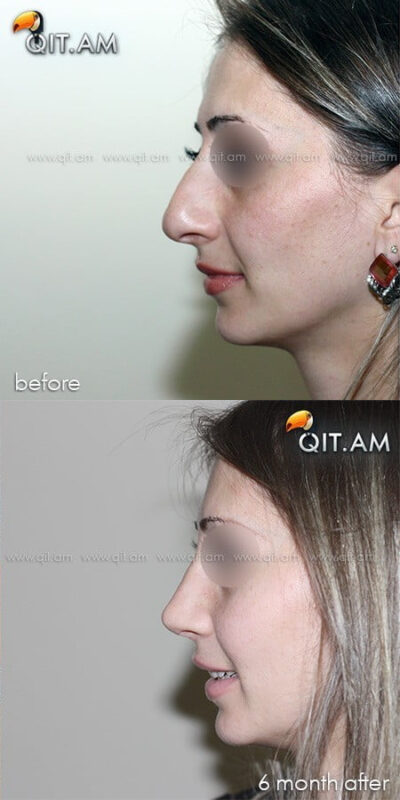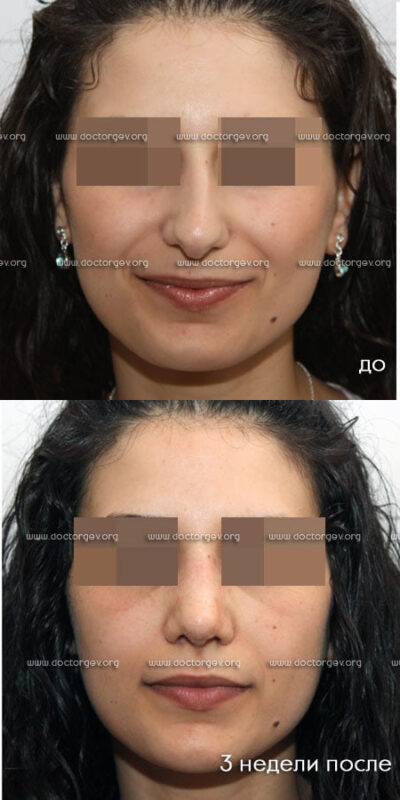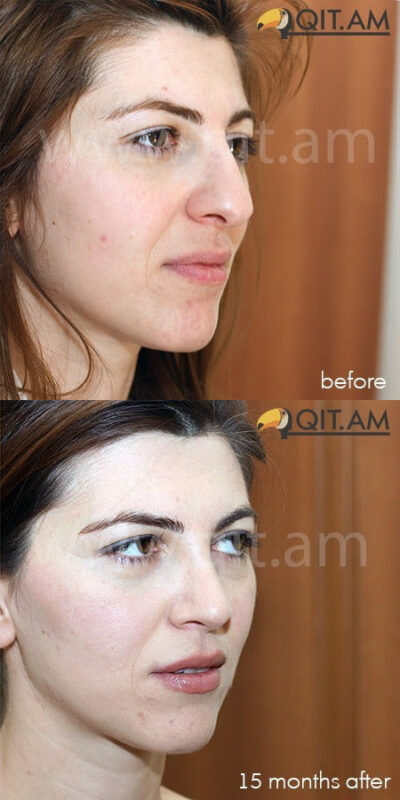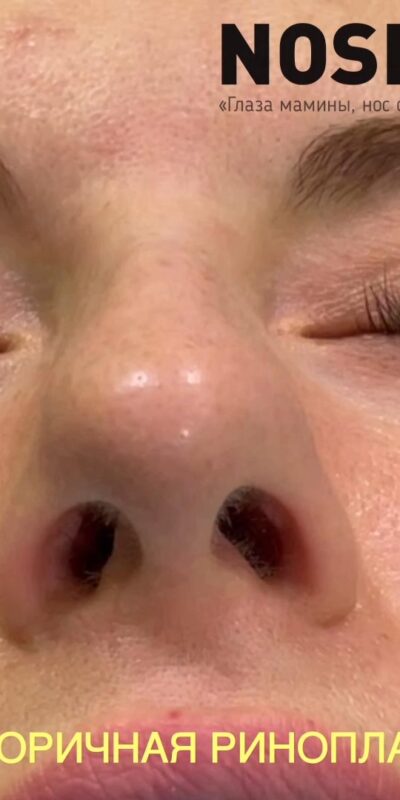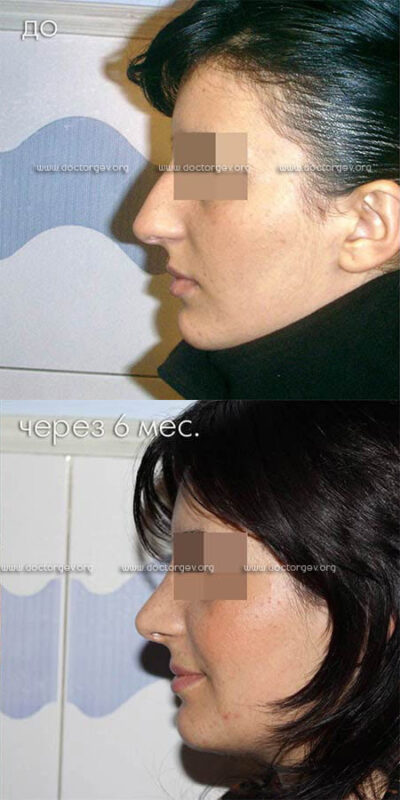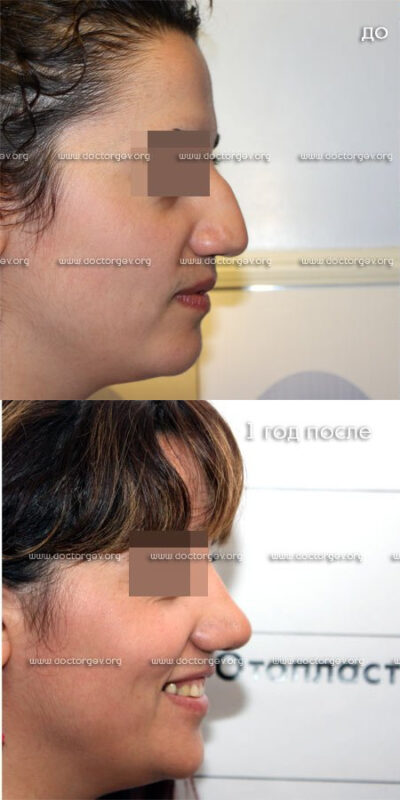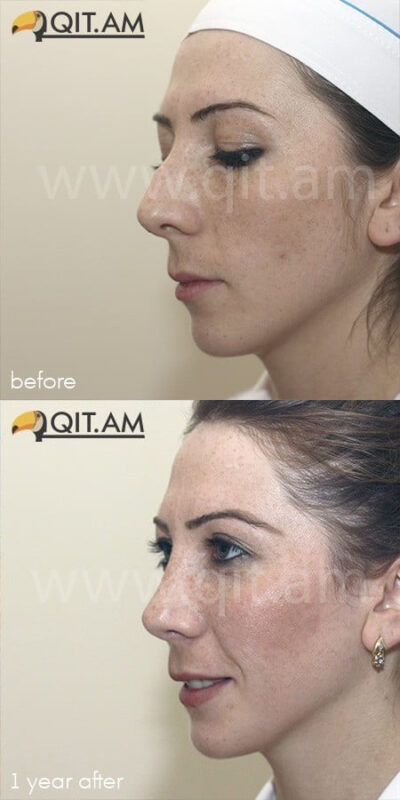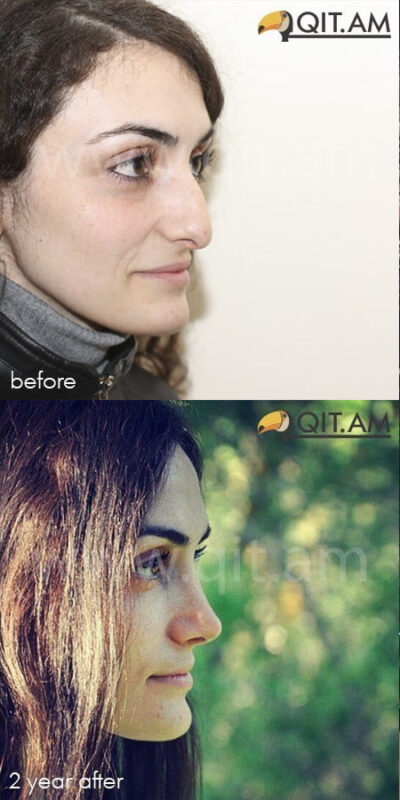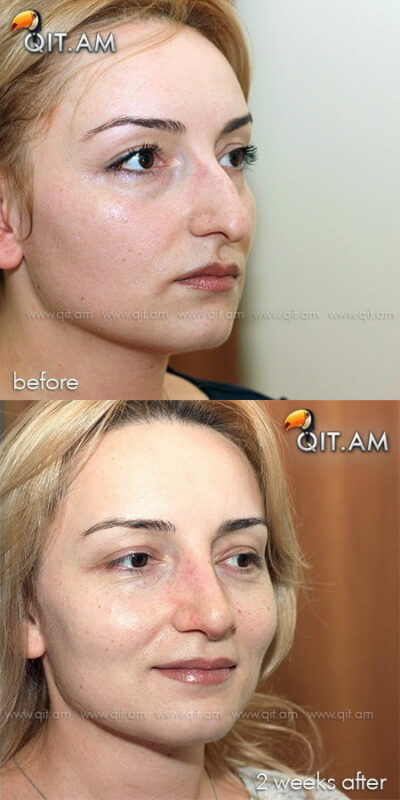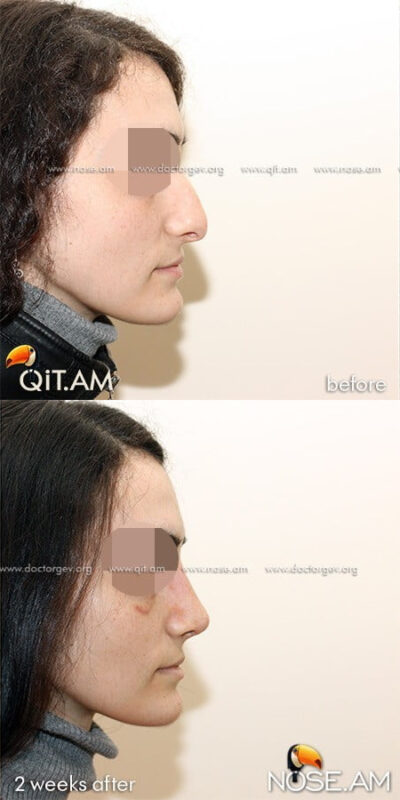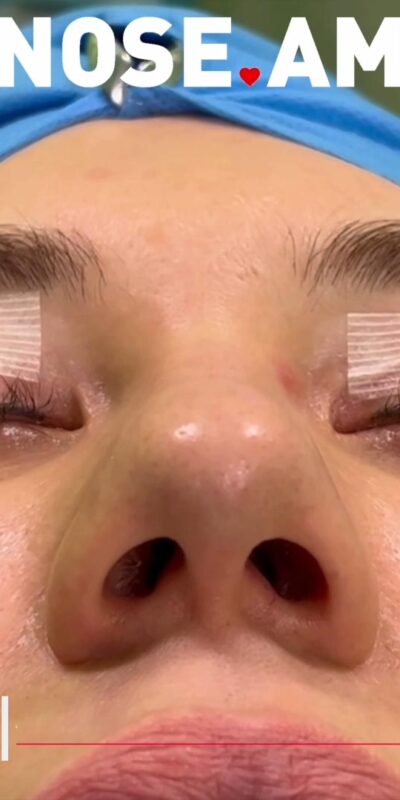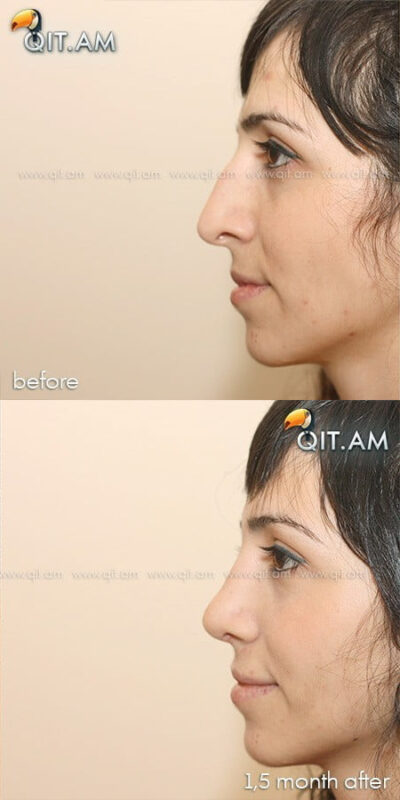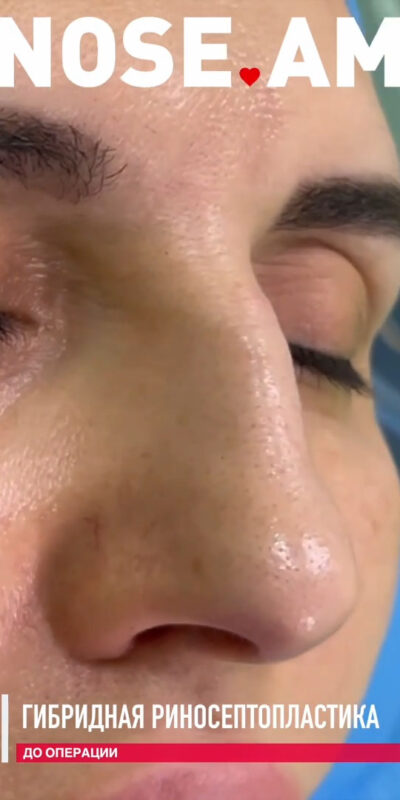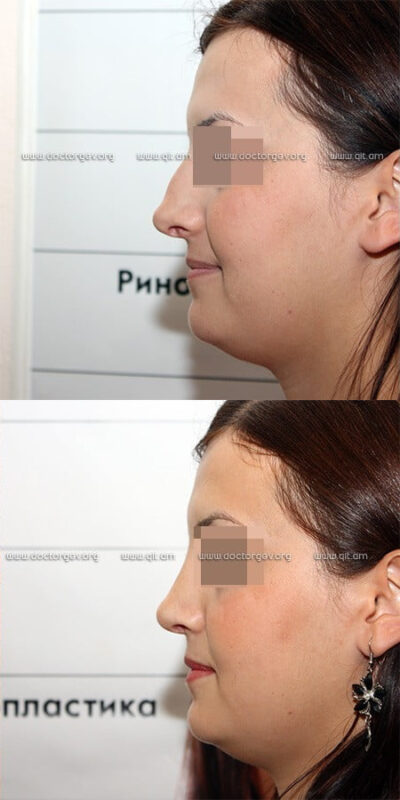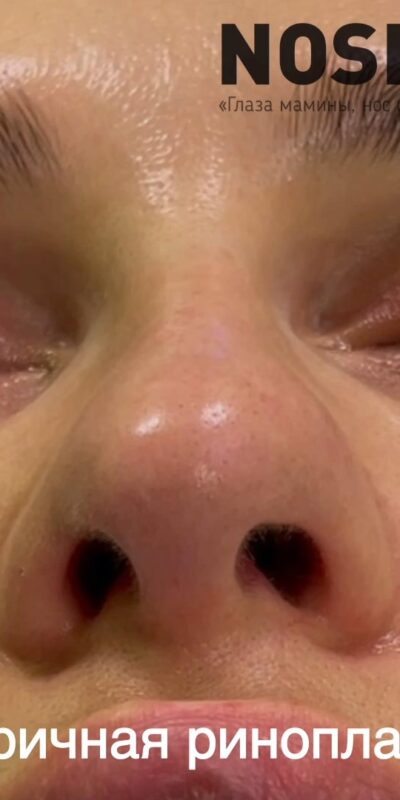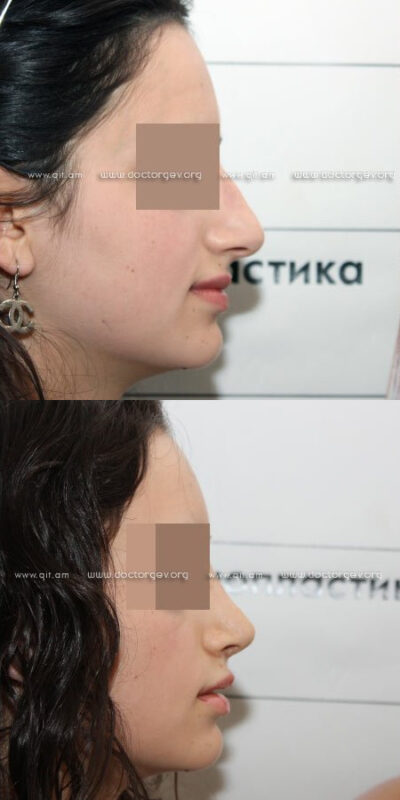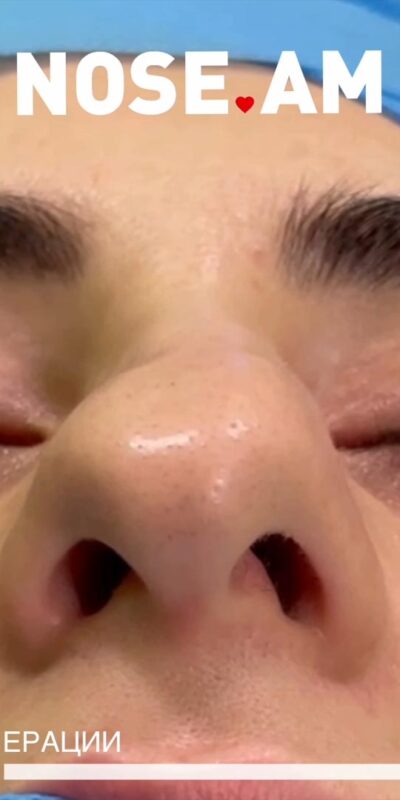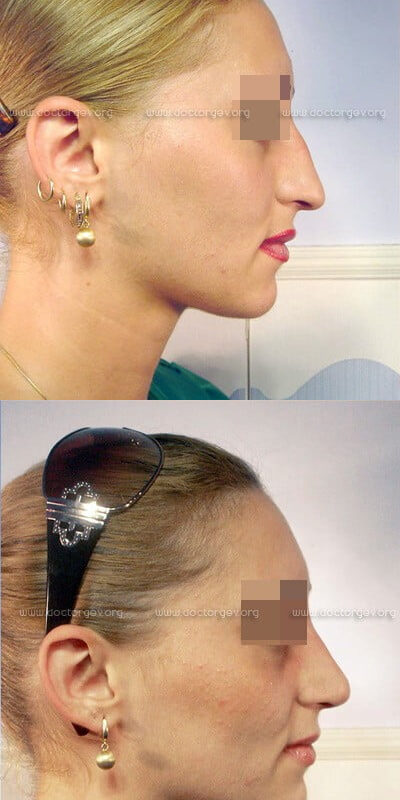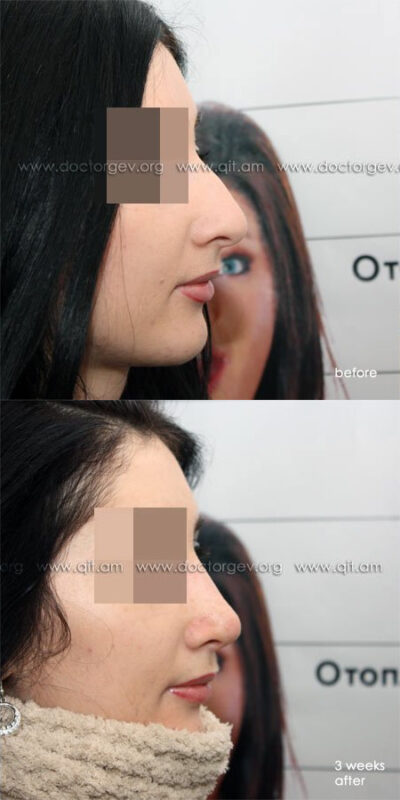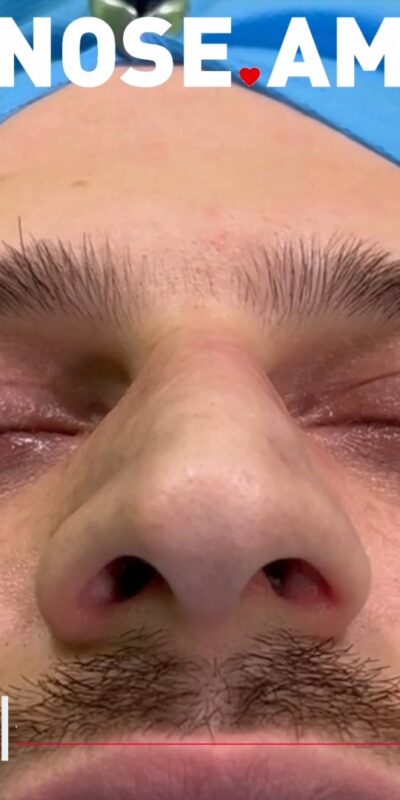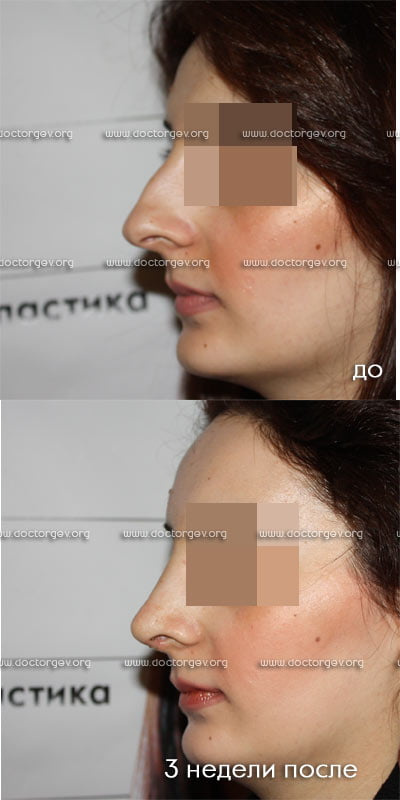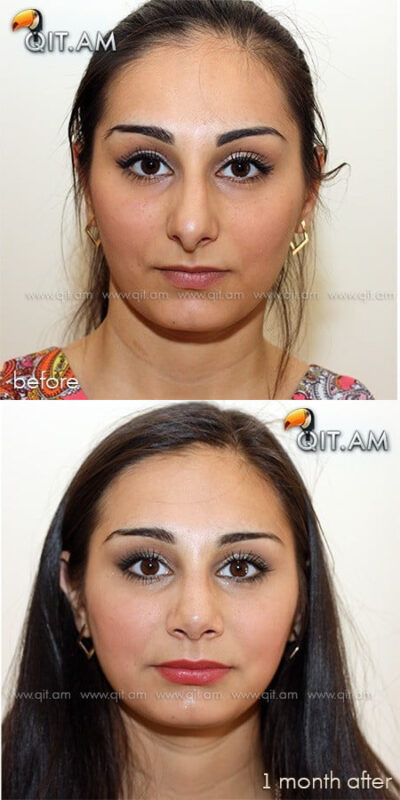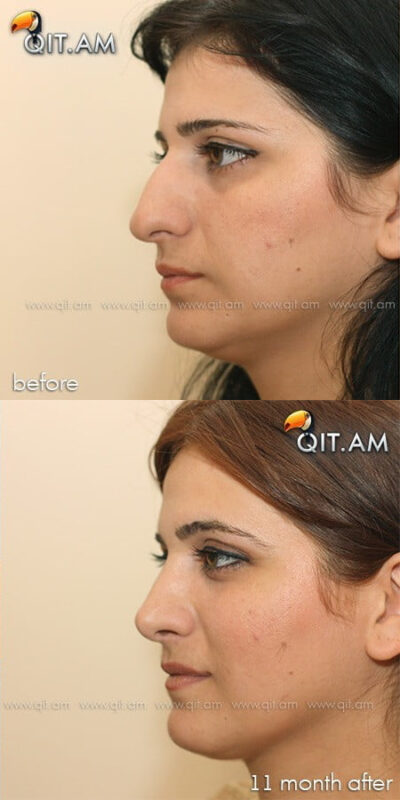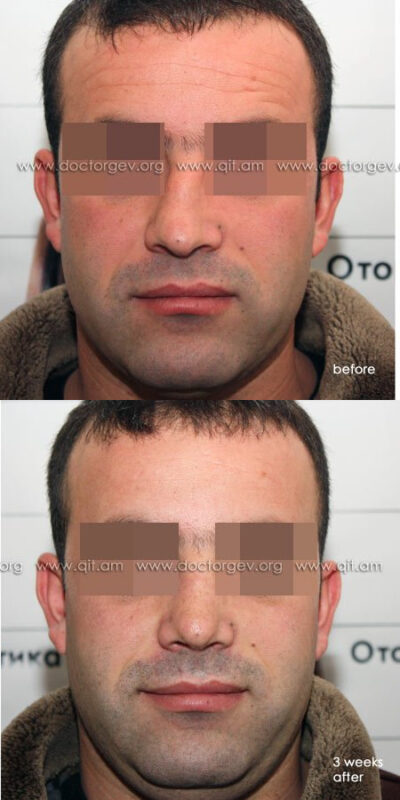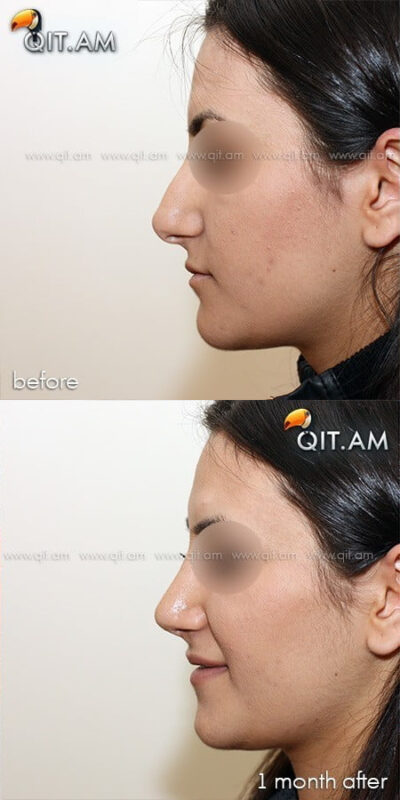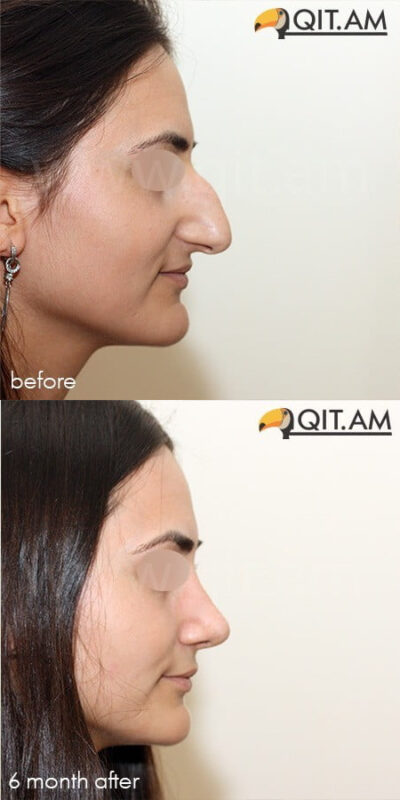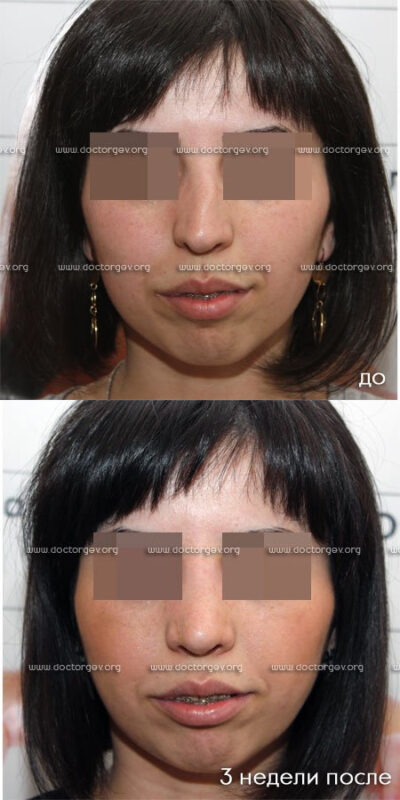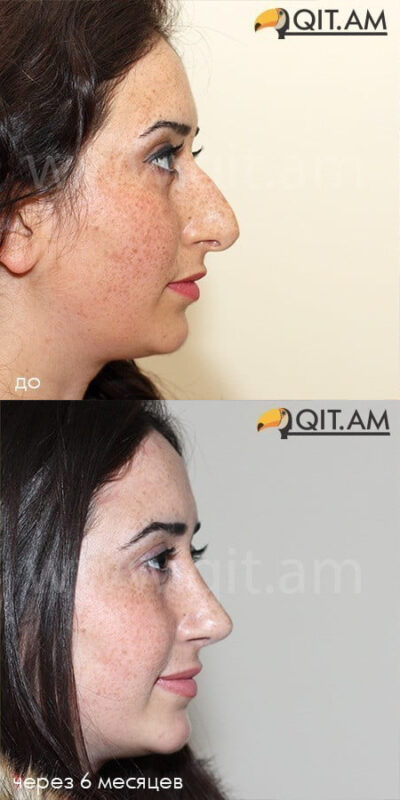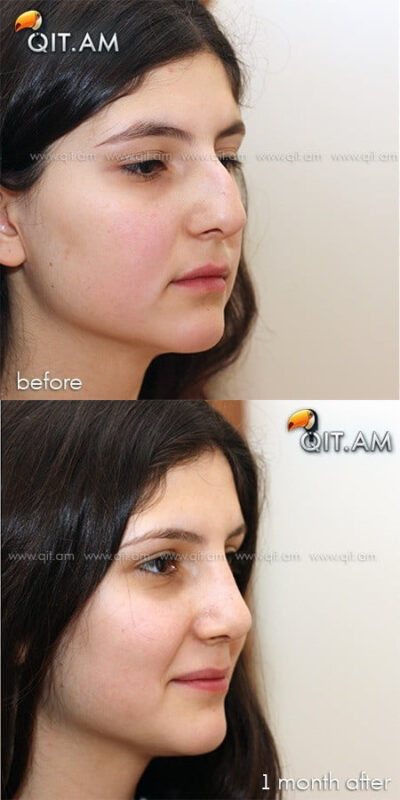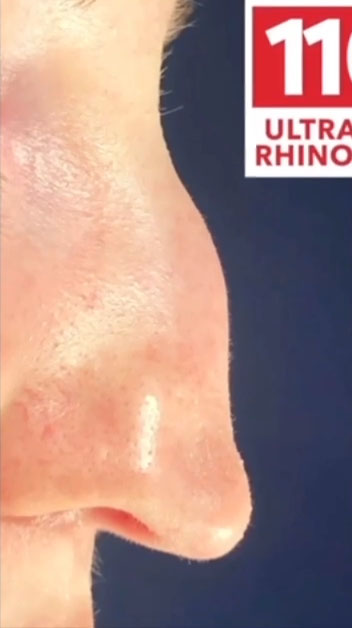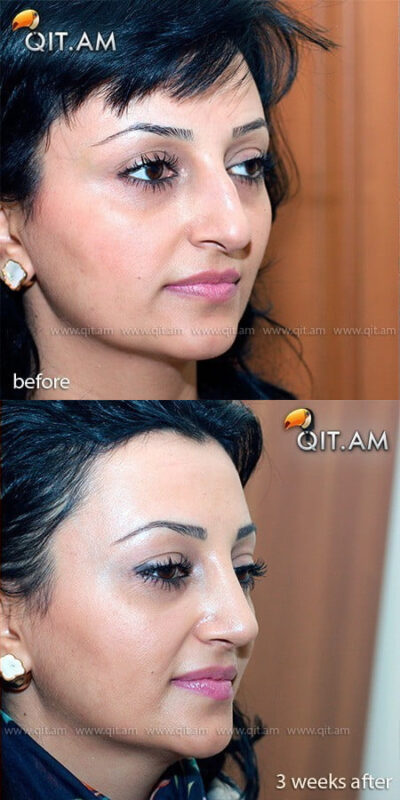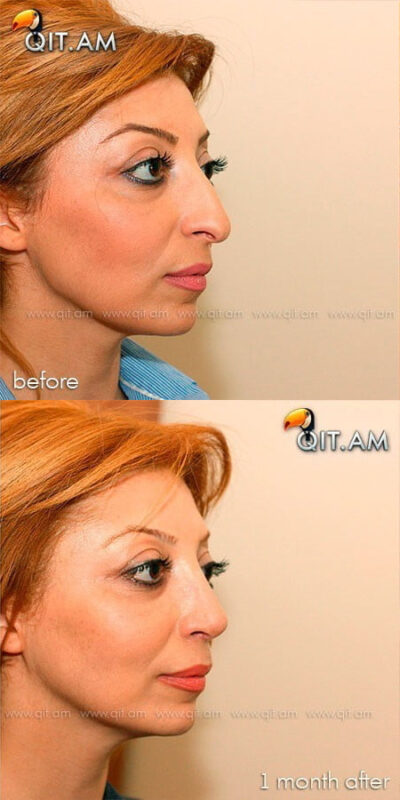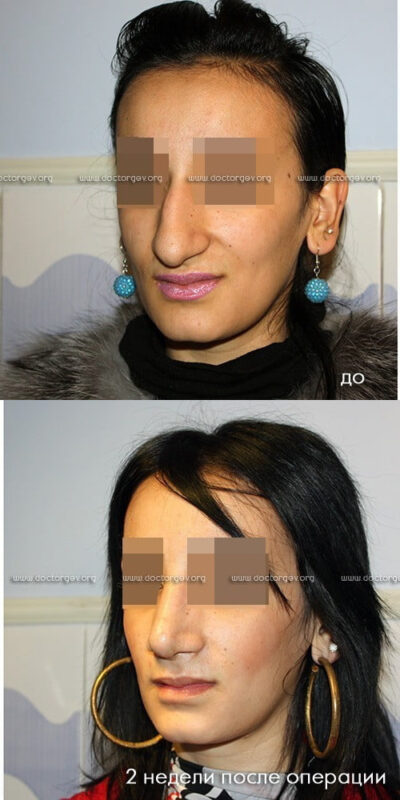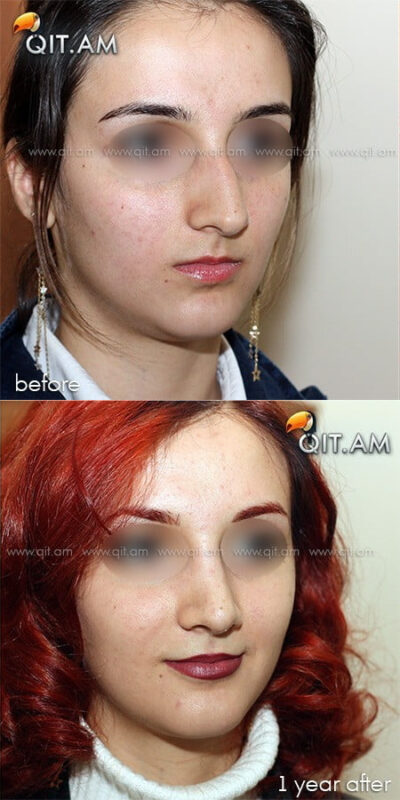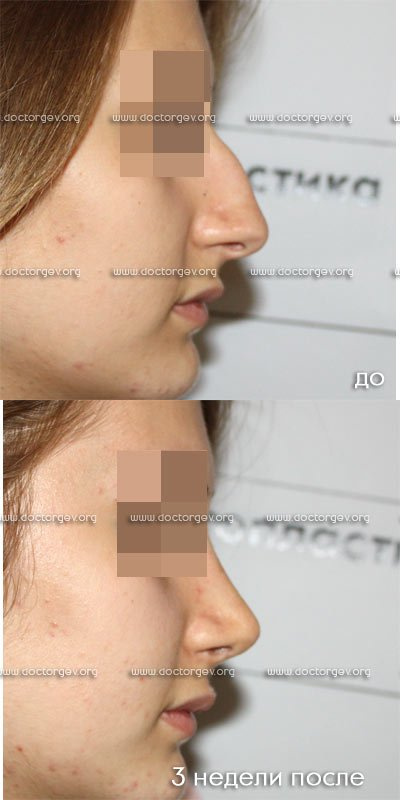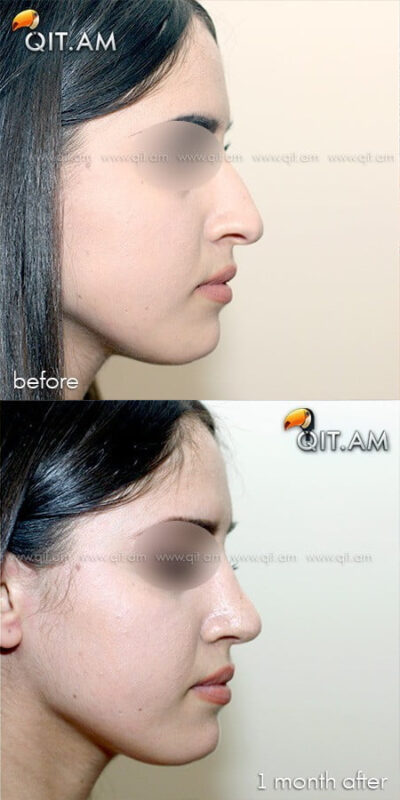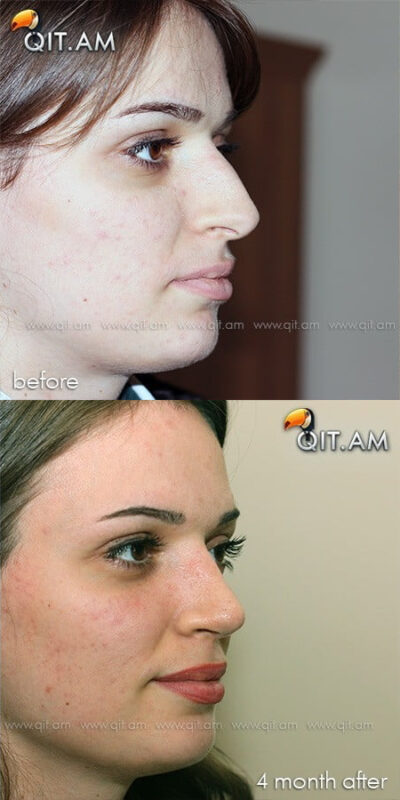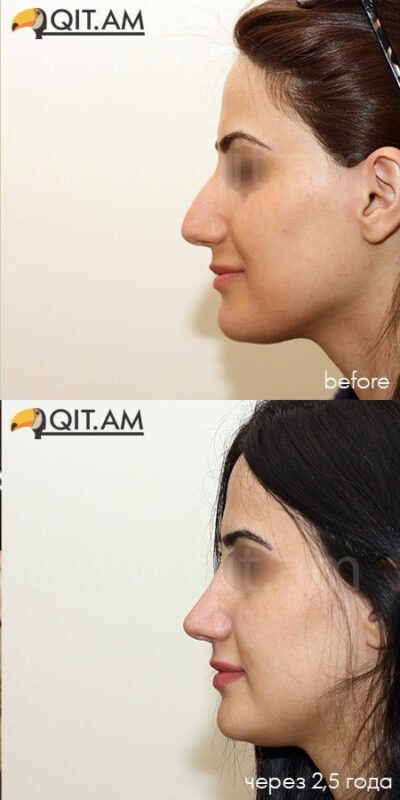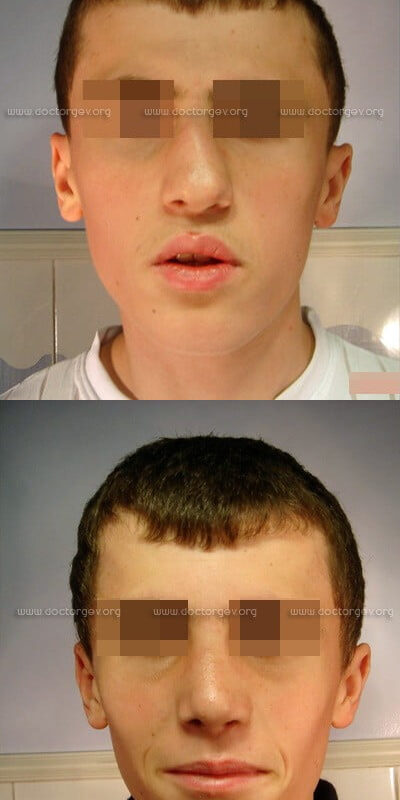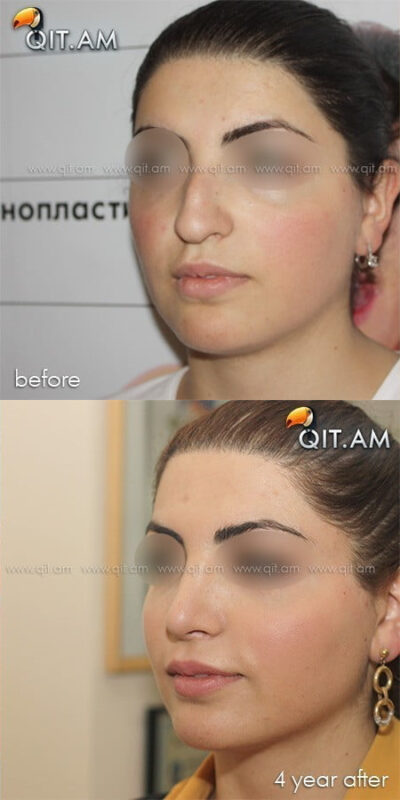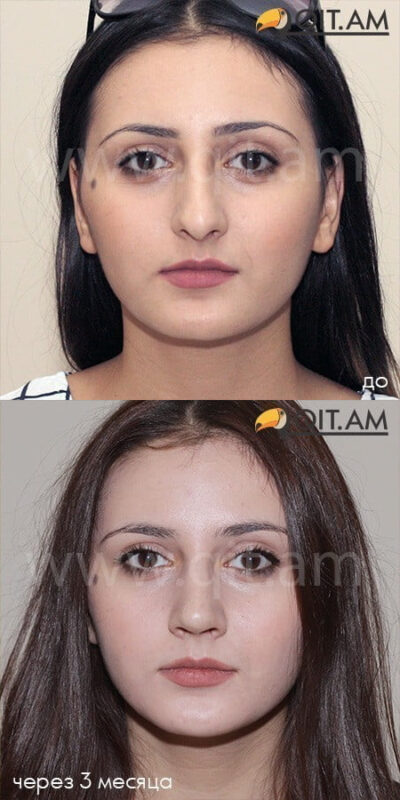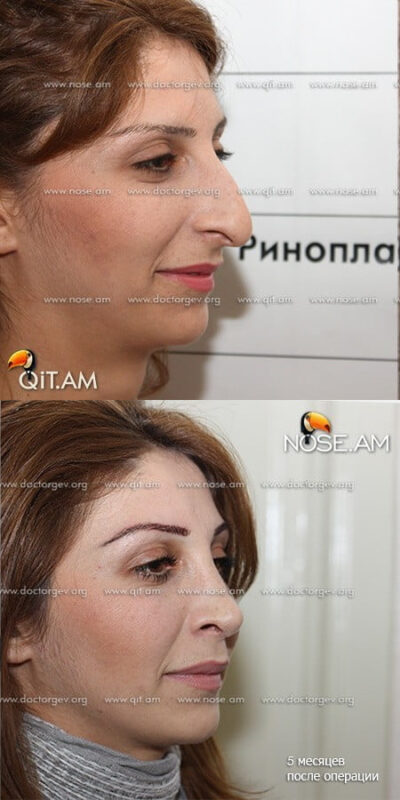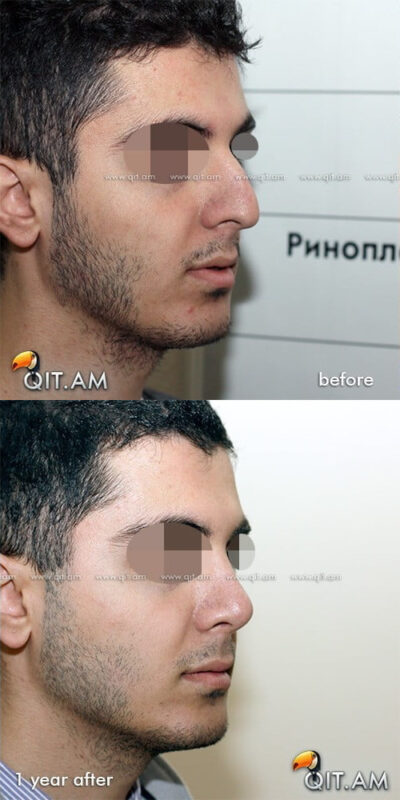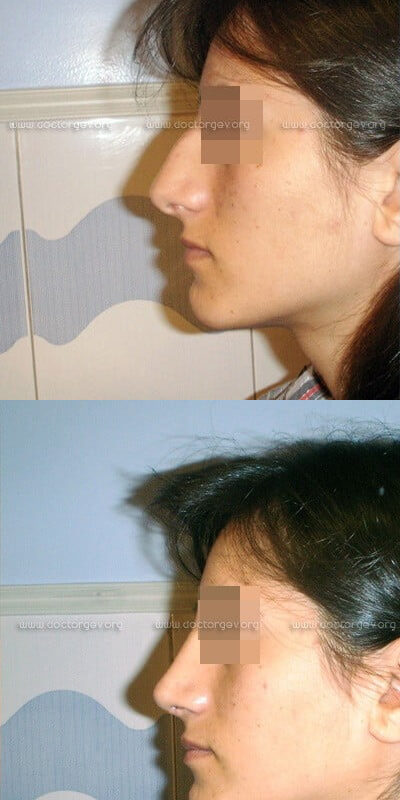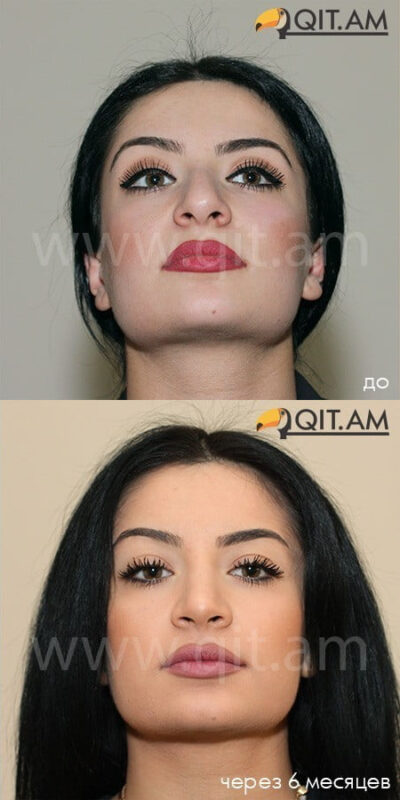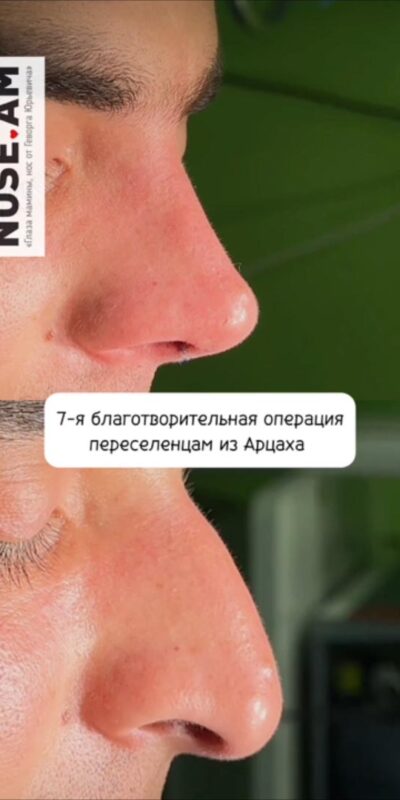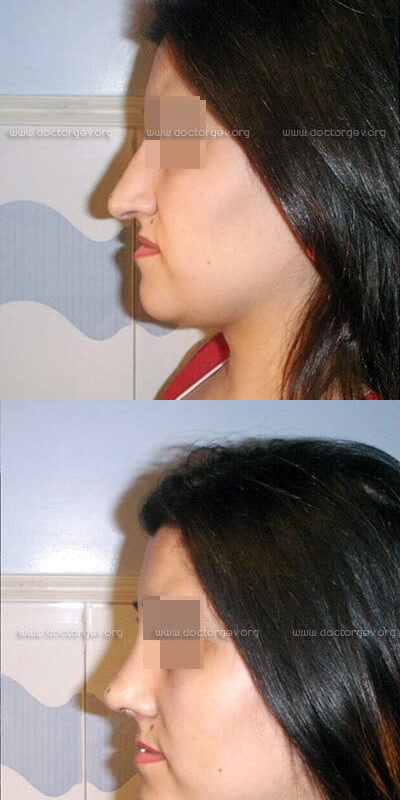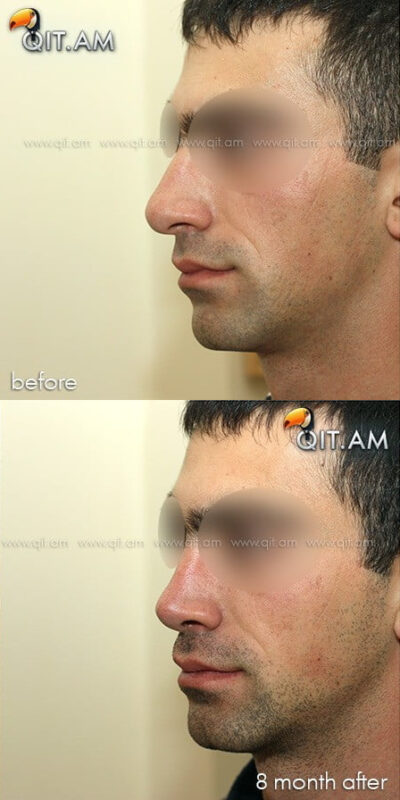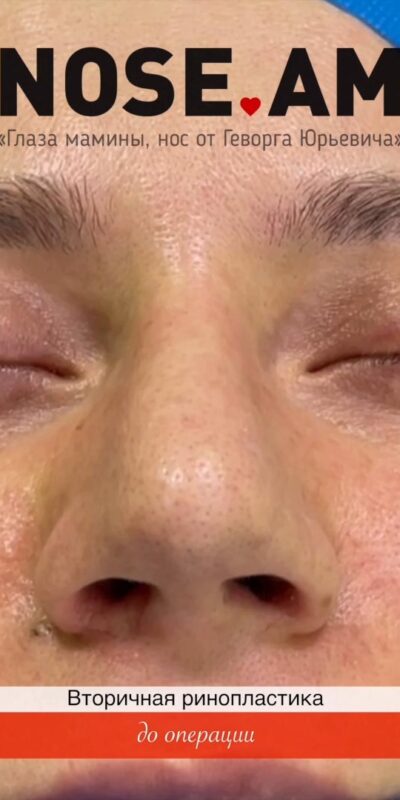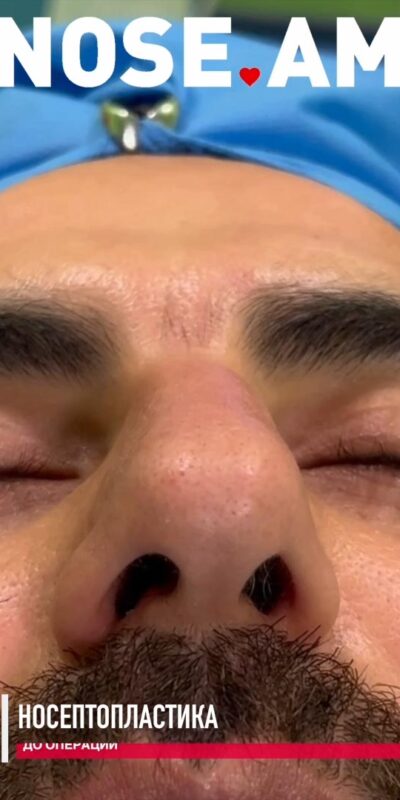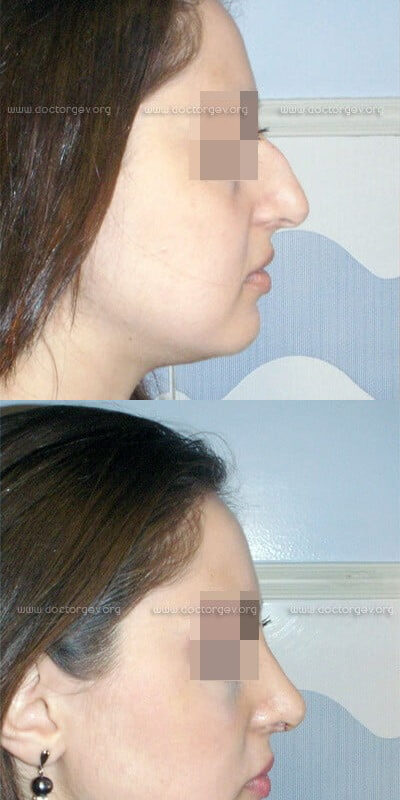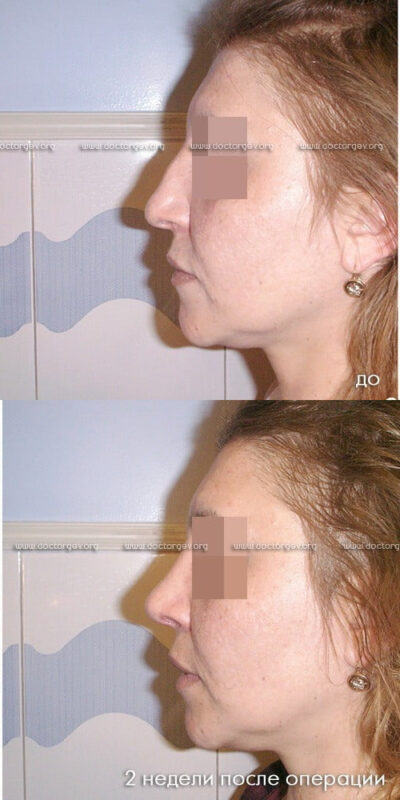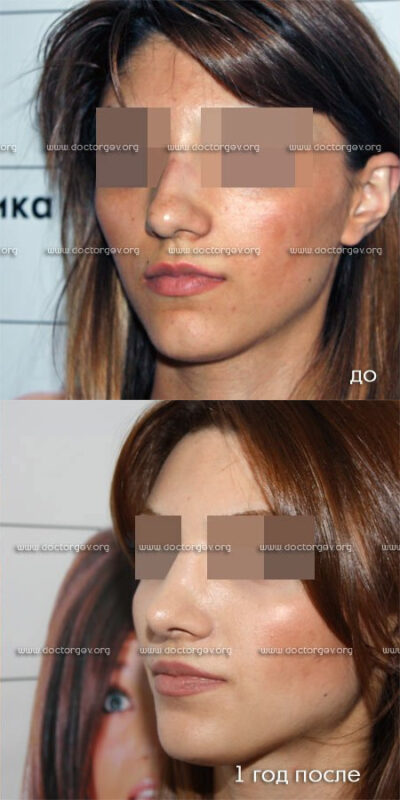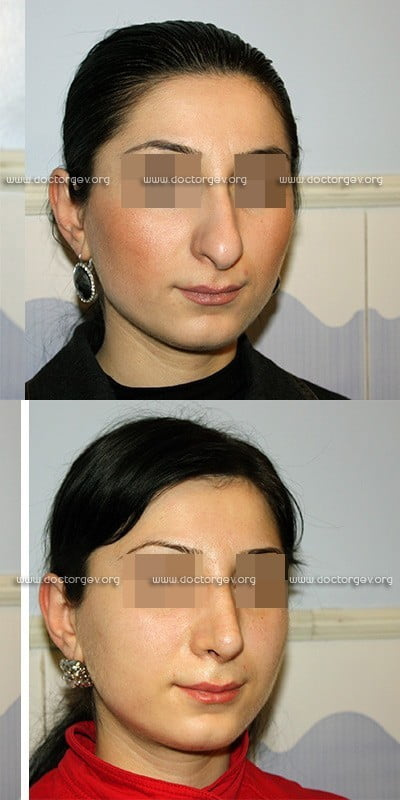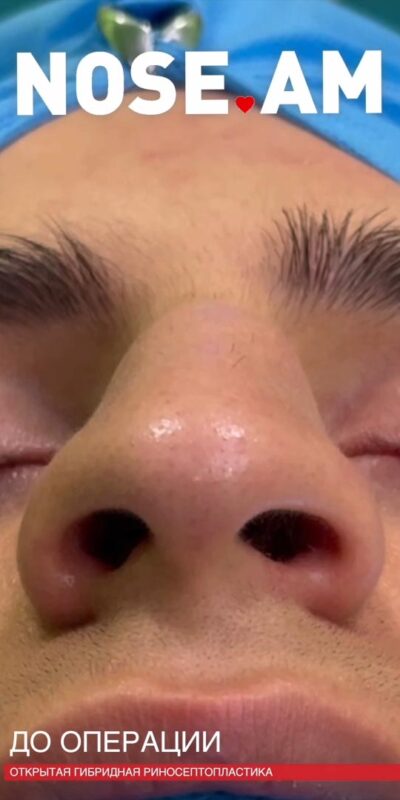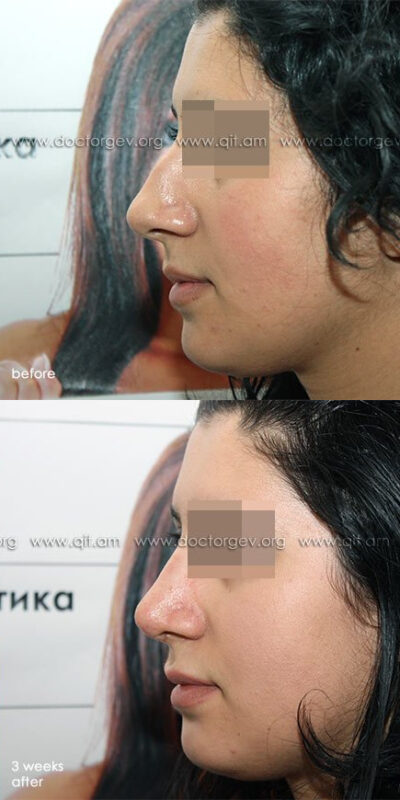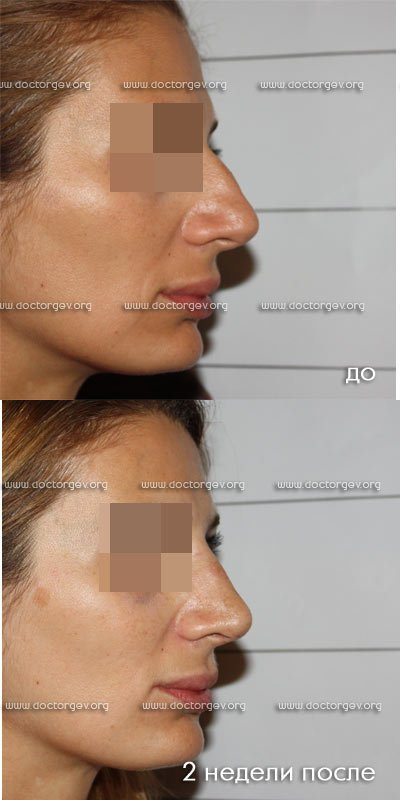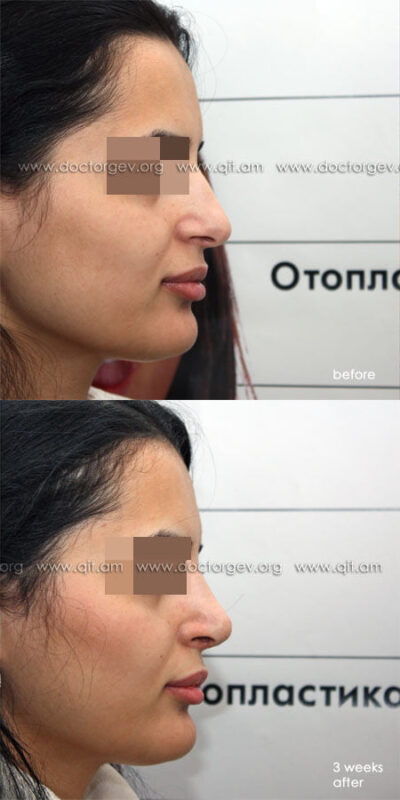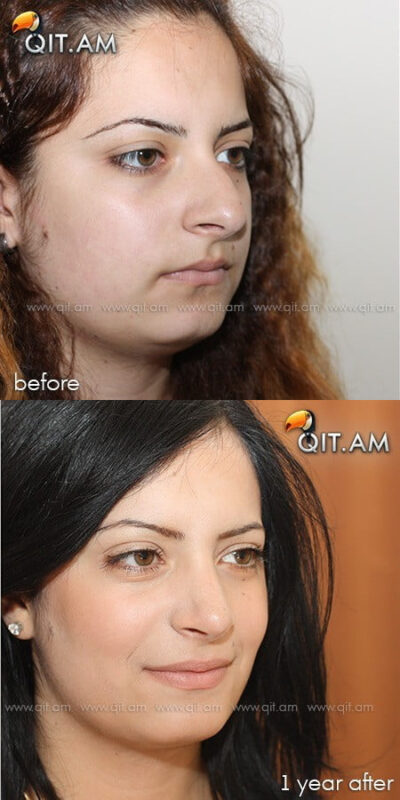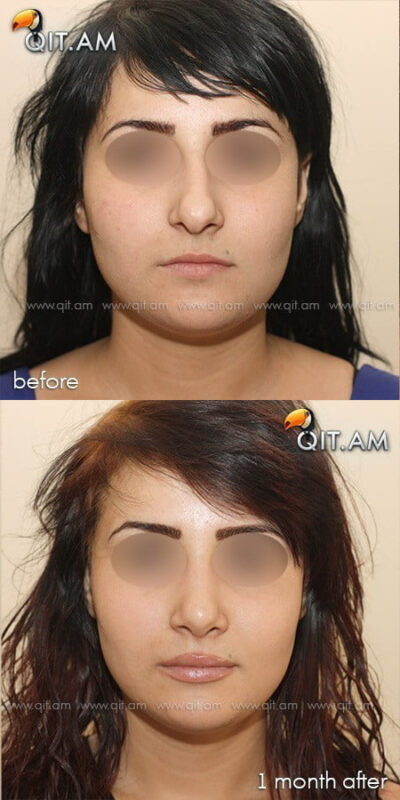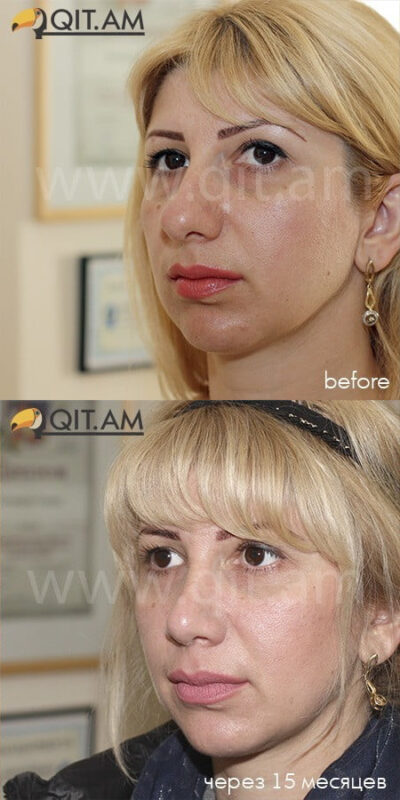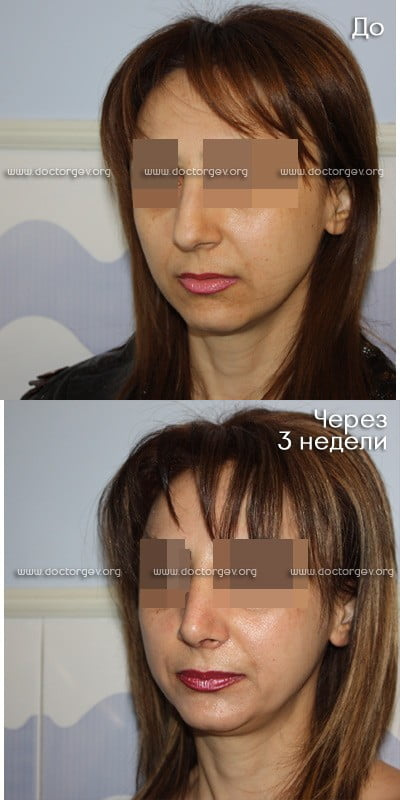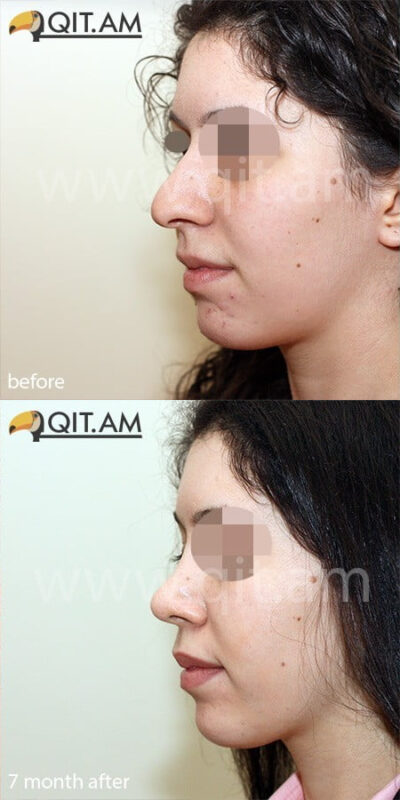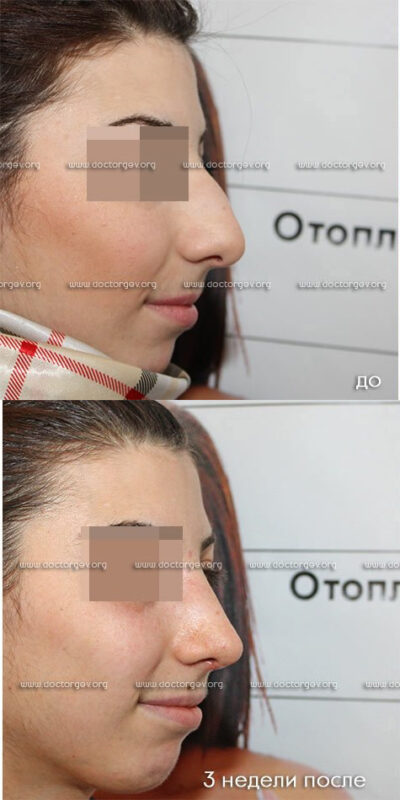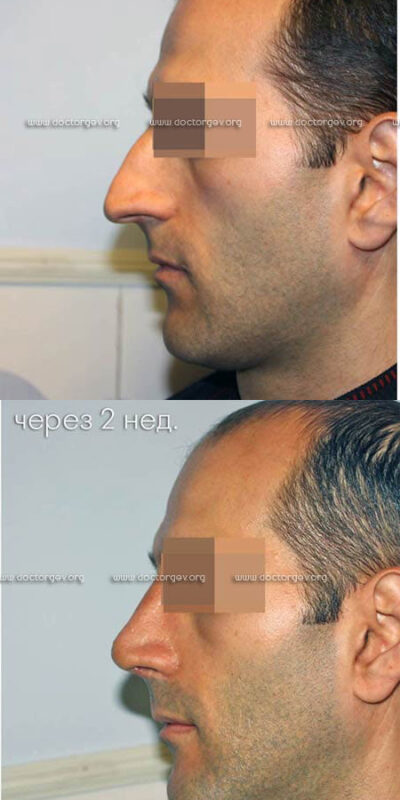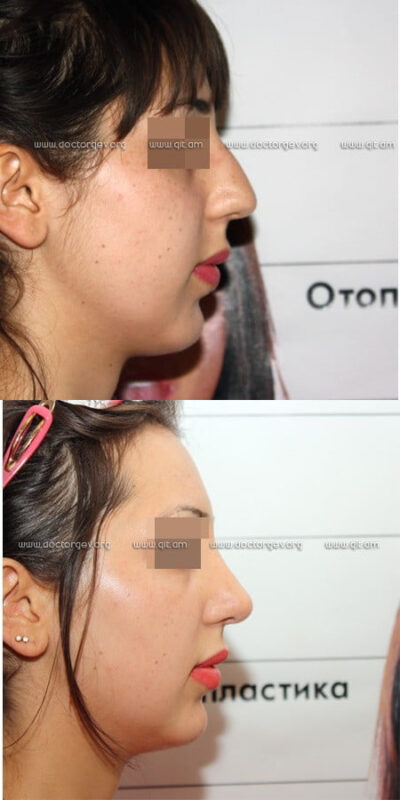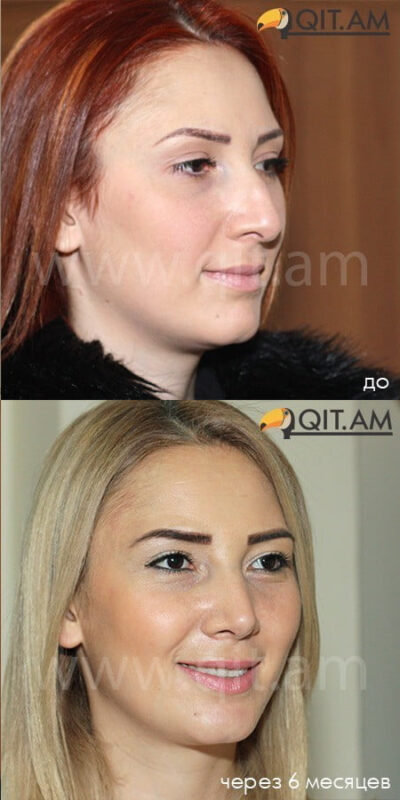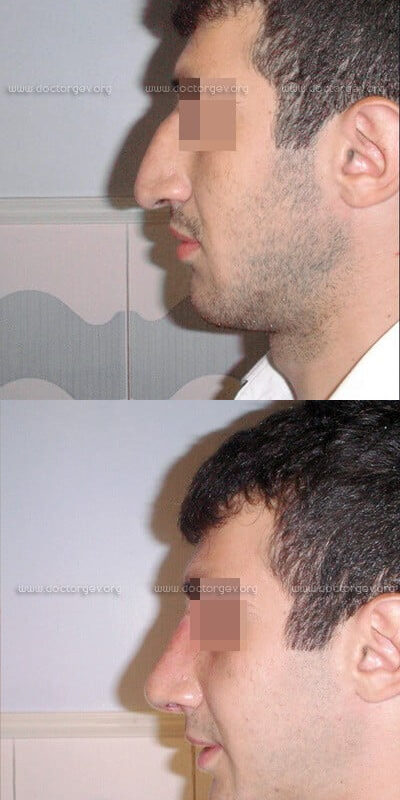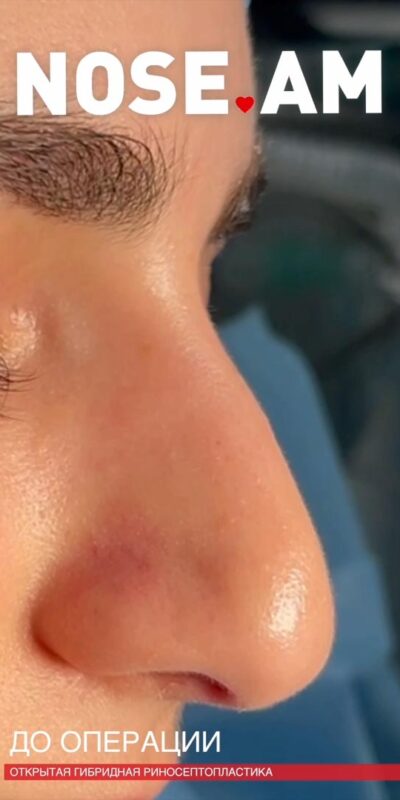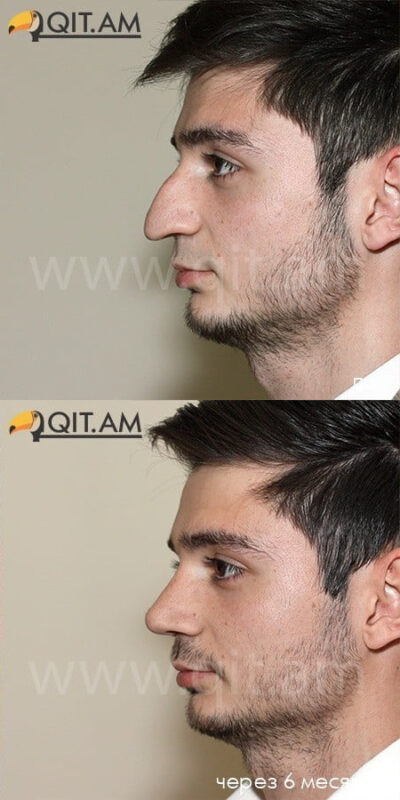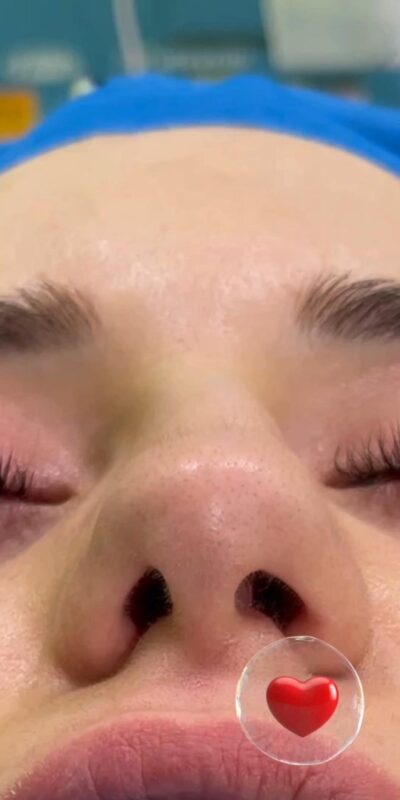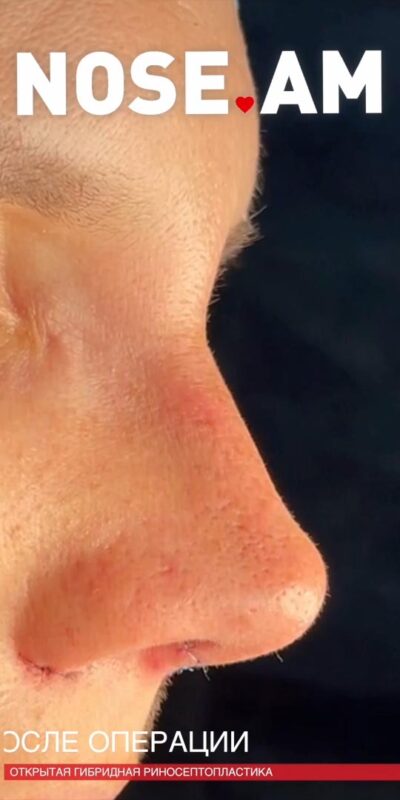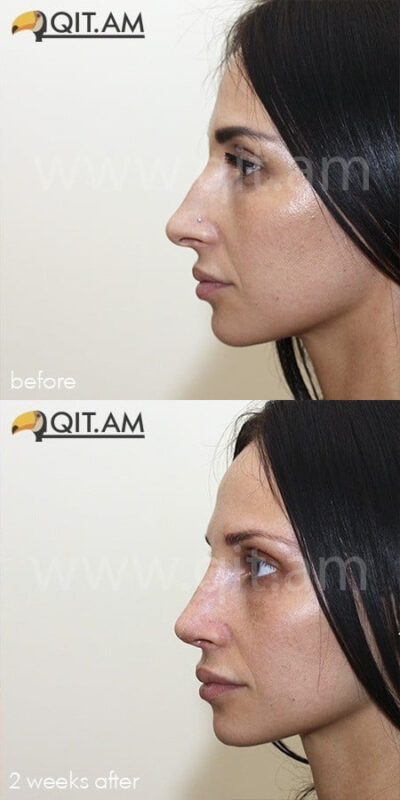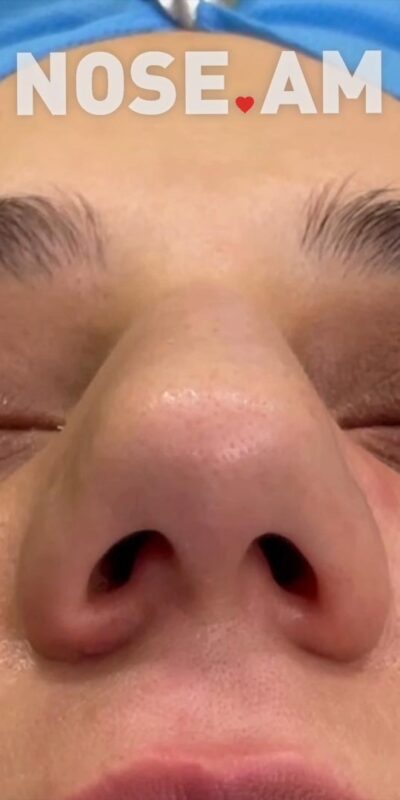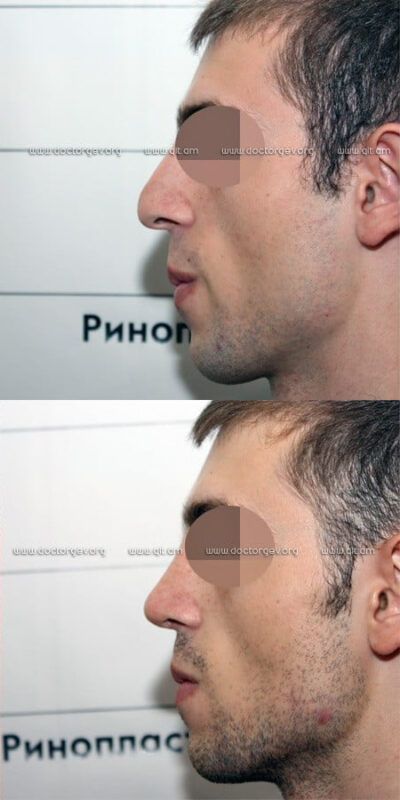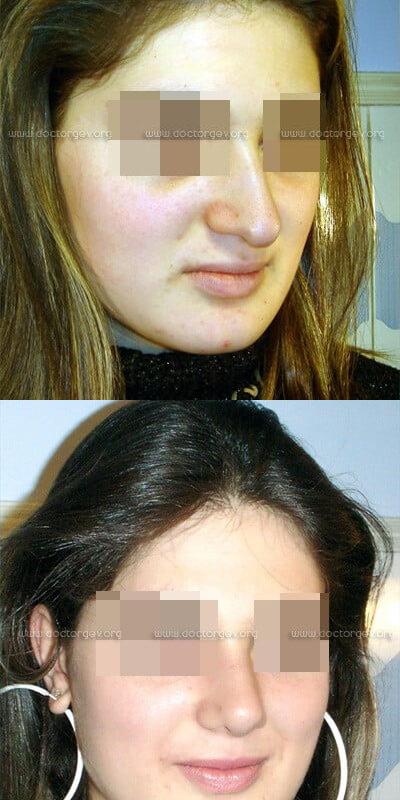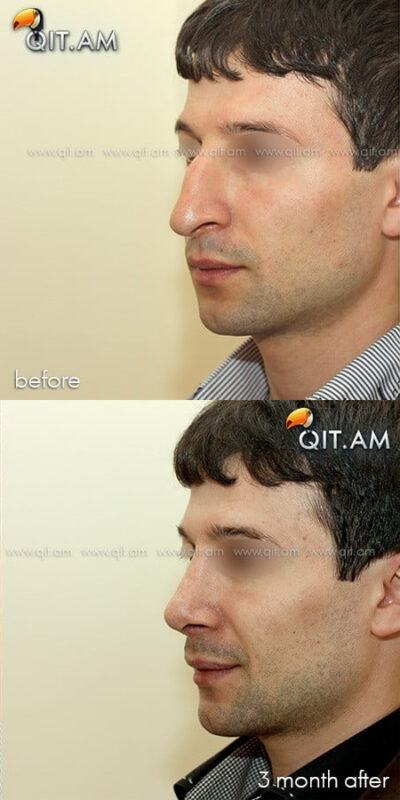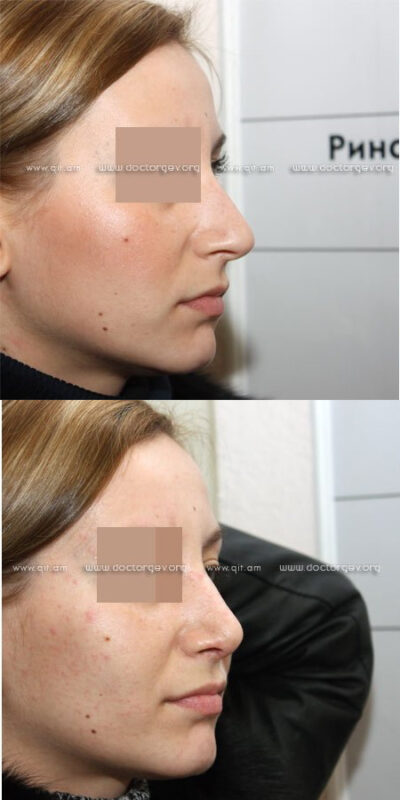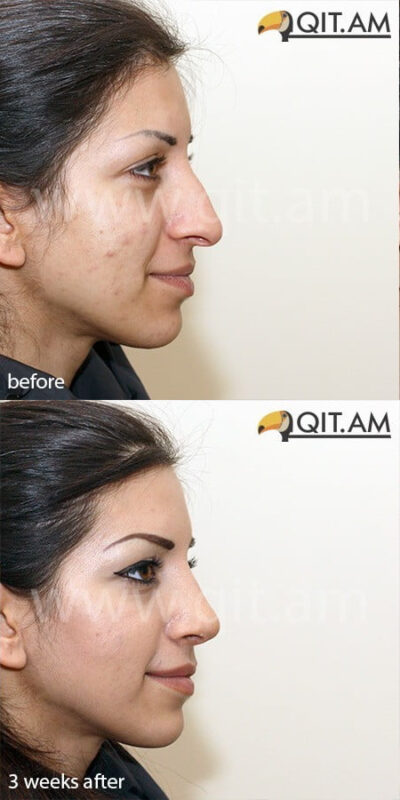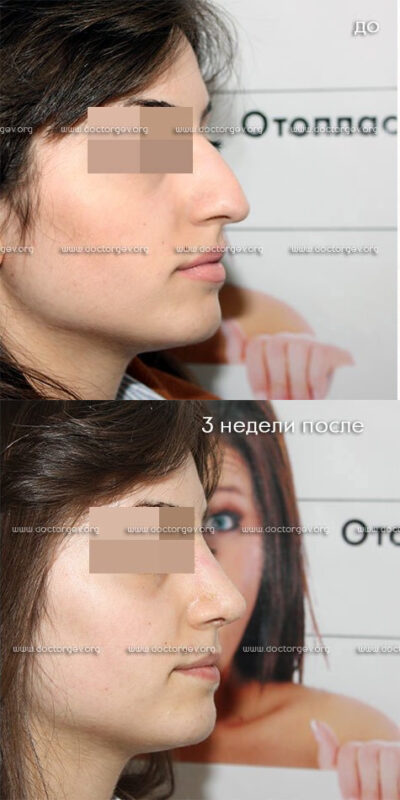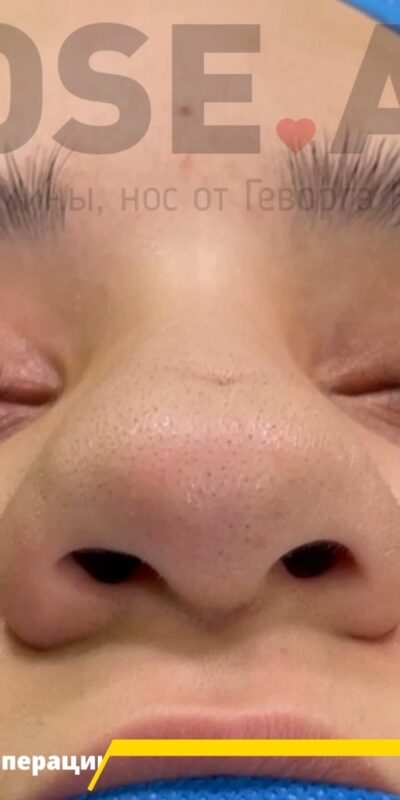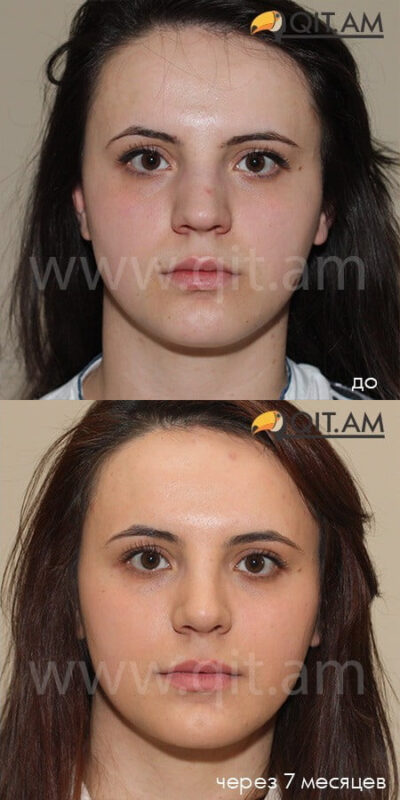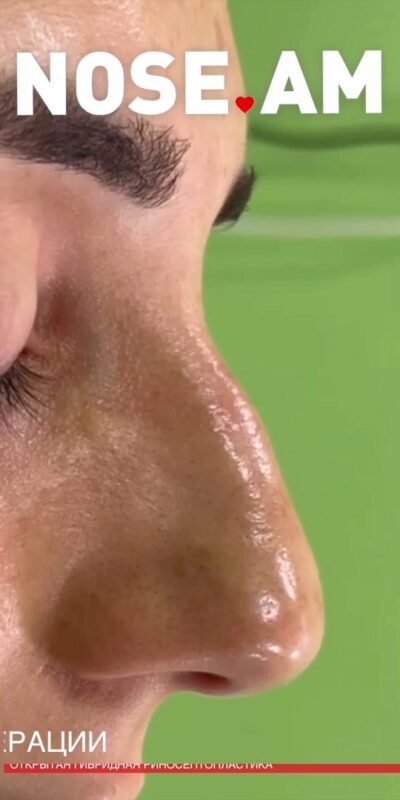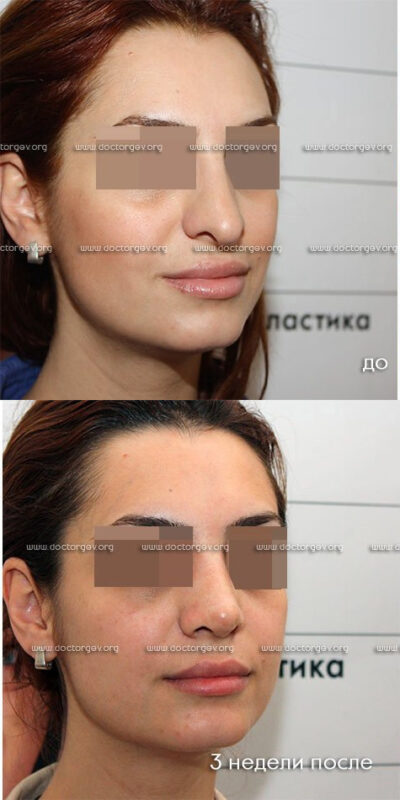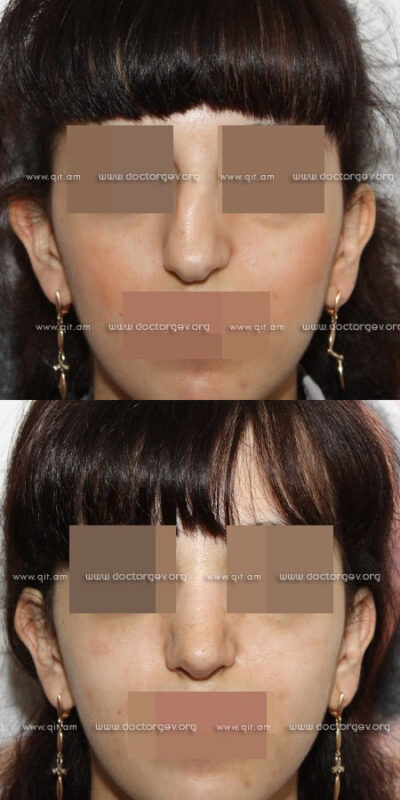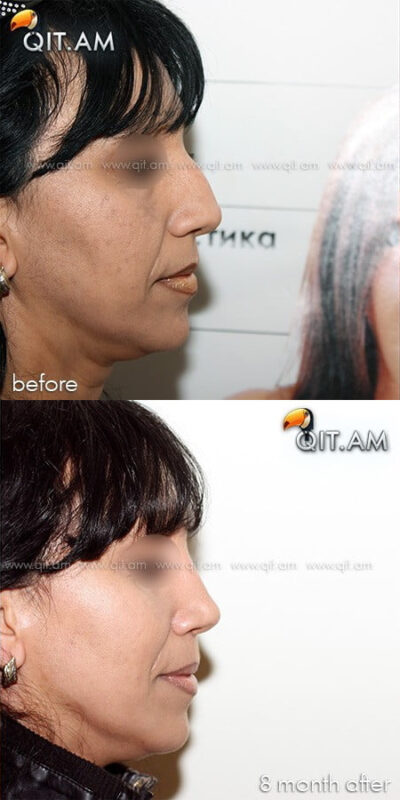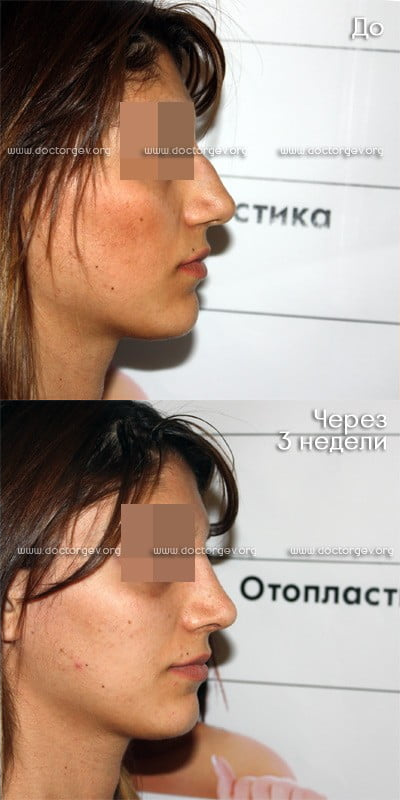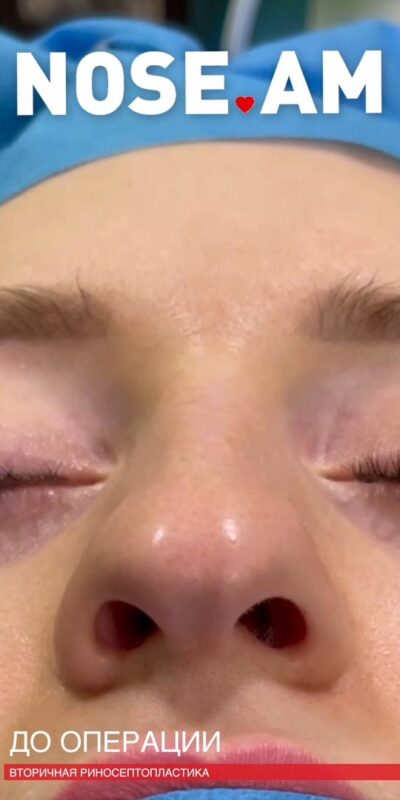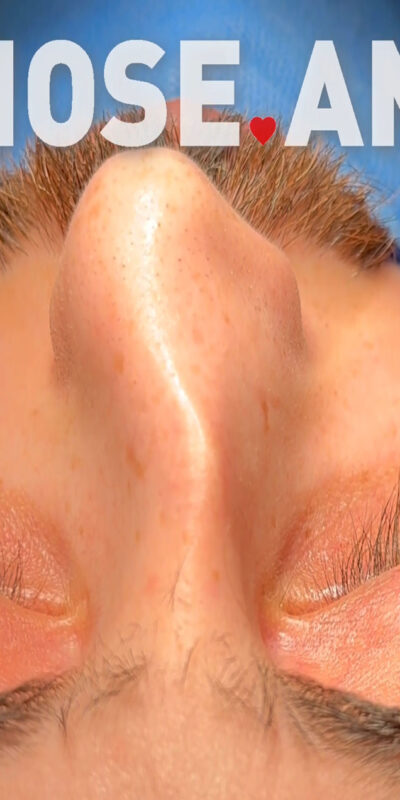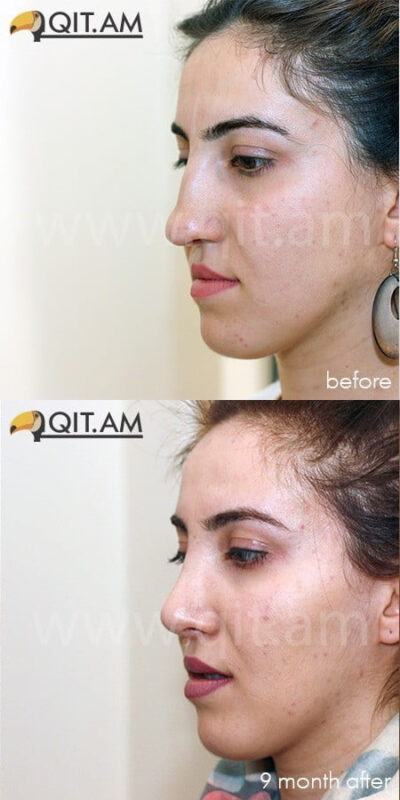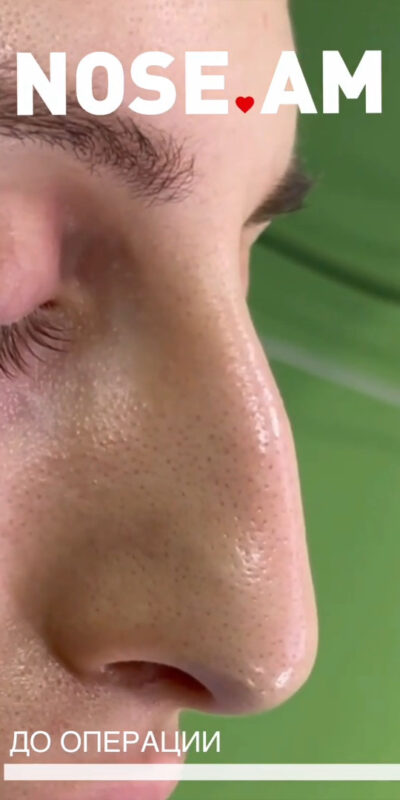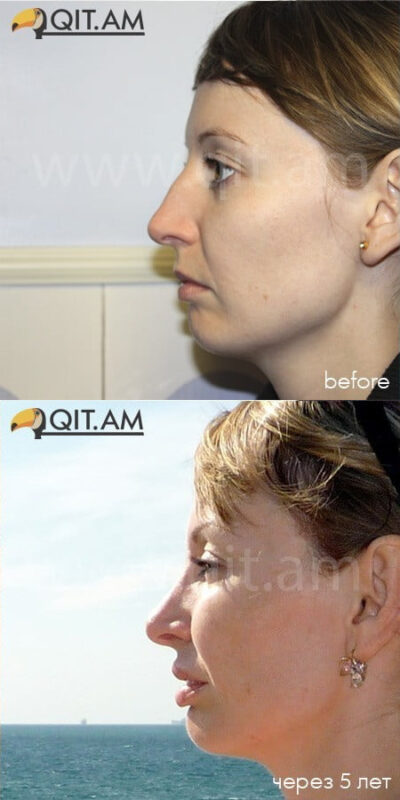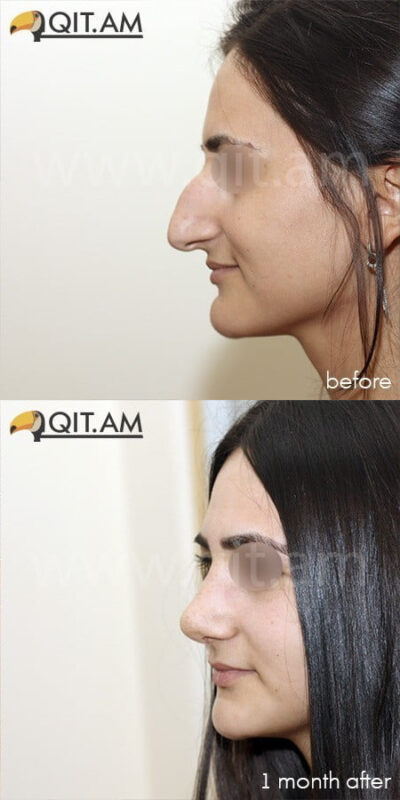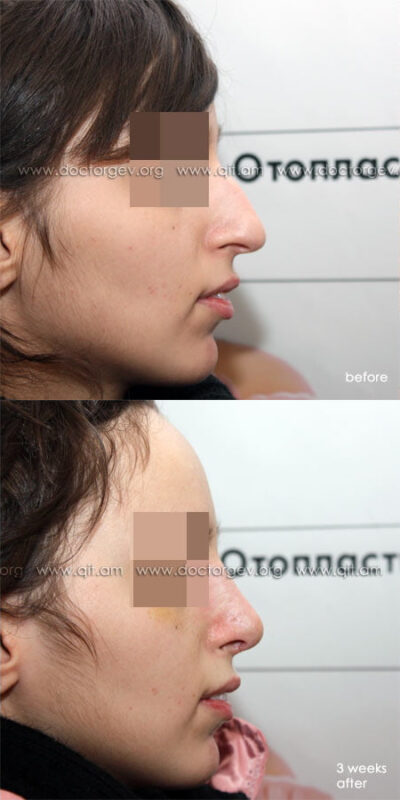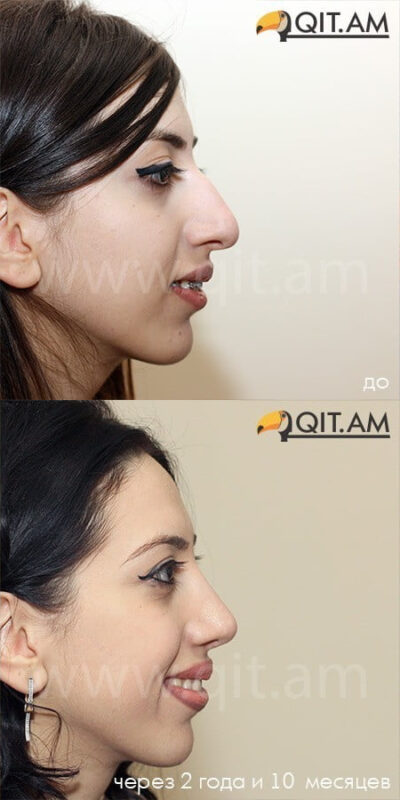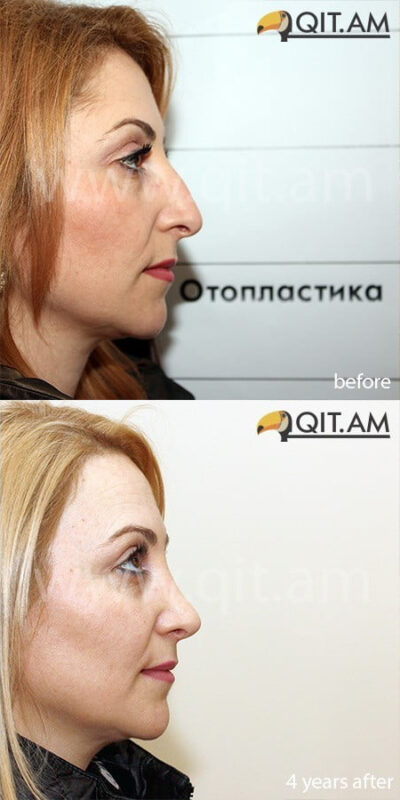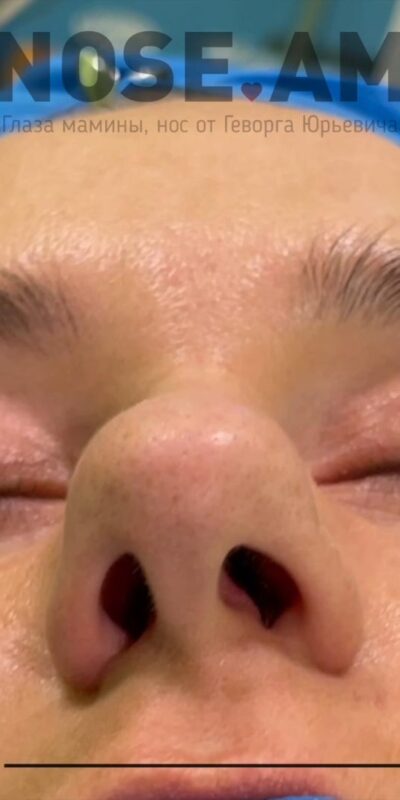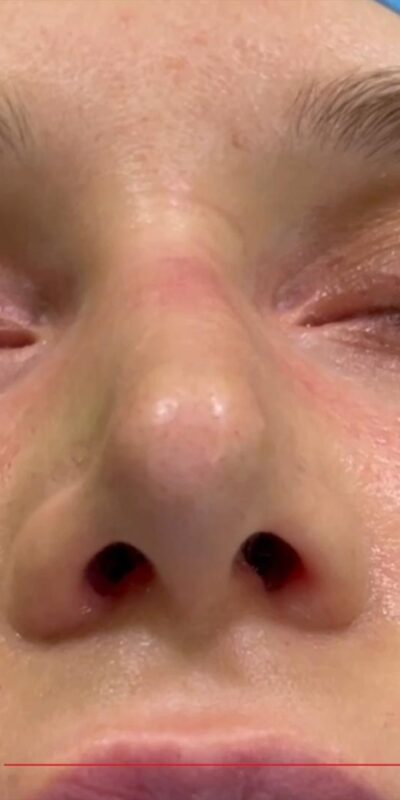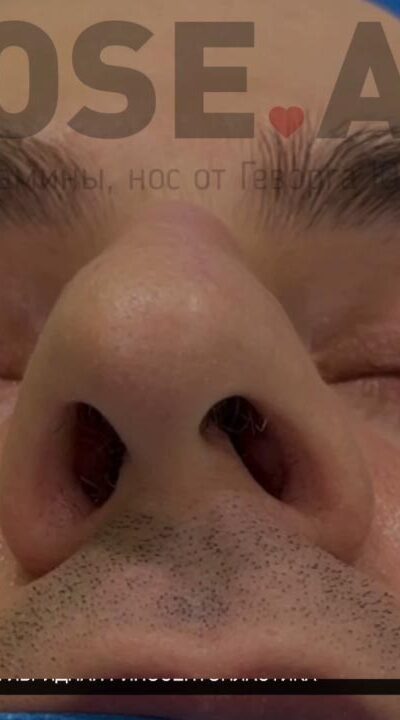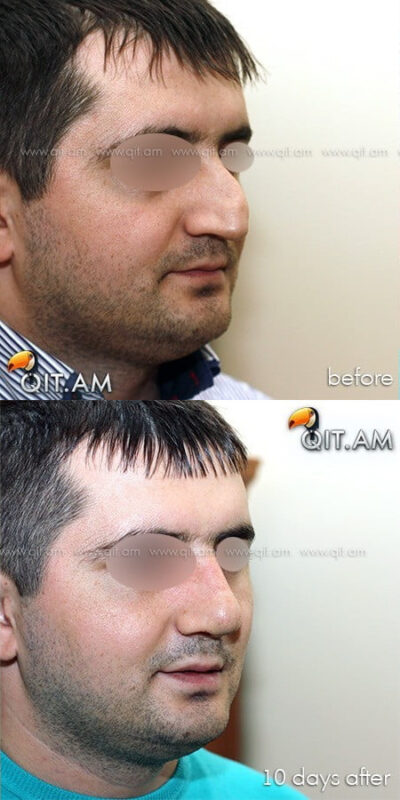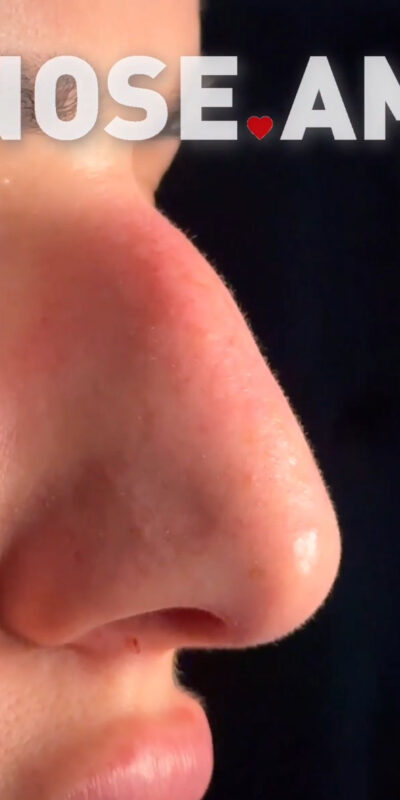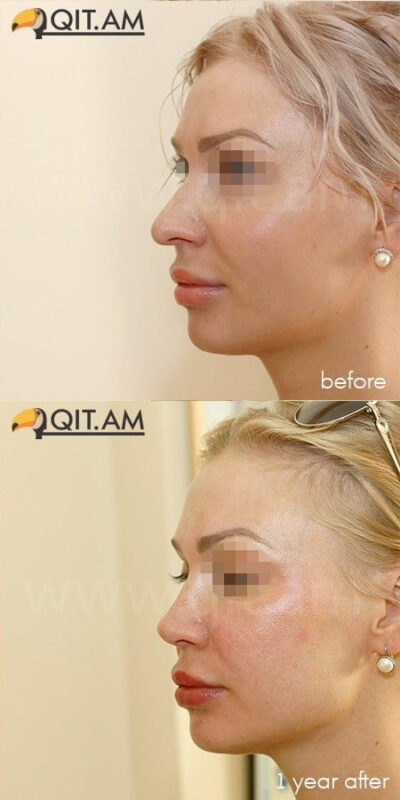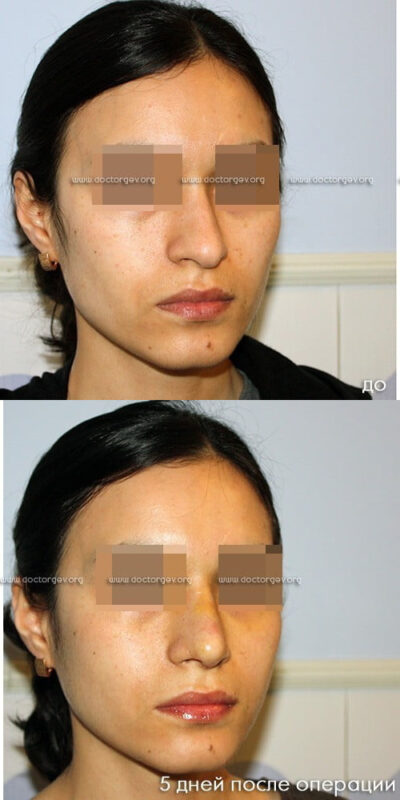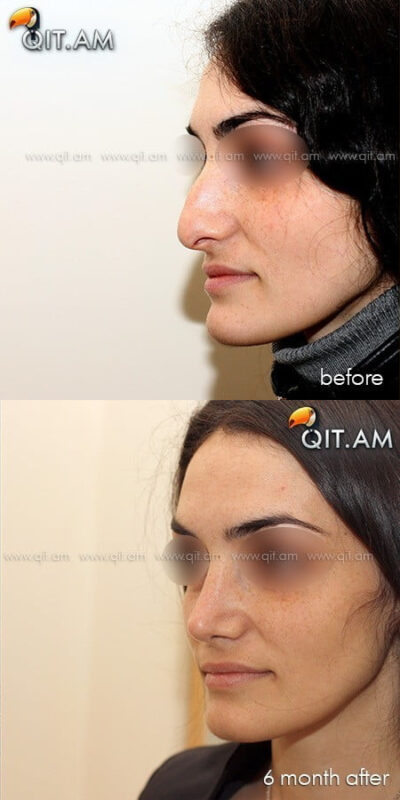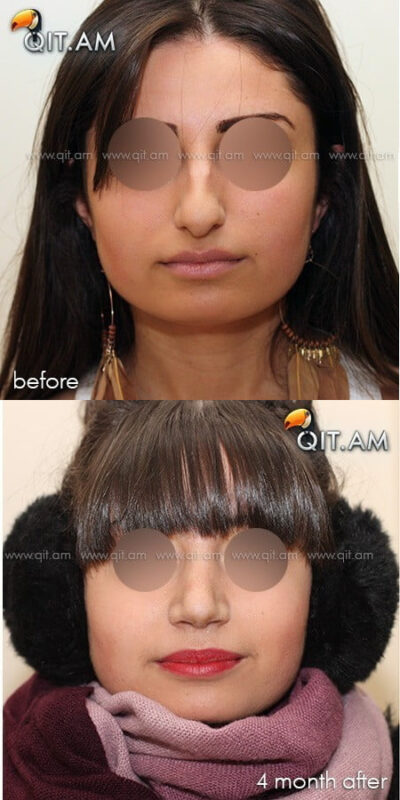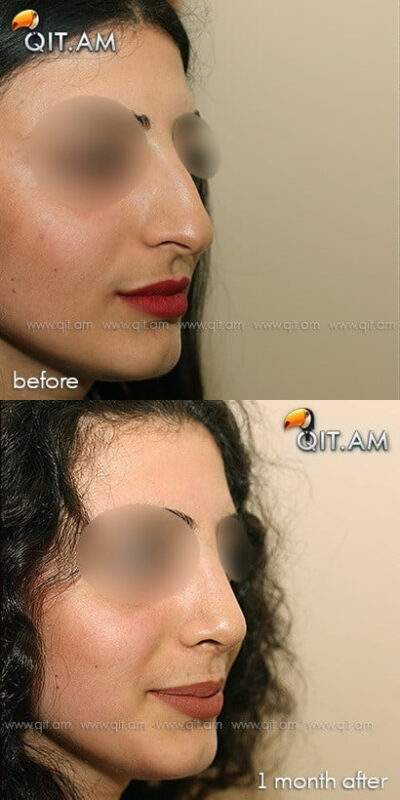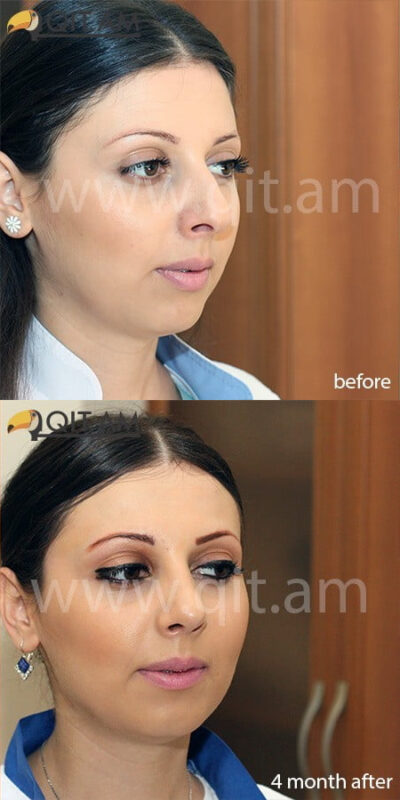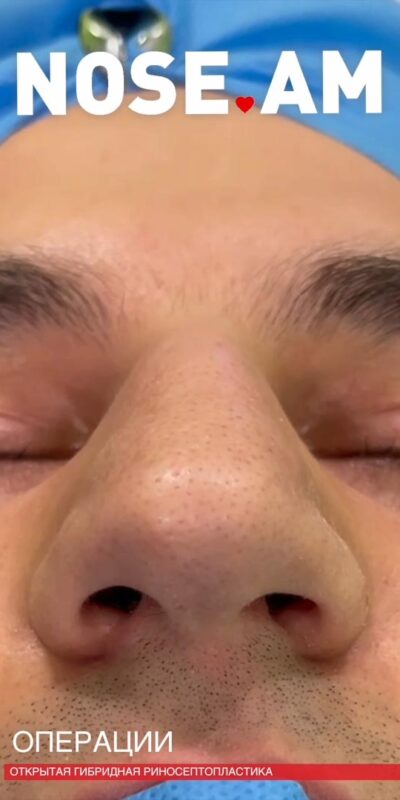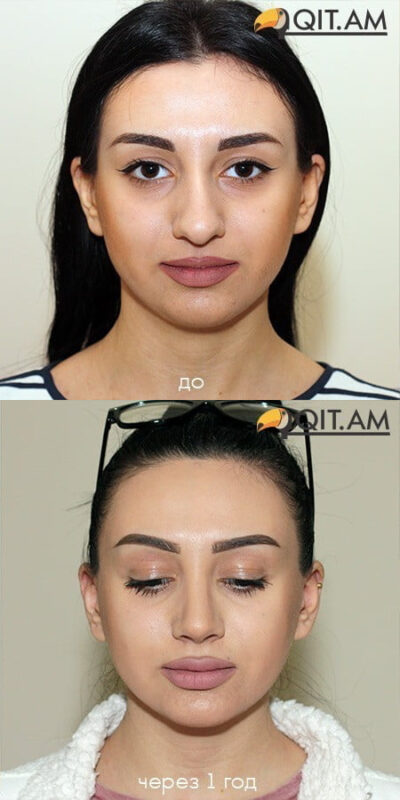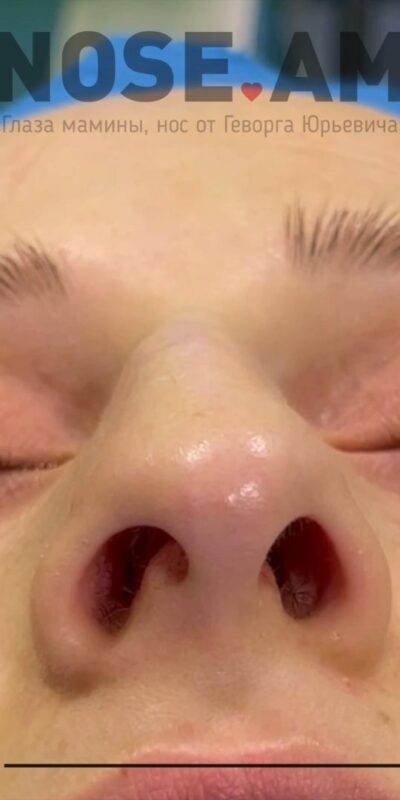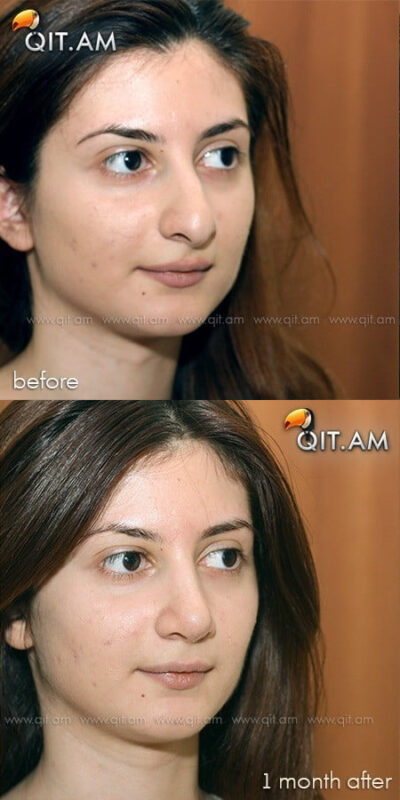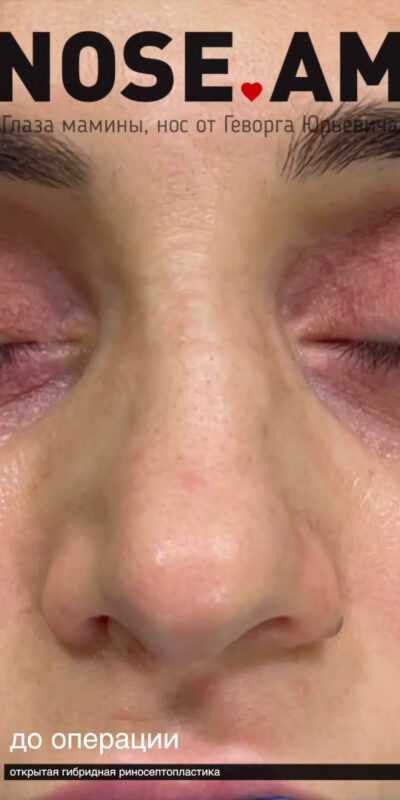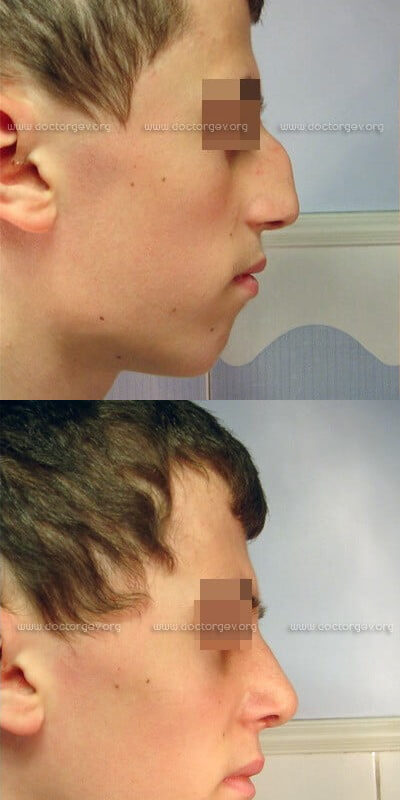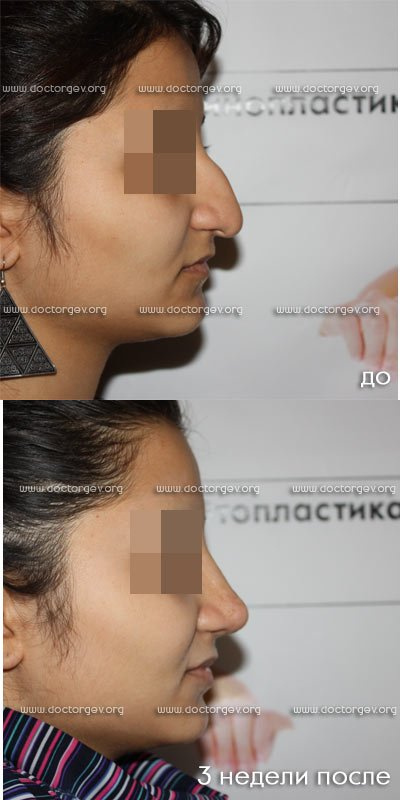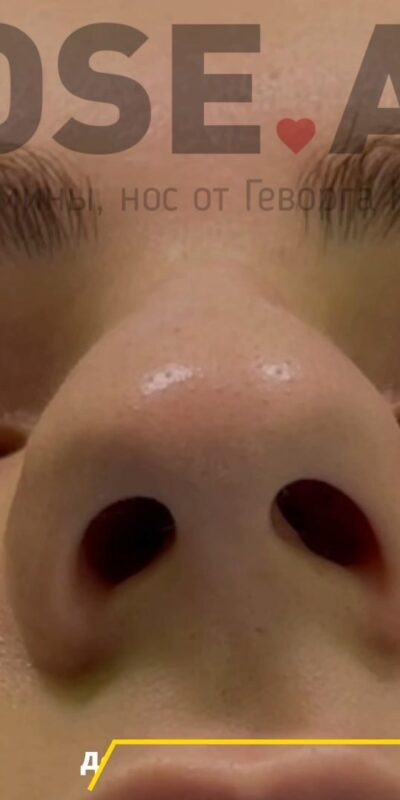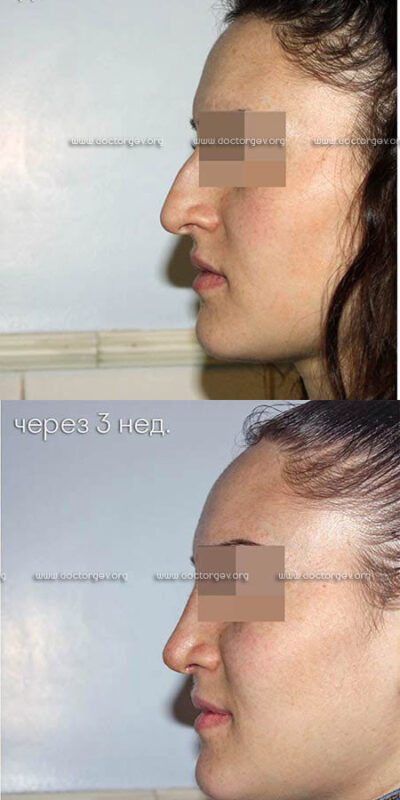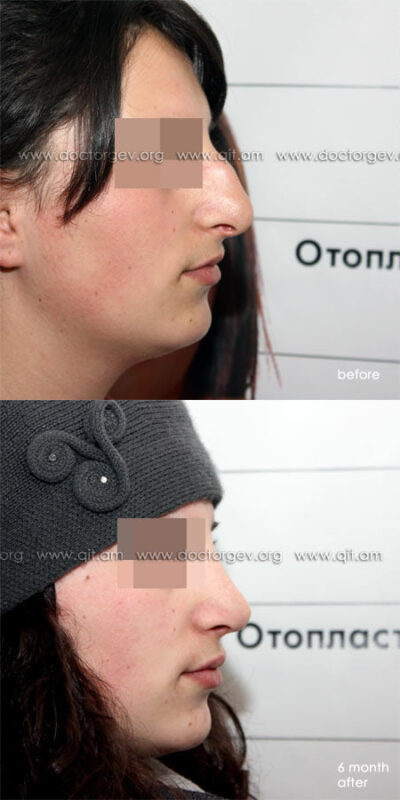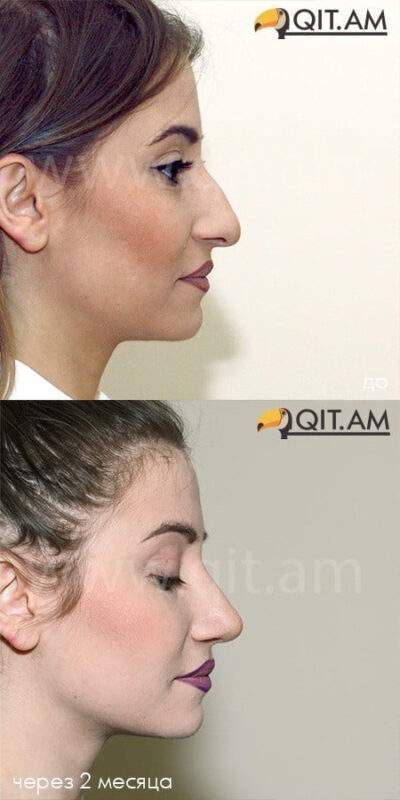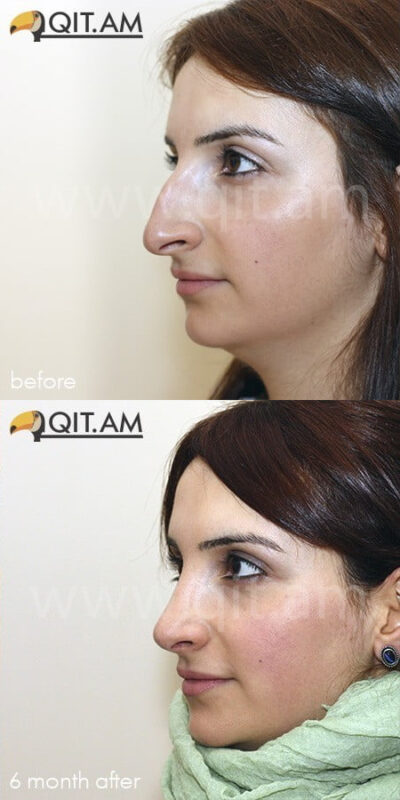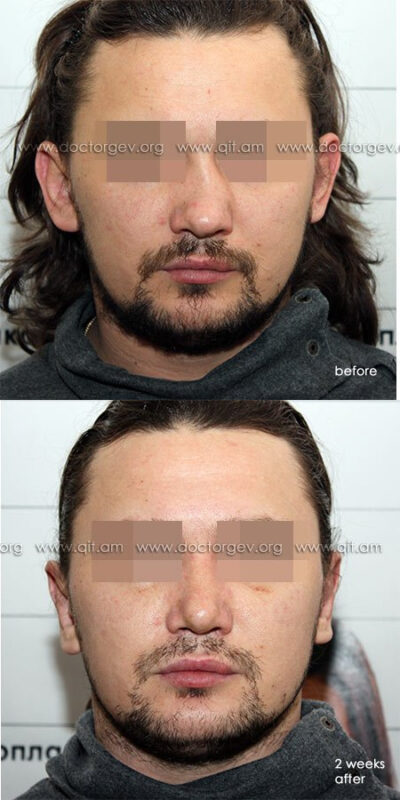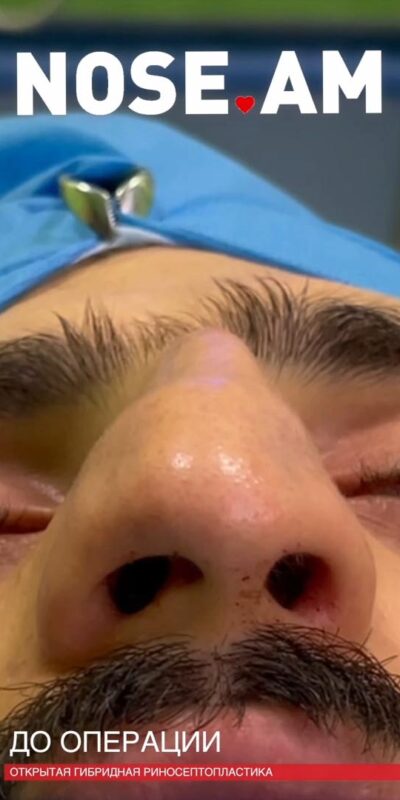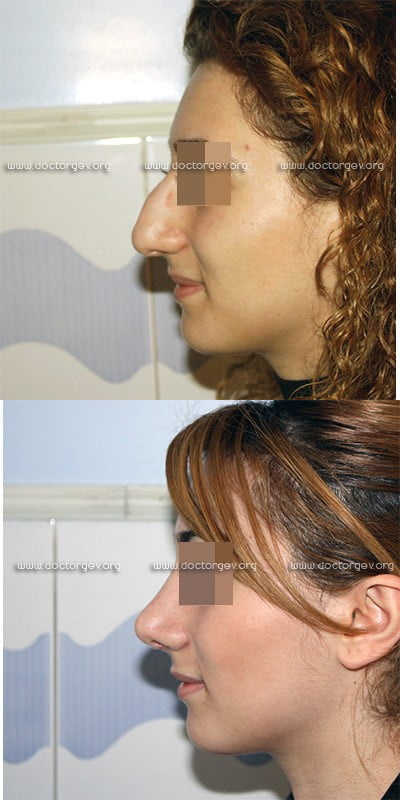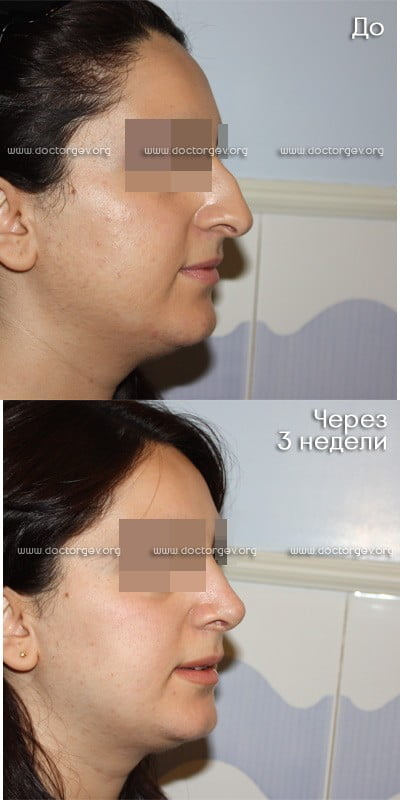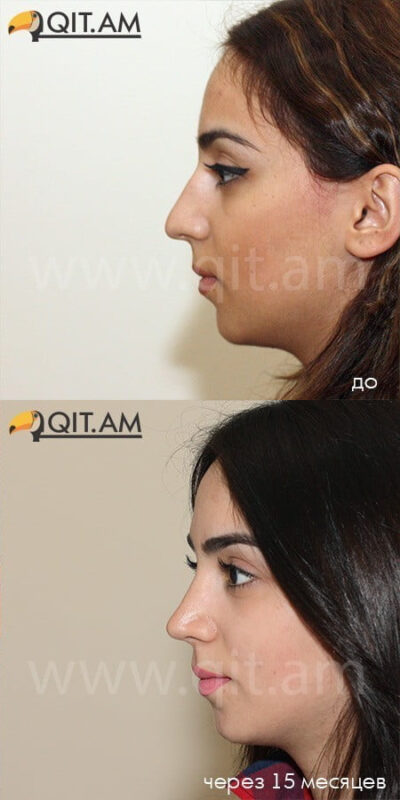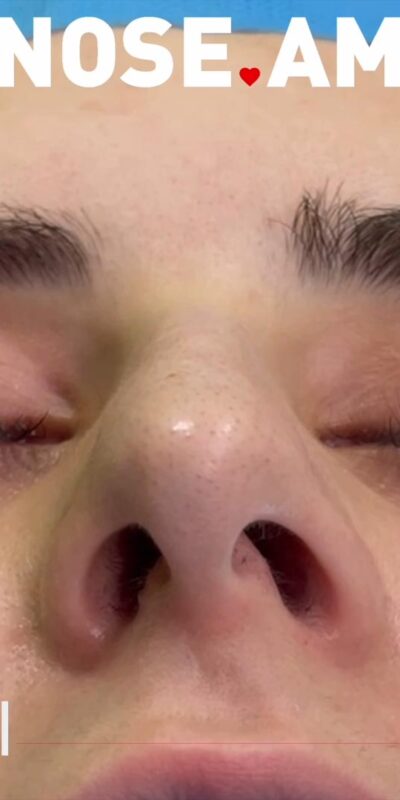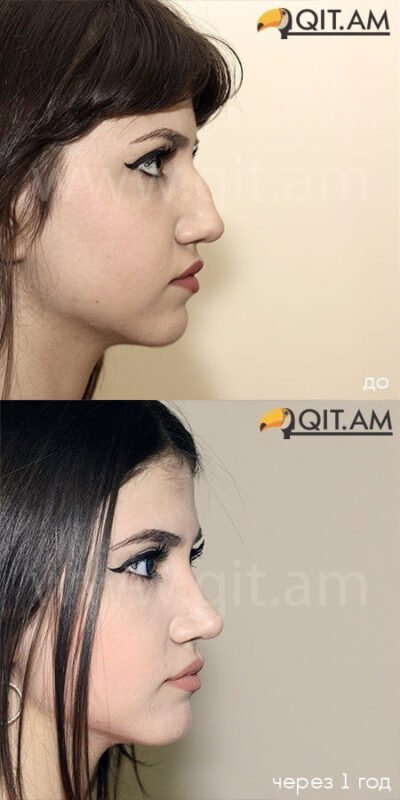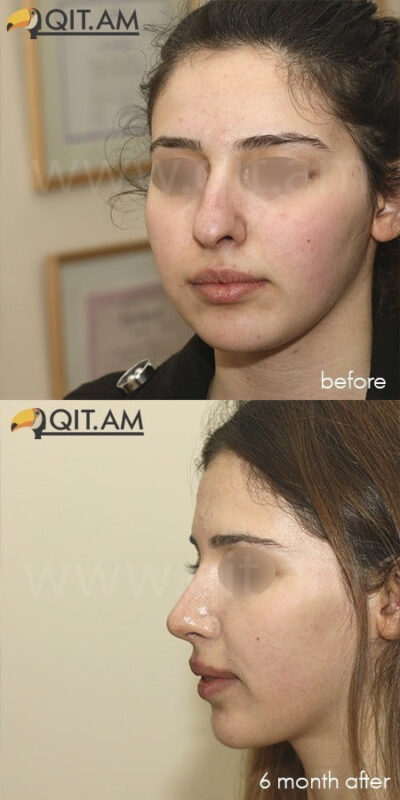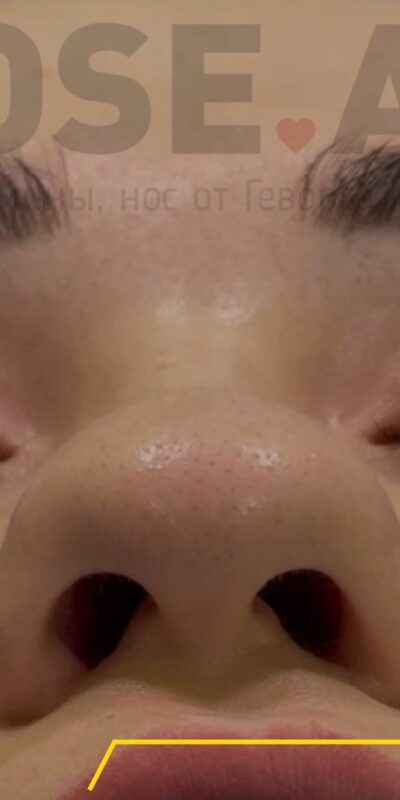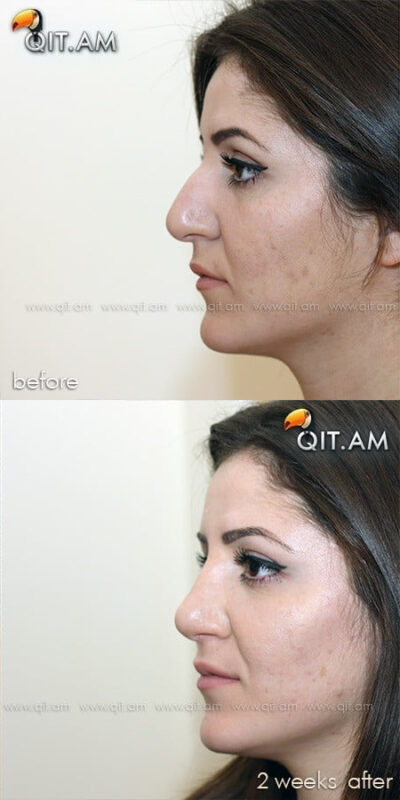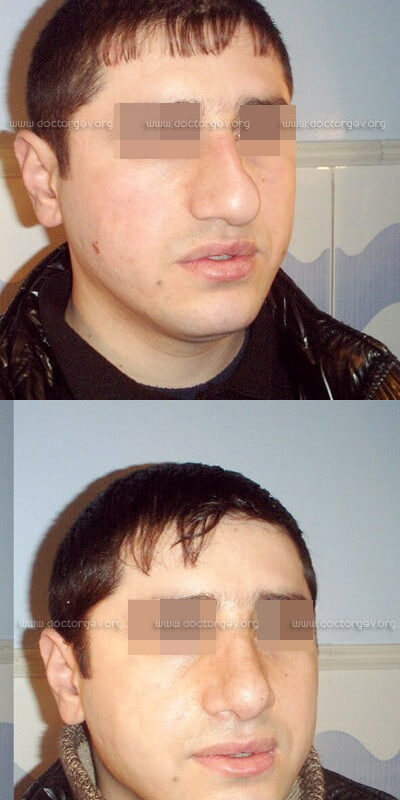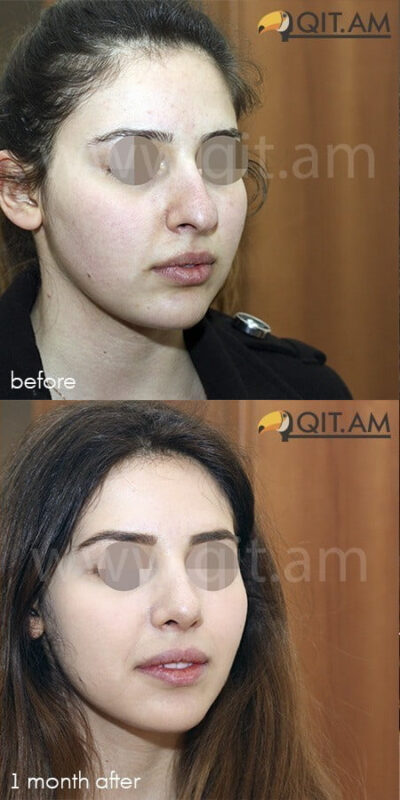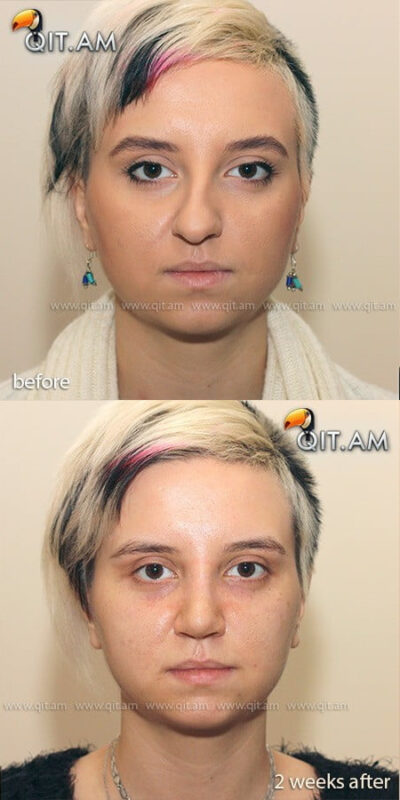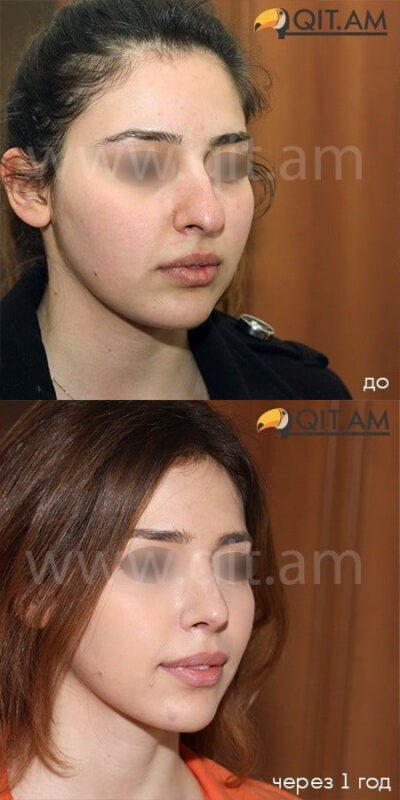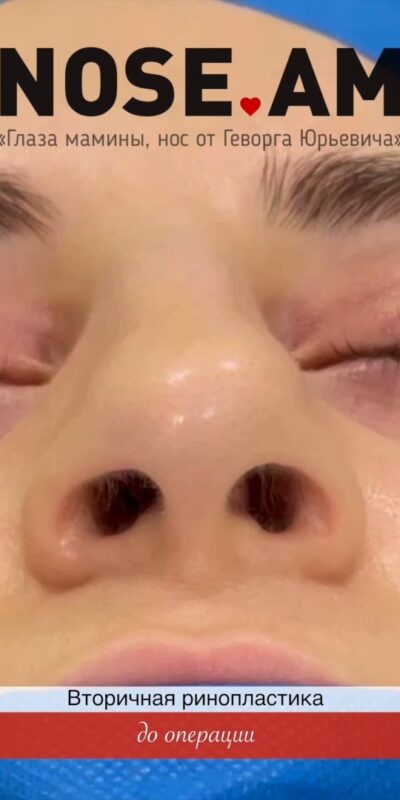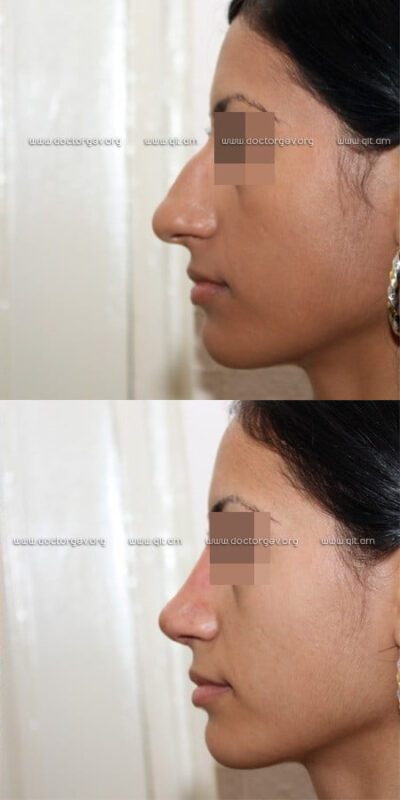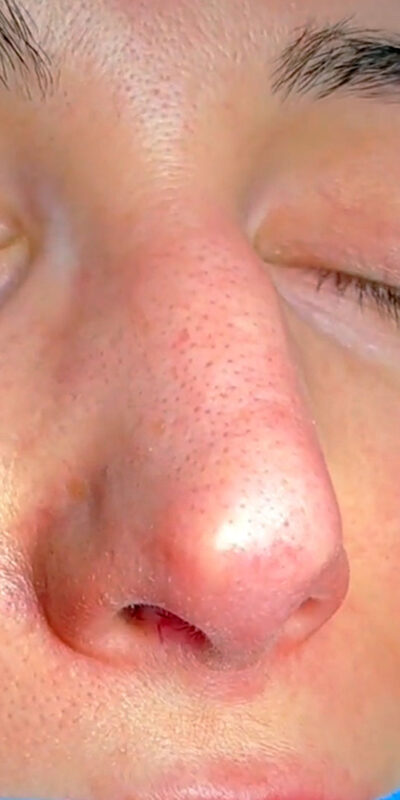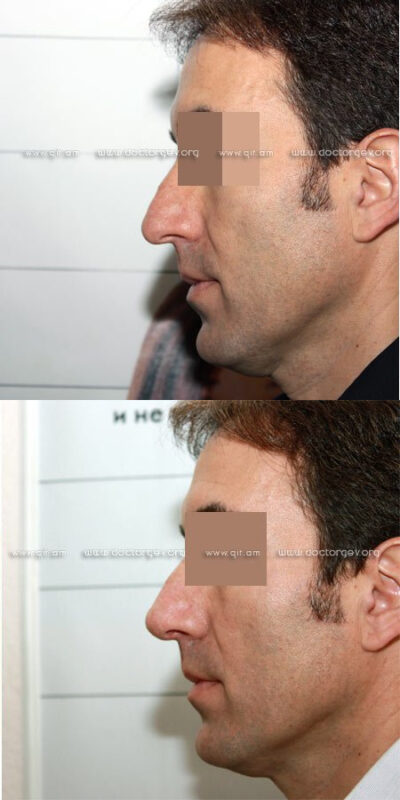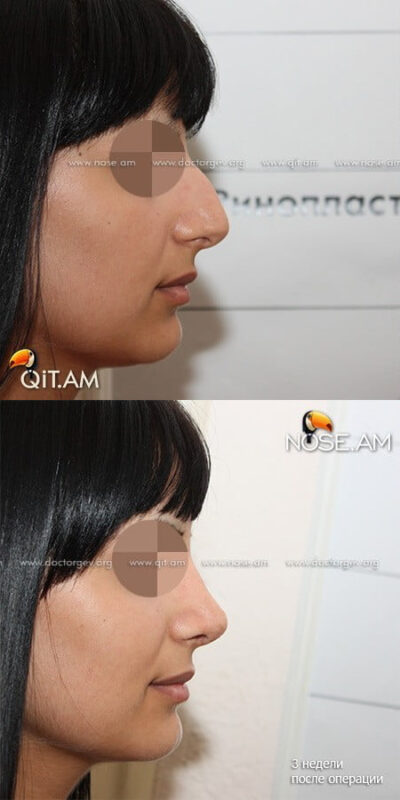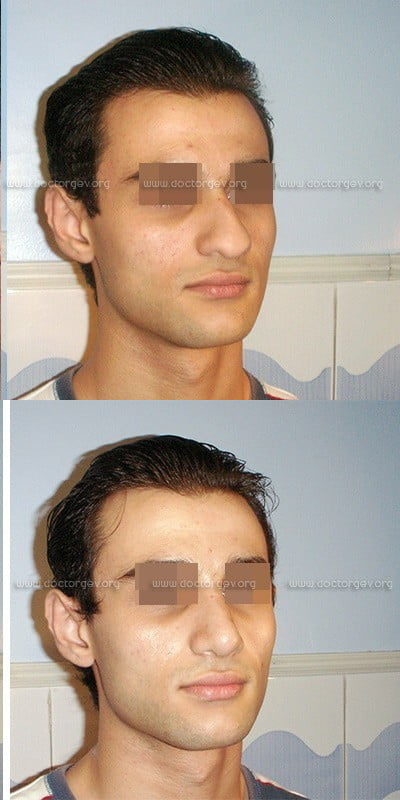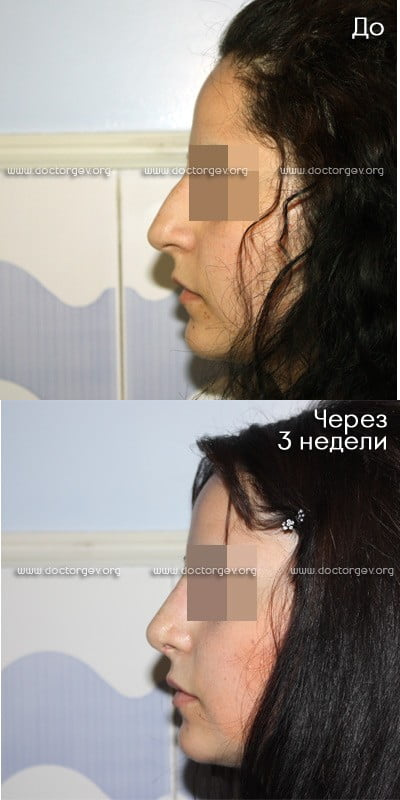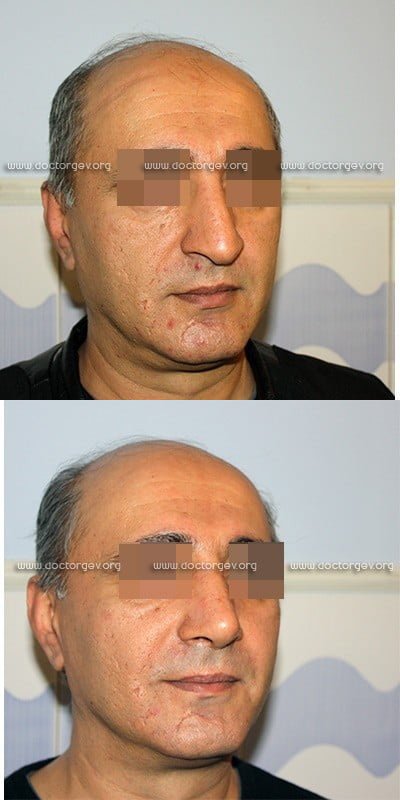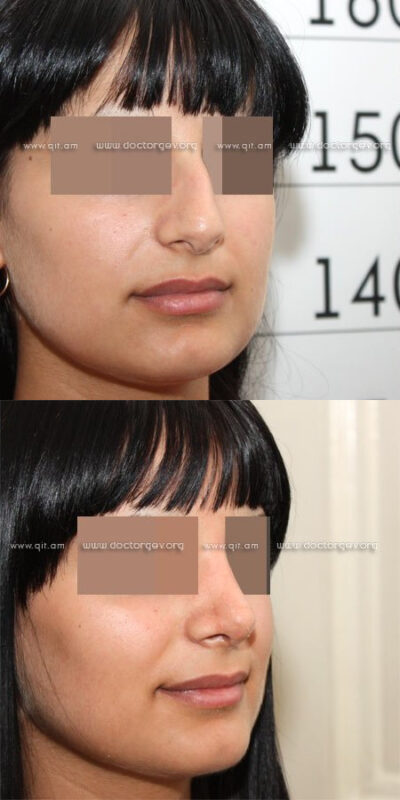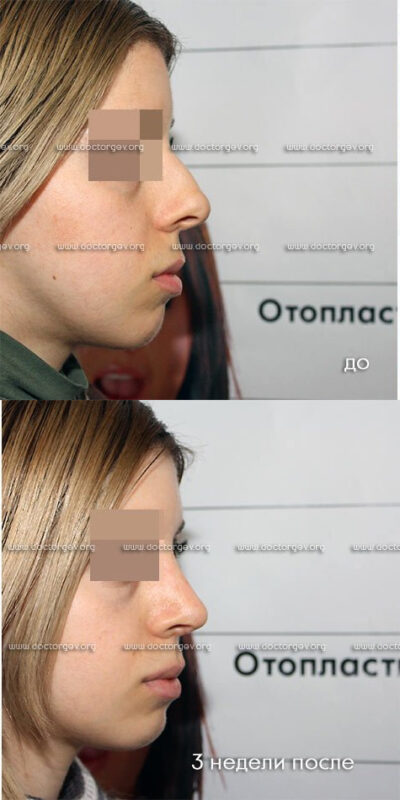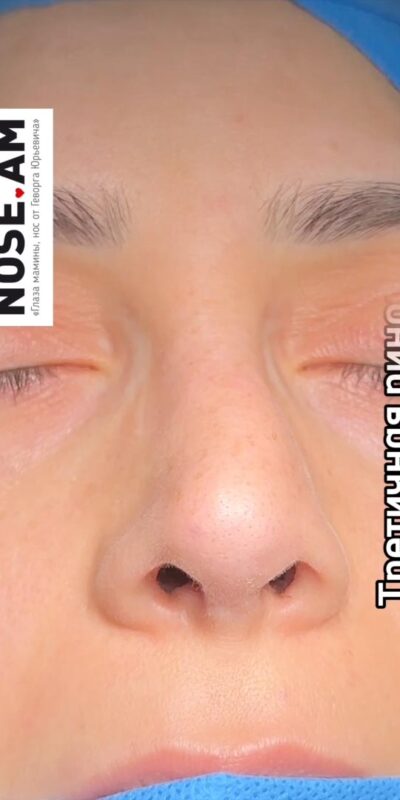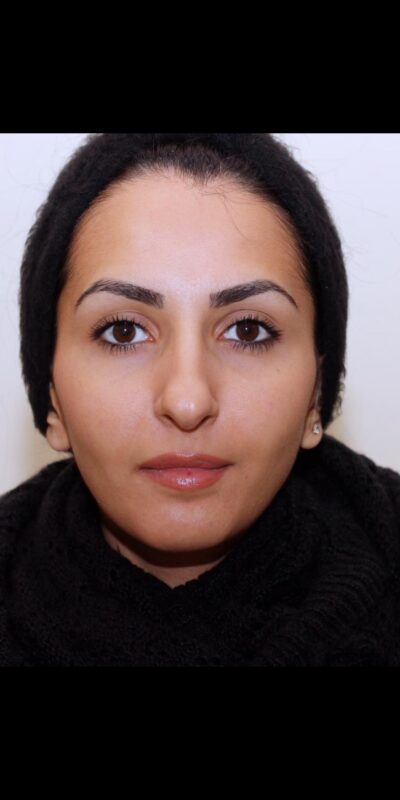

(from Ancient Greek ῥίς, gen. ῥινός — nose + πλαστική — plastic surgery) — is the correction of congenital or acquired nose deformities.
Rhinoplasty is an aesthetic surgery aimed at changing the size or shape of the nose. One of its main goals is the harmonious alteration of the nose shape with the mandatory preservation of individual facial features. Nose surgery can be performed both for medical indications, in the case of congenital defects or injuries, and for aesthetic reasons, when the patient is dissatisfied with the shape of their nose.
Rhinoplasty is indicated in the following cases:
- hump on the bridge of the nose
- excessively pointed or thickened nasal tip
- hooked nasal tip
- excessive length of the nose
- flared nostrils
- saddle nose deformity
- deviated nasal septum
- congenital and post-traumatic nose deformities
- impairment or complete impossibility of nasal breathing.
Contraindications to rhinoplasty
- age under 17 years (exceptions are possible in some cases; for example, in the case of trauma, rhinoplasty can be performed at an earlier age).
- age over 65 years (due to the increased risk of complications, as well as delayed tissue healing resulting from weakened regenerative processes).
- cardiovascular system diseases, in particular, coronary artery disease, heart failure, and arterial hypertension.
- pregnancy and the lactation period.
- atrophic rhinitis
- liver and kidney diseases
- diabetes mellitus
- blood coagulation disorders
- folliculitis in the area of the planned surgical intervention
- acne in the area of the planned surgical intervention
- acute viral diseases
- oncological diseases
- psychiatric disorders
- hepatitis B, C
- HIV