
A charming patient came to me seeking help to create softer and more harmonious facial features. During the initial aesthetic analysis, I immediately noted several anatomical nuances that I had to work with.
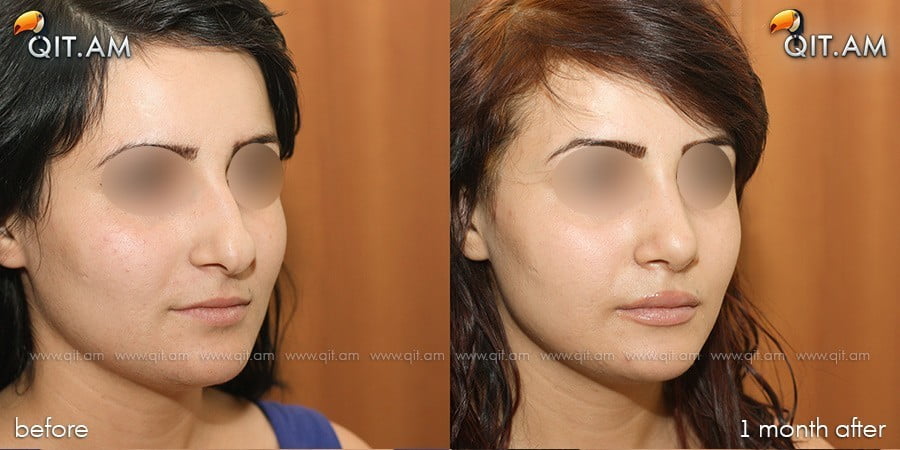
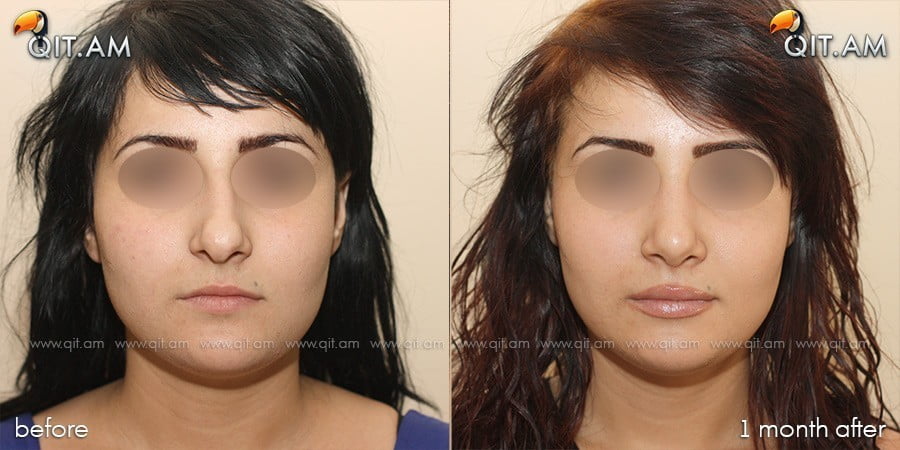
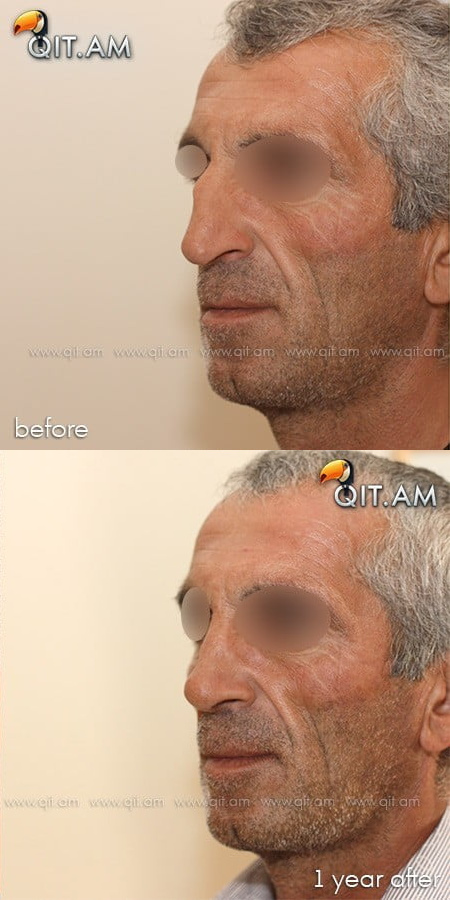
Initial picture and my observations:
- First and foremost, I noticed a pronounced hump and a fairly high nasal root.
- The nasal tip was wide, slightly massive, and had a pronounced tendency to droop (ptosis). This feature visually weighed down the middle third of the face and gave it a slightly tired, older appearance.
- In the frontal projection, a deviation of the nasal axis was clearly visible. Such asymmetry always indicates a deviated septum, due to which the young woman, as expected, experienced significant difficulties with nasal breathing.
- I also carefully assessed the quality of the patient’s skin — it turned out to be quite thick and porous. For me, as an operating surgeon, this is an important signal: thick skin conceals the definition, meaning I would need especially meticulous, jewelry-like work on forming a rigid internal cartilaginous framework so that the new tip turns out elegant and structured.
Surgical procedure:
My main goal was to perform a comprehensive rhinoseptoplasty — that is, not only to create an impeccable aesthetic profile but also to restore full function.
- First, I performed a septoplasty: straightened the nasal septum, clearing the airways.
- Then, I delicately lowered the bridge level, removing the hump.
- I paid special attention to working with the tip cartilages: I reassembled them, created a reliable support, rotated the tip upward, and narrowed it to overcome the resistance of the thick skin.
Result:
The photos show the result just 1 month after the surgery. Although the rehabilitation process is still ongoing (the swelling from the thick skin subsides gradually), the transformation is already obvious now:
- Function: I fully restored physiological nasal breathing.
- Aesthetics: The nasal axis is aligned, and the bridge has acquired a beautiful, straight, and noble contour. The tip of the nose has become neat, upturned, and harmonious.
Thanks to these changes, my patient’s face looks incredibly refreshed, the visual heaviness is gone, and the overall look has become lighter, more open, and refined. My patient now breathes freely and is absolutely happy looking at herself in the mirror. For me, this is the highest reward for the work done.
&description=&image=https://new.nose.am/wp-content/uploads/2026/07/115_case_2_preview.jpg)