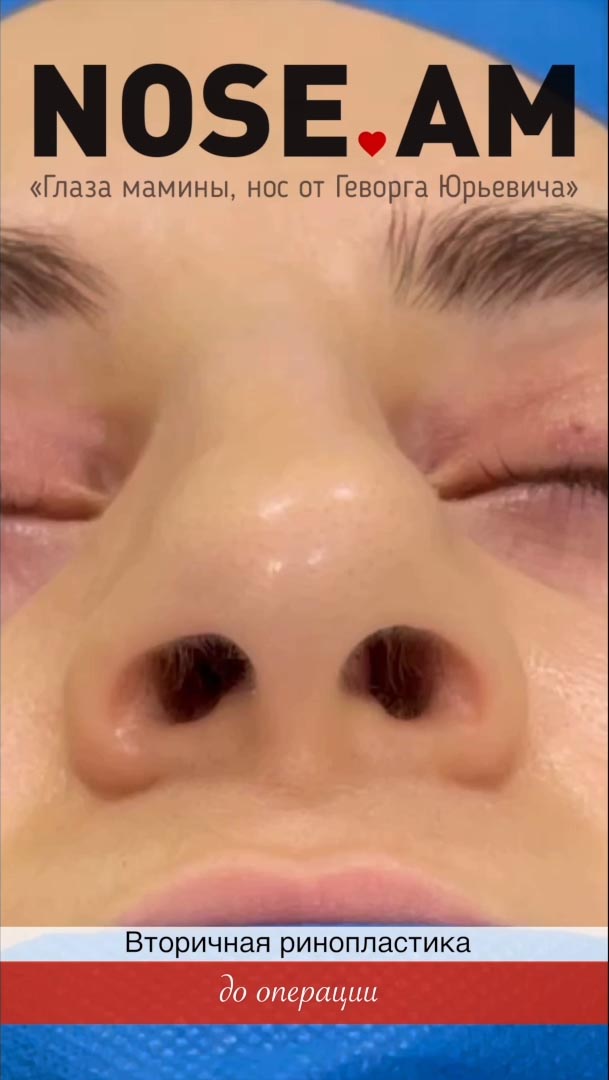

A young man came for help in correcting the shape of his nose with pronounced aesthetic complaints regarding the results of a previous plastic surgery. The main complaint was its excessive width. The patient noted that the nose looked massive, “blurry” on the face, and the tip seemed too flat and shapeless. In addition, he wanted to improve his nasal breathing, which was partially obstructed.
Secondary (revision) rhinoplasty is always a special challenge for a surgeon. The young woman was disappointed with the result of the previous intervention, which did not bring the desired aesthetics, disrupted the architecture of the nose and, as is often the case in such situations, led to difficulty in nasal breathing.
Initial anatomical features
A careful examination and analysis of the computed tomography scan, as well as a visual analysis of the “Before” picture, revealed a number of complex anatomical features that required a comprehensive approach:
- Nasal dorsum: It was too wide in both the bony and cartilaginous parts, and had visual irregularities and asymmetry.
- Nasal tip: Extremely wide, flat, with diverging cartilages, having lost its structural support. It had drooped and looked massive and shapeless, creating the effect of a “bulbous” tip without clear definition.
- Nostrils and nasal alae: Very wide, with pronounced “flaring”, which further emphasized the overall width of the nose.
- Internal structure: A deviated nasal septum was identified, exacerbated by the formation of subcutaneous scar tissue (fibrosis) after the first surgery. The situation was complicated by dense, porous, and rather thick facial skin, which tends to conceal the refinement of lines.
My main task was to perform an open hybrid rhinoseptoplasty to radically narrow the nose, rebuild a reliable internal framework from scratch, and at the same time maintain reliable support for the soft tissues.
Course of the surgery
Given the scale of the work, I chose an open approach, which provides a full view of the anatomical structures under conditions of altered anatomy and allows for the delicate excision of scar tissue. Working with thick skin is always a piece of jewelry work (meticulous task) that requires the creation of a powerful structural support.
My work included the following steps:
- Functional correction (Septoplasty): I corrected the deviation of the nasal septum, eliminating the cause of the breathing difficulty. I preserved the obtained cartilaginous material for subsequent reconstruction.
- Narrowing the bony vault: I performed precise osteotomies for the controlled approximation of the bones, which allowed for a significant narrowing of the upper third of the nose.
- Reconstruction and narrowing of the cartilaginous section: I narrowed the cartilaginous part of the dorsum and formed a new, narrower, and more detailed framework for the tip. I used special suturing techniques and cartilage grafts from the patient’s own septum to create definition and support. This made it possible to “assemble” the tip under the dense skin envelope.
- Correction of the nasal alae: To eliminate the “flaring” and achieve the final narrowing of the nasal base, I performed an alar base resection. This is a critical step to achieve aesthetic balance.
Result
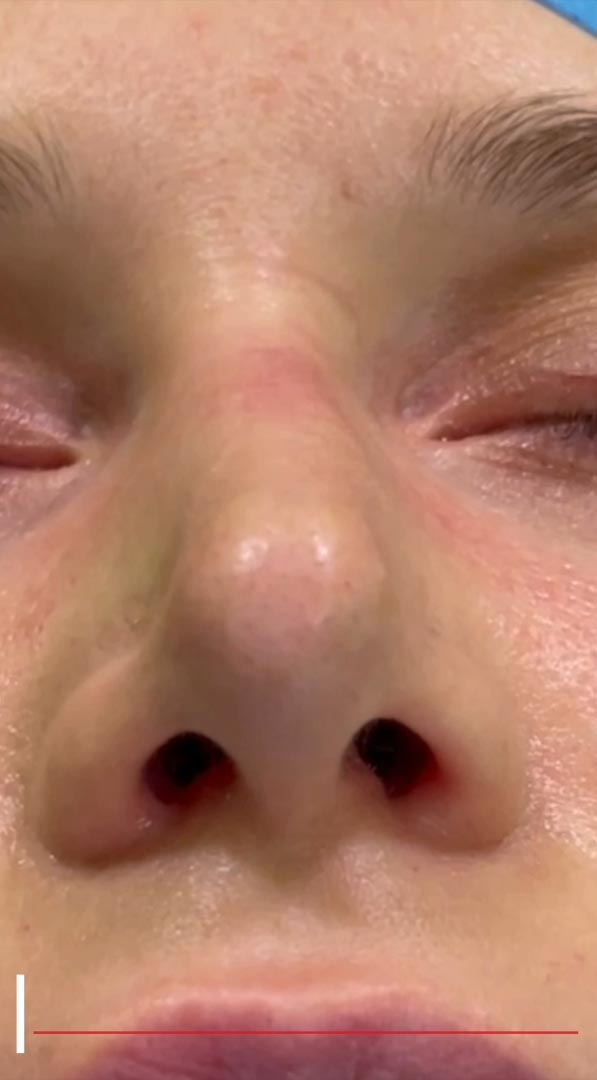
In the “After” footage, taken still in the operating room (the tissues are understandably hyperemic and reddened), the new aesthetics are already evident. The result of the surgery exceeded all of the patient’s expectations. We achieved what we were striving for: the nose became significantly narrower along its entire length. The straight, defined nasal dorsum now harmoniously transitions into a well-defined, detailed, slightly elevated, and refined tip. The base of the nose became more compact, and the nostrils acquired a neat shape without excessive “flaring”. The proportions of the face changed instantly: it began to look more open, light, and fresh. The patient was extremely satisfied with the aesthetic result and the fact that his breathing became free. In his own words, this chiseled nose gave his face a more noble and balanced look, confirming the effectiveness of Gevorg Yuryevich’s method.