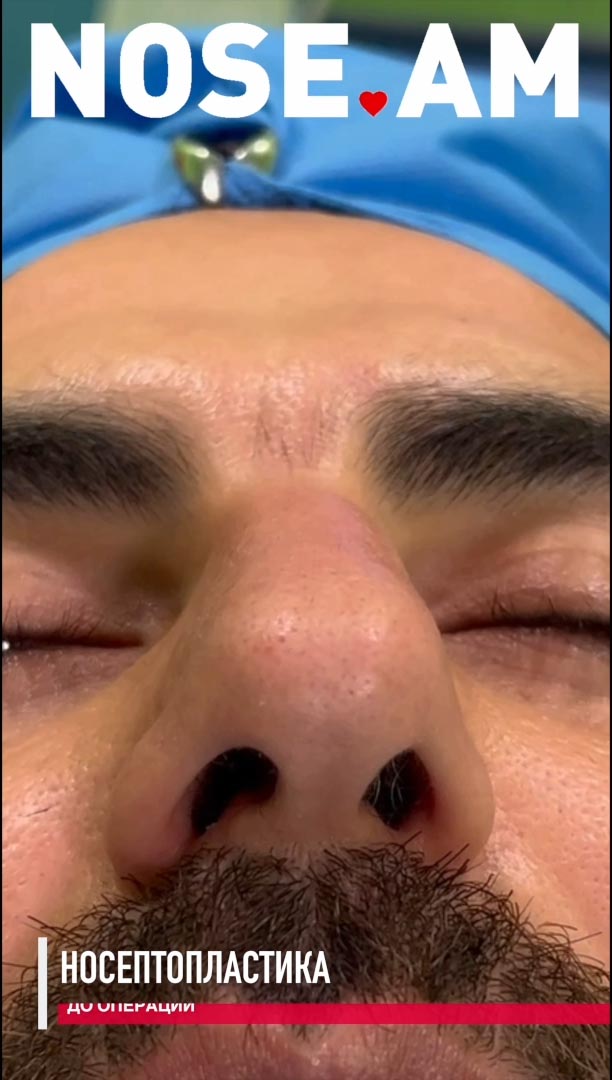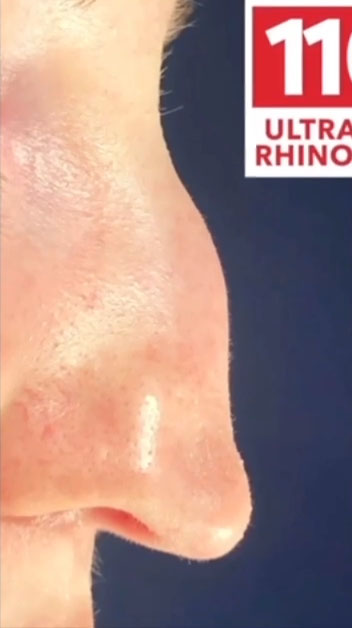

A young man presented for an initial consultation with pronounced aesthetic complaints regarding the shape of his nose. His primary concern was its excessive width. The patient noted that his nose looked massive and “spread out” on his face, while the tip seemed too flat and shapeless. In addition, he wanted to improve his nasal breathing, which was partially obstructed.
Initial anatomical features
A careful examination and analysis of the computed tomography scan revealed a series of complex anatomical features that required a comprehensive approach:
- Nasal dorsum: Was excessively wide in both the bony and cartilaginous sections.
- Nasal tip: Extremely wide, flat, with diverging cartilages, creating a “bulbous” tip effect without clear definition.
- Nostrils and nasal alae: Very wide, with pronounced “flaring”, which further emphasized the overall width of the nose.
- Internal structure: A deviated nasal septum was identified, confirming the breathing complaints and necessitating functional correction.
My main objective was to perform an open hybrid rhinoseptoplasty to radically narrow the nose, create defined contours, and simultaneously preserve reliable support for the soft tissues.
Surgical procedure
Given the extent of the work, I opted for an open approach, which provides a full view of the anatomical structures and allows for precise, controlled manipulations. The procedure included the following stages:
- Functional correction (Septoplasty): I corrected the deviated nasal septum, eliminating the cause of the breathing difficulties. The harvested cartilage material was preserved for subsequent reconstruction.
- Narrowing the bony vault: I performed precise osteotomies for the controlled convergence of the nasal bones, allowing for a significant narrowing of the upper third of the nose.
- Reconstruction and narrowing of the cartilaginous vault: This was the most labor-intensive stage. I narrowed the cartilaginous part of the dorsum and created a new, narrower, and more detailed tip framework. I utilized special suturing techniques and cartilage grafts from the patient’s own septum to provide definition and support. This allowed me to “assemble” the tip, making it more refined and less “spread out”.
- Correction of the nasal alae: To eliminate the flaring and achieve the final narrowing of the nasal base, I performed an alar base resection. This is a critical step in achieving aesthetic balance for patients with wide noses.
Result
The outcome of the surgery exceeded all of the patient’s expectations. We achieved our goals: the nose became significantly narrower throughout its entire length. The straight, clear nasal dorsum now harmoniously transitions into a well-defined, detailed tip. The nasal base became more compact, and the nostrils acquired a neat shape without excess “flaring”. The patient was highly satisfied with the aesthetic result and the fact that his breathing became free. In his own words, this refined nose gave his face a more noble and balanced appearance, confirming the effectiveness of Dr. Gevorg Yuryevich’s method.