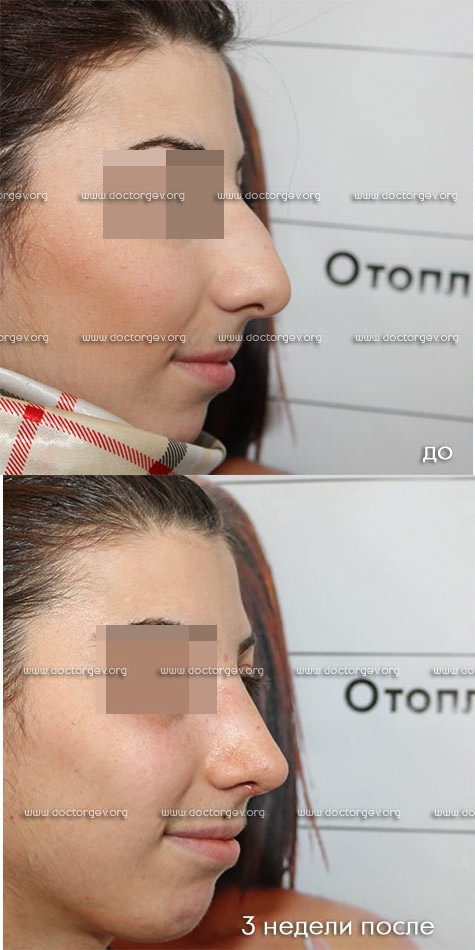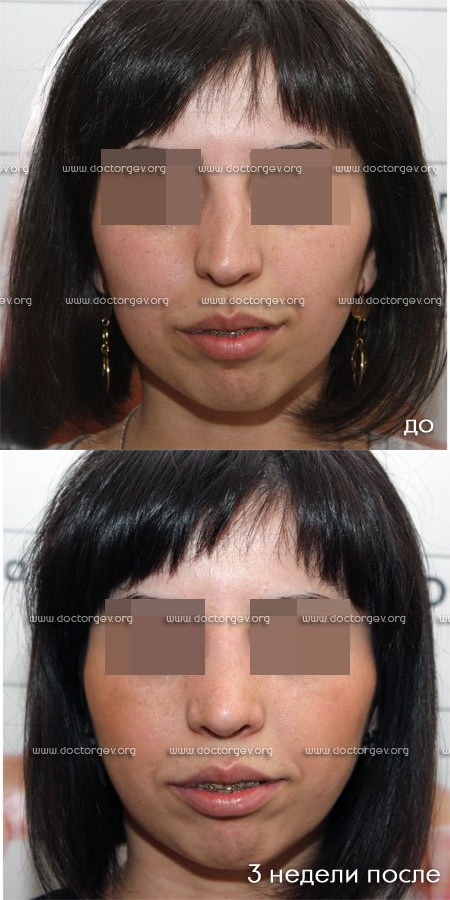

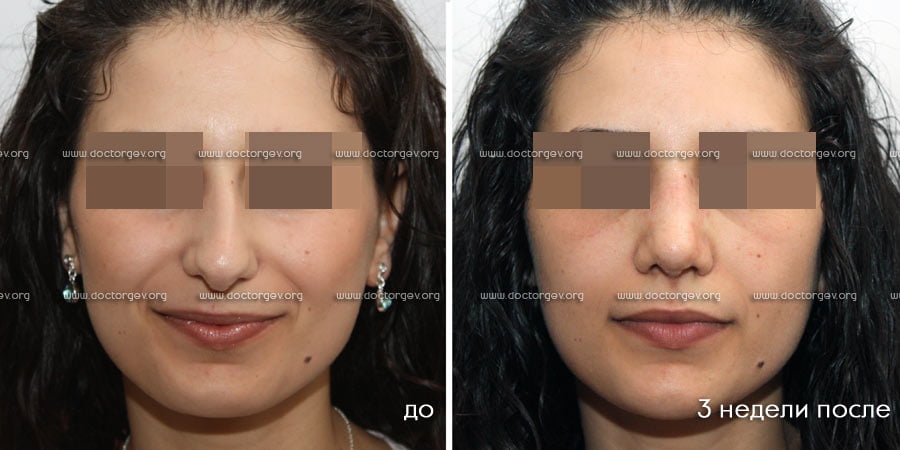
A young woman scheduled an appointment, complaining of a pronounced nasal curvature. The asymmetry was clearly visible in the full-face view, causing the patient significant psychological discomfort. In addition, the severe deviation of the internal structures understandably led to problems with respiratory function—one of the nasal passages was virtually uninvolved in the airflow.
Initial Anatomical Baseline (Before)
Upon analyzing the face from the front, I identified a complex, combined deformity:
- Nasal axis: There was a pronounced C-shaped deviation of the entire nasal pyramid, shifted from the facial midline.
- Dorsum of the nose: Due to the curvature of the cartilaginous and bony parts, light reflections were distributed unevenly, visually making the nose appear wider and more deformed.
- Nasal tip: It was displaced to the side and featured an asymmetrical shape of the alar cartilages, disrupting the balance of the lower third of the face.
Course of the Operation and Surgical Objectives
My primary goal was to restore the nose to a strictly central position, achieving ideal facial symmetry, while simultaneously fully normalizing nasal breathing.
Working with a deviated nasal axis always requires jewelry-like precision from the surgeon. As a first step, I performed a simultaneous septoplasty—straightening and reinforcing the cartilaginous septum. Then, I carried out a careful repositioning of the bony structures, returning the nasal dorsum to its correct anatomical position. The final stage involved delicate reshaping of the tip cartilages: I centered it and eliminated the asymmetry, creating smooth, harmonious contours.
Result 3 Weeks Post-Op
The photograph on the right shows an early result—only three weeks have passed since the surgical intervention. At this stage, natural postoperative swelling still persists in the tissues (especially in the supratip area and the dorsum), which is why the nose currently looks slightly puffy. Over the coming months, the swelling will completely subside, the skin will contract, and the contours will become even more refined and chiseled.
Nevertheless, a wonderful therapeutic and aesthetic outcome is already visible now:
- The nasal axis is perfectly straight, and it is positioned strictly in the center. The previous asymmetry has disappeared.
- The dorsum has become smooth, and the nasal tip has taken on a neat, proper shape.
- The patient’s face has begun to look more harmonious and softer.
Respiratory function has been fully restored, and even at this early stage, the young woman is genuinely delighted with her transformation.