
A female patient approached me for an initial consultation with a complex and delicate request — she needed secondary rhinoplasty. The previous intervention did not yield the desired aesthetic result, and the young woman experienced severe psychological discomfort due to the disharmony of her facial features.
Initial Anatomical Features
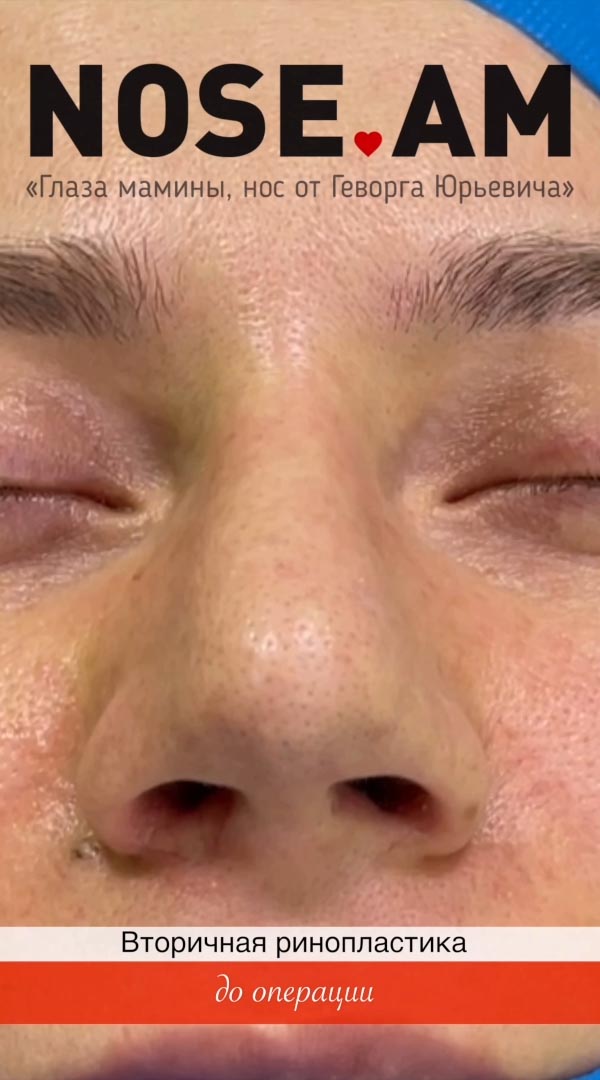
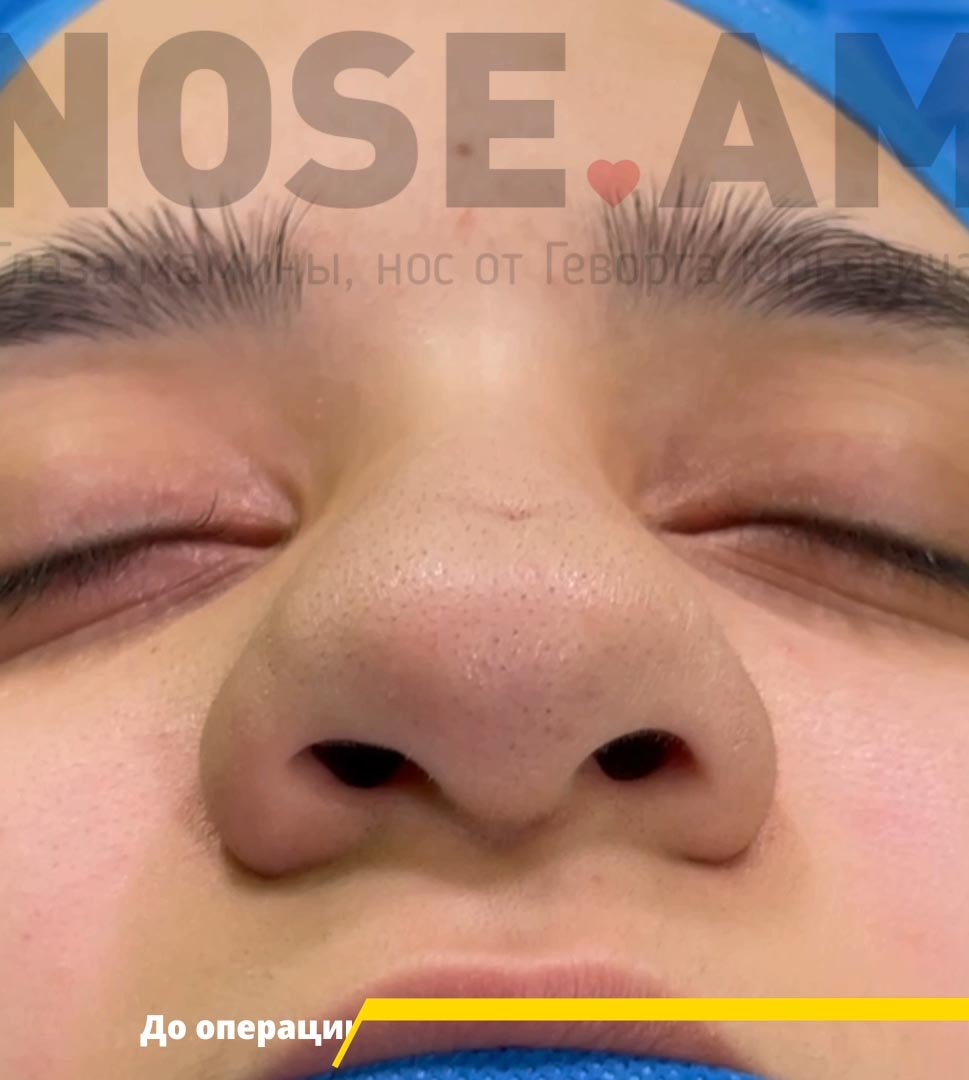
During the initial examination (the “Before” photo), I thoroughly evaluated the baseline situation. I noted deformation and asymmetry: the nasal tip was insufficiently defined, wide, and lacked graceful structure. The nasal dorsum also required careful correction. The situation was complicated by the patient’s thick skin and, most importantly, the presence of scar tissue from the first surgery. As a surgeon, I understood that we were facing a complex reconstructive procedure, where we needed not only to improve aesthetics but also, with a high degree of probability, restore full nasal breathing that had been previously impaired.
Surgical Procedure
Secondary rhinoplasty is always a true challenge. My main objective was to rebuild a reliable cartilaginous framework within altered anatomy. The open approach allowed me to visualize all damaged structures and perform the work with surgical precision. Due to the characteristics of the patient’s skin, I had to apply a special approach when shaping the nasal tip so that it turned out refined while maintaining proper projection and support for years to come.
Results
The “After” result speaks for itself. I aligned the nasal axis, formed an ideally smooth, refined dorsum, and created a neat, slightly elevated tip with beautiful highlights and shadows. The patient’s face was instantly transformed — it began to look fresher, softer, and more harmonious, and the heaviness in the middle third of the face disappeared. We successfully addressed the consequences of the previous surgery, restoring not only unobstructed breathing to the young woman, but also confidence in her beauty. Seeing my patient’s happy eyes is the best reward for this challenging surgical journey.