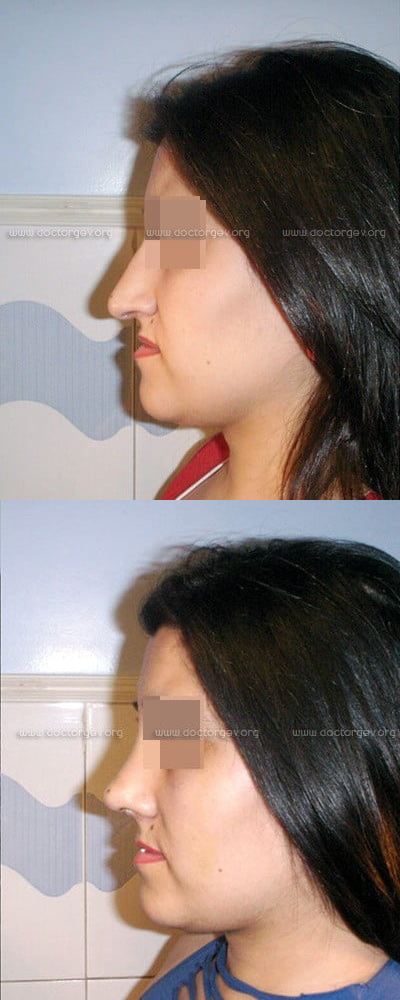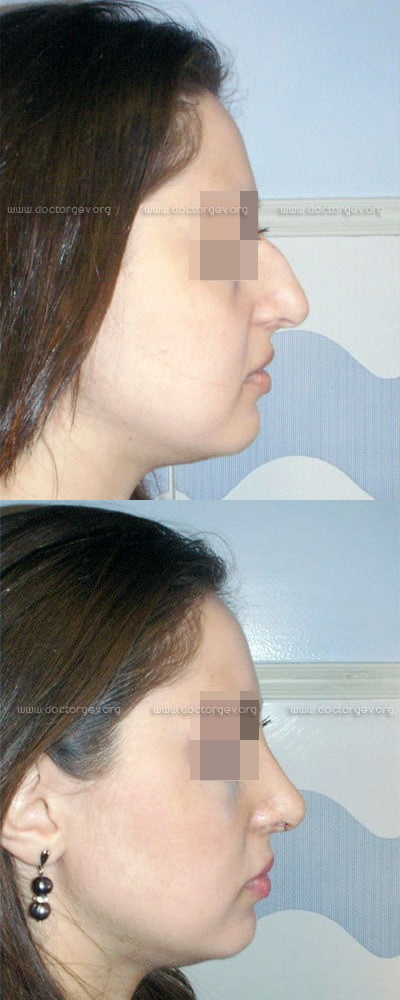

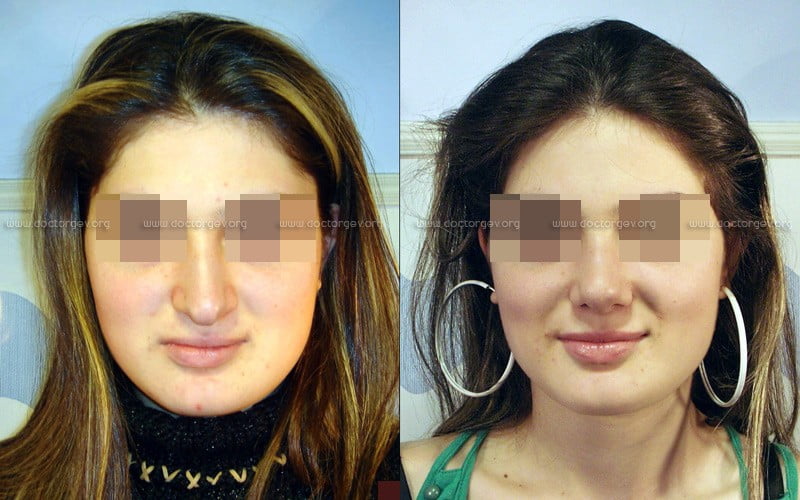
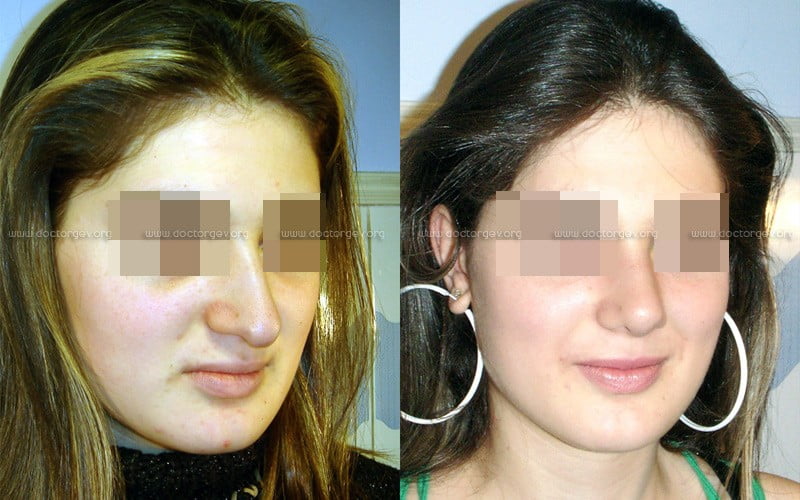
A young female patient presented for a consultation with pronounced aesthetic and functional complaints. She was concerned about severe nasal asymmetry, the presence of a hump, and the fact that the nasal tip appeared overly droopy and “heavy.” In addition to visual discomfort, the clear deviation of the nasal axis indicated a concomitant impairment of nasal breathing, which was fully confirmed during the examination.
Initial Anatomical Picture (Before Surgery)
When analyzing the patient’s face in frontal and three-quarter views, I identified several key features that required complex structural work:
- Nasal axis and septum: The frontal photograph clearly shows a pronounced deviation of the nasal bridge and tip from the central axis. Such a deformity is always accompanied by a severe deviation of the cartilaginous septum, which caused the patient to experience constant difficulties with proper breathing.
- Nasal tip: It was severely drooped downwards (pronounced tip ptosis). Combined with the excessive length of the nose, this created a hooked silhouette that visually weighed down the middle third of the face and added age to the young girl, making her facial expression look overly stern.
- Nasal bridge: It had an uneven contour with a large osteocartilaginous hump, stripping the profile of its femininity.
Objectives and Course of the Operation
My primary goal was to restore the nose to its correct anatomical position, completely restore respiratory function, and make the facial features softer, gentler, and more harmonious.
The surgery included the following stages:
- Septum reconstruction (Septoplasty): I completely aligned the internal nasal structures, correcting the cartilage deformity. This laid a solid, straight foundation for the new aesthetics and cleared the airways.
- Hump removal and centering: I carefully removed the excess bone and cartilage tissue on the nasal bridge, then performed an osteotomy to narrow and align the nose strictly along the central axis of the face.
- Derotation and tip modeling: To rid the patient of the “beak effect,” I elevated (derotated) the nasal tip, slightly shortened it, and securely fixed it in the new position, forming an elegant, open nasolabial angle.
Aesthetic and Functional Result
The “After” photographs clearly show a colossal difference in the perception of the face:
- The nose became absolutely straight, symmetrical, and even along its entire length.
- By eliminating the severe drooping of the nasal tip and the hump, we achieved a neat, feminine profile. The patient’s face was instantly transformed — the former heaviness vanished, and the look began to appear much fresher, lighter, and younger.
- Nasal breathing was 100% restored, freeing the young woman from constant discomfort.
The result turned out to be harmonious and natural — the new nose perfectly accentuated the patient’s natural beauty, and she is completely satisfied with her reflection in the mirror.