
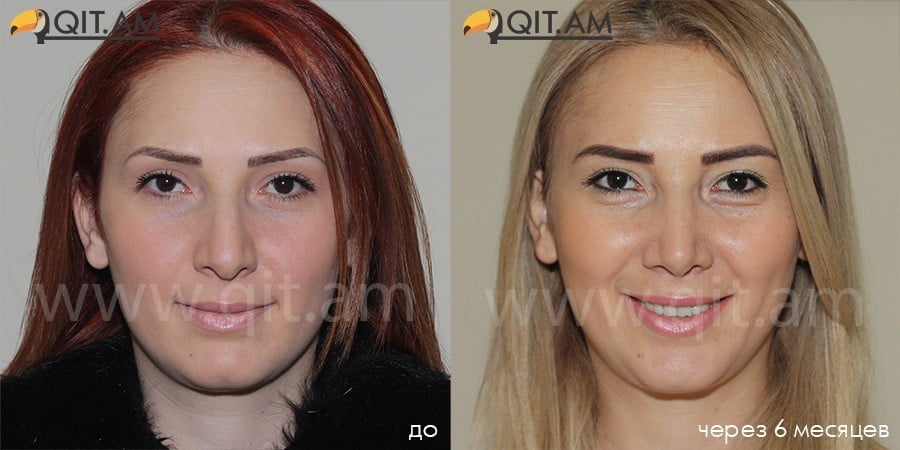
A young woman came to me dreaming of making her appearance softer, more harmonious, and feminine. The main aesthetic concern that troubled her was a large, dominant nose with a prominent hump and a heavy tip. In addition, during the examination, I revealed a pronounced disruption of the architectonics of the internal nasal structures: a deviated septum obstructed the free flow of air, causing the patient to suffer from breathing difficulties for years.
Initial Anatomical Presentation (Before surgery):
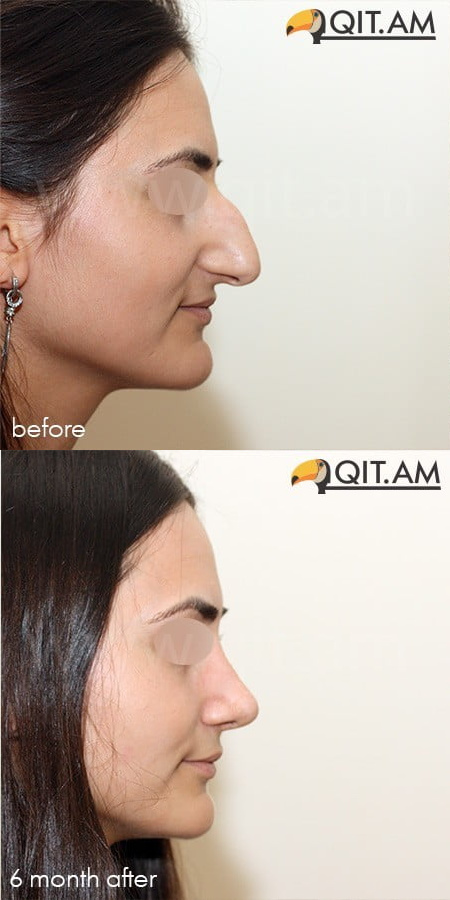
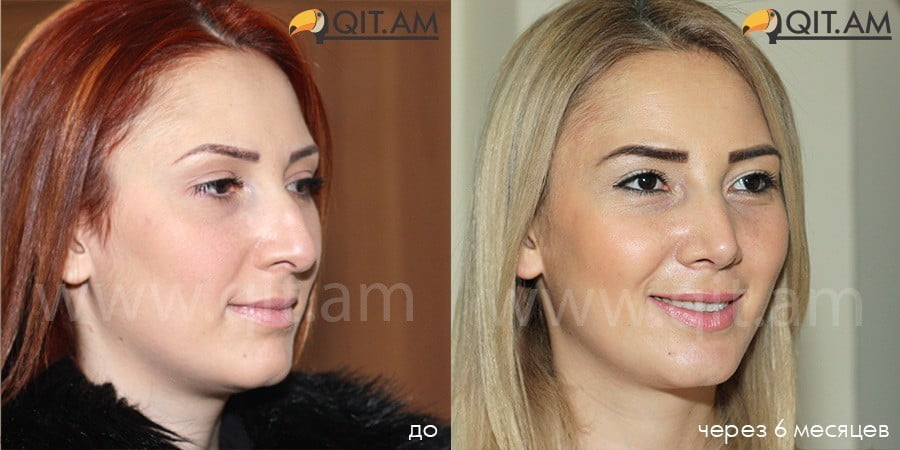
- Profile and three-quarter view: Carefully evaluating the face in the three-quarter projection, I noted a pronounced osteocartilaginous hump. The nasal tip was droopy (a “drooping” tip effect), which visually elongated the middle third of the face and gave the facial expressions excessive severity and tiredness.
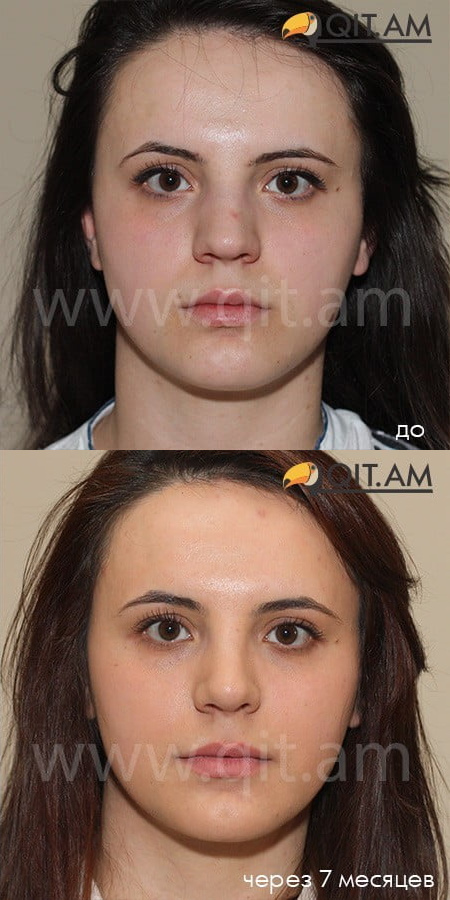
- Frontal view: The nasal bridge looked wide, and the axis was deformed and deviated. The nasal tip lacked defined contours, appearing rounded and bulbous due to the structural characteristics of the alar cartilages.
- Tissues: The patient’s thick, elastic skin required extremely precise and delicate modeling of the cartilaginous framework, since with this skin type, any errors in tip definition could be masked by swelling or, conversely, manifest as asymmetry in the long term.
Surgical Procedure and Objectives:
My key objective was to relieve the face of its visual heaviness, making the nose neat and proportional, but without an “operated” look.
I performed a closed, tissue-sparing rhinoseptoplasty. In the first stage, I removed the osteocartilaginous hump, creating an absolutely straight, elegant line of the nasal bridge. Next, I narrowed the bridge using a precise osteotomy to restore the correct axis. The most delicate work involved the tip: I reshaped and approximated the alar cartilages, altering their angle and performing a subtle rotation (lifting the nasal tip upward). At the same time, I performed a septoplasty, completely straightening the septum and clearing the nasal passages.
Aesthetic and Functional Result at 6 Months:
The “After” photos showcase a stable result six months after the surgery. By this time, the soft tissues have settled, and the swelling has almost completely subsided, revealing the surgeon’s true work:
- Dream profile: The hump is completely eliminated. The new line of the bridge looks impeccably straight and smooth.
- Chiseled tip: The nasal tip has become neat, lifted, and well-defined. It no longer droops when smiling, maintaining an ideal nasolabial angle.
- Frontal harmony: The nasal axis is perfectly straight, the bridge has become elegant and harmonizes with the neat nasal alae.
- Rejuvenating effect: The patient’s face looks significantly softer, fresher, and younger, her gaze has opened up, and her smile has become incredibly radiant.
The greatest reward for me is the sparkling eyes of the patient, who now looks at herself in the mirror with pleasure and, no less importantly, finally breathes easily and freely every single second.