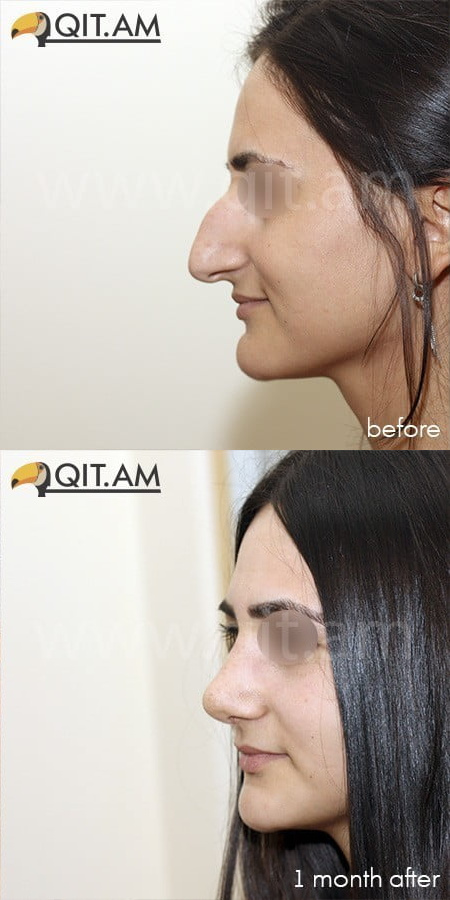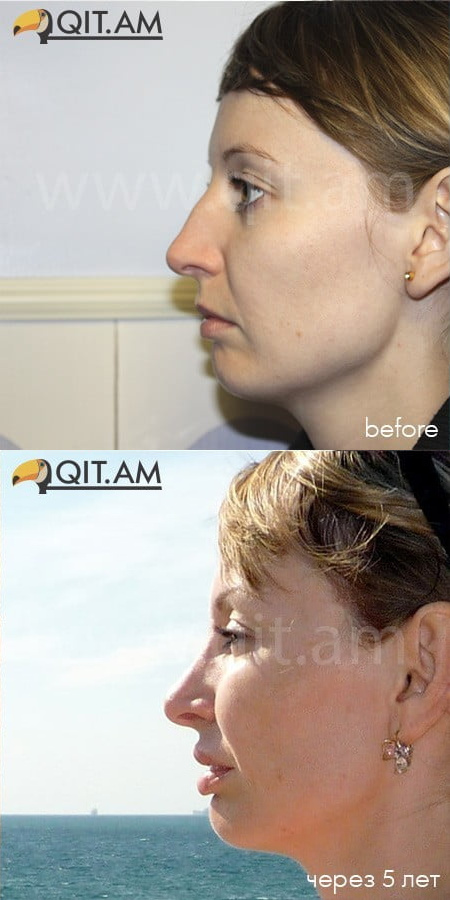

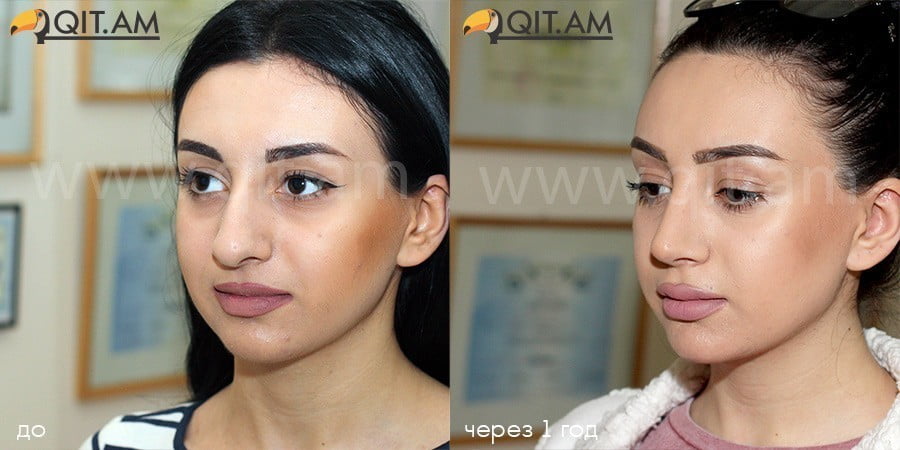
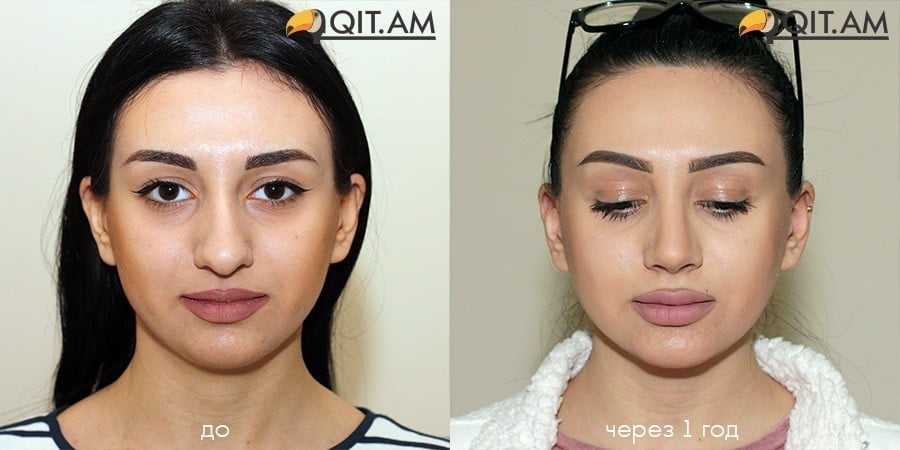
A charming young lady visited my consultation expressing a desire to soften her facial features, removing excess severity and “heaviness.” In her opinion, this heaviness was caused by a large and wide nose. The patient wished for an elegant, neat result while preserving her unique individuality.
Baseline anatomical features (before surgery)
During a detailed analysis of the face in two projections, I identified the following set of objectives:
- Full-face shape (frontal view): The nose appeared excessively wide in all sections. The middle third (nasal bridge) was flattened, and the tip was rounded, voluminous (a so-called “potato” or bulbous tip), and lacked clear definition.
- Three-quarter view (oblique profile): A pronounced bony-cartilaginous hump was clearly visible. The nasal tip tended to droop downward, which visually elongated the middle third of the face and made the gaze look more tired.
- Skin quality: Dense, fairly thick skin in the area of the nasal tip. For a surgeon, this is always an additional challenge: thick skin contracts reluctantly and can obscure delicate cartilage work, so a special structural approach was required here.
- Functional state: In addition to aesthetics, during the examination I identified a deviated nasal septum, which narrowed the nasal passages and impeded proper breathing.
Surgical course and objectives
My strategy was aimed at a total reduction of nasal volumes while creating a reliable cartilaginous framework that would “support” the thick skin and define beautiful contours.
I performed a closed rhinoseptoplasty, during which I:
- Performed a precise osteotomy to narrow the bony nasal pyramid and removed the hump, making the bridge smooth and elegant.
- Performed a septoplasty — corrected the nasal septum, completely clearing the airways for comfortable breathing.
- Refined the nasal tip: delicately excised excess subcutaneous fatty tissue, performed lower lateral cartilage reshaping (alar cartilage plasty), narrowed them, and slightly elevated (rotated) the tip upward, setting a correct, beautiful projection.
Aesthetic and functional result
In the “After” photos, exactly 1 year has passed — this is the timeframe when thick skin has completely settled onto the new framework, allowing us to evaluate a stable result.
Look at how the patient’s face has been transformed: the nose has become sculpted, the bridge has narrowed and acquired a noble silhouette, and the voluminous, drooping tip has turned into a neat and defined one. Due to the elimination of the hump and the lifting of the tip, the profile has become soft, and the full face looks significantly gentler, more feminine, and younger. The gaze has become more open. Nasal breathing has been perfectly restored, and most importantly — my patient is absolutely happy seeing her new reflection in the mirror.