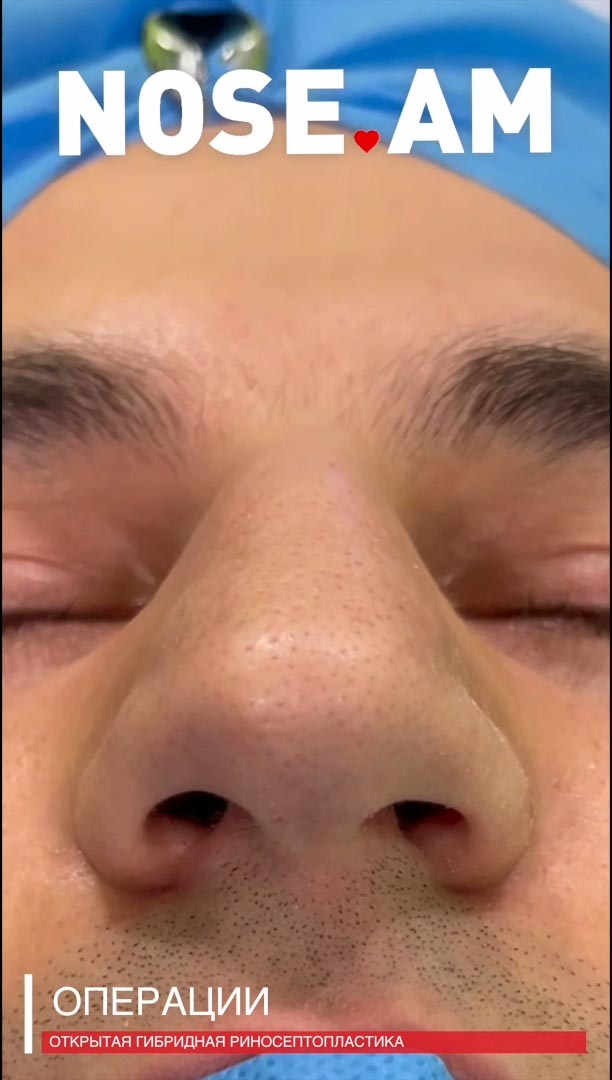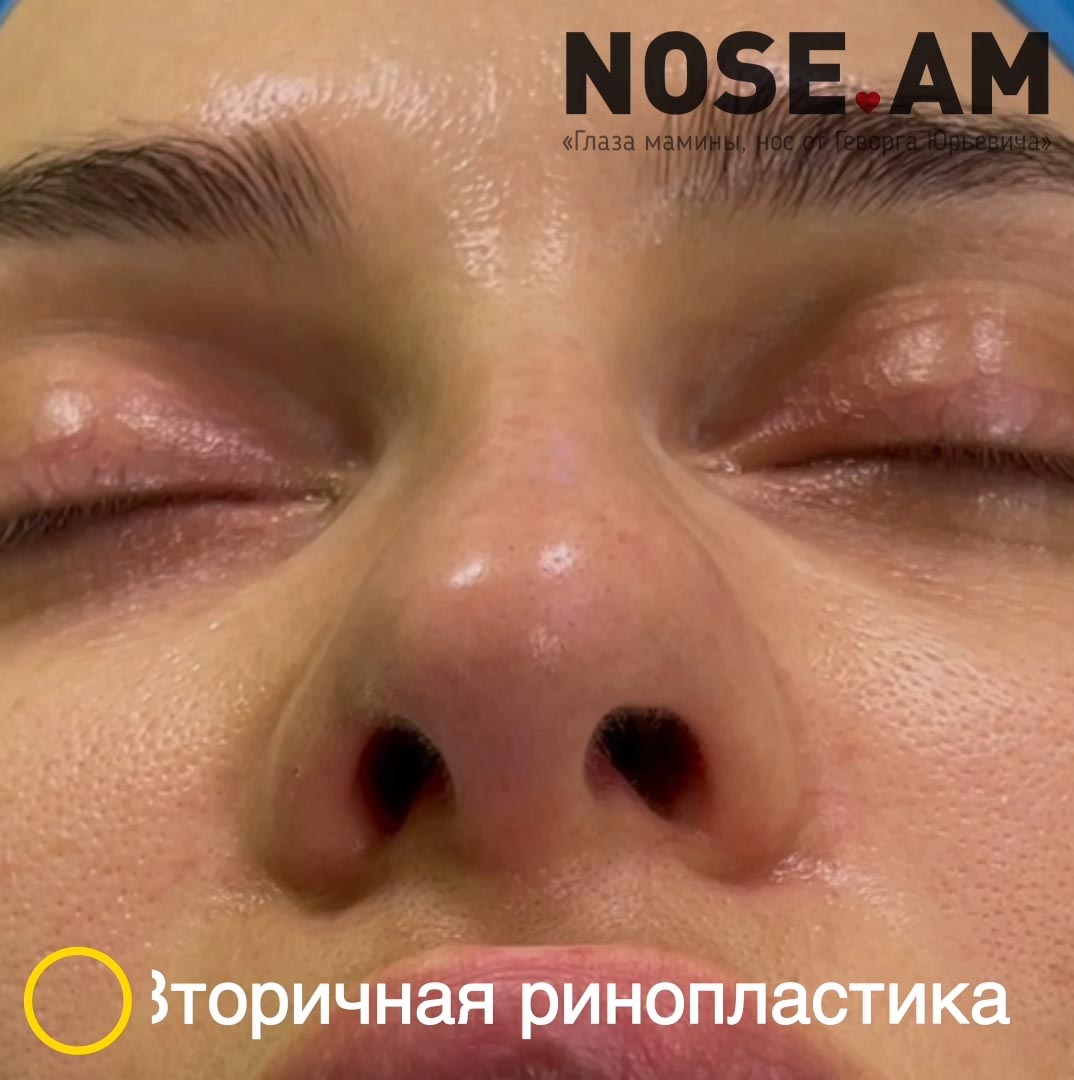

A charming young woman came in for a consultation with a desire to make her facial features softer and more harmonious. Her main aesthetic concern was her nose, which, in her perception, seemed too massive and drew unnecessary attention. During the initial en face examination, I immediately noticed a visible asymmetry and deviation of the nasal axis. As my practice shows, such a picture is almost always accompanied by nasal breathing problems due to a deviated septum, so I instantly realized that we were facing not only an aesthetic but also a functional correction.
Initial Anatomical Features
Having studied the initial anatomical features in detail, I outlined the scope of work for myself. In profile, a pronounced osteo-cartilaginous hump and an elongated, slightly drooping, and voluminous nasal tip were visualized. Such geometry visually weighed down the profile, giving the face a slightly tired and stern look. Moreover, I noted the patient’s moderately thick skin. For me as a surgeon, this is always a professional challenge: forming a refined, structured, and chiseled tip under such skin requires truly jewelry-like precision work with the cartilaginous framework.
Course of the Surgery
To achieve the most accurate and delicate result, I chose the technique of preservation ultrasonic rhinoseptoplasty. The use of a piezo device allowed me to work with the bone structures of the nasal dorsum as atraumatically as possible, avoiding rough damage to the surrounding tissues and minimizing postoperative bruising. During the surgery, the first thing I performed was a septoplasty — straightening the septum to restore free and full breathing to my patient. Then, I carefully lowered the projection of the nasal dorsum, eliminating the hump, and carried out meticulous work on the rotation, narrowing, and projection of the tip, creating reliable support for it to prevent drooping in the future.
Result
The result of the work turned out to be incredibly delicate. I formed a beautiful, smooth dorsum with a perfectly straight profile and lifted the tip, giving it that very feminine refinement that we lacked so much. The patient’s facial features were instantly transformed: her face became more open, fresh, and youthful. The most touching moment for me was our meeting on the seventh day after the surgery. When I removed the splints and the patient saw herself in the mirror for the first time, her sincere surprise, tears of joy, and words, “How do you do this? I have no words, I just can’t believe it!” — became the best reward for my work. My patient is happy, which means my main surgical goal has been achieved: we obtained flawless aesthetics and restored healthy breathing.