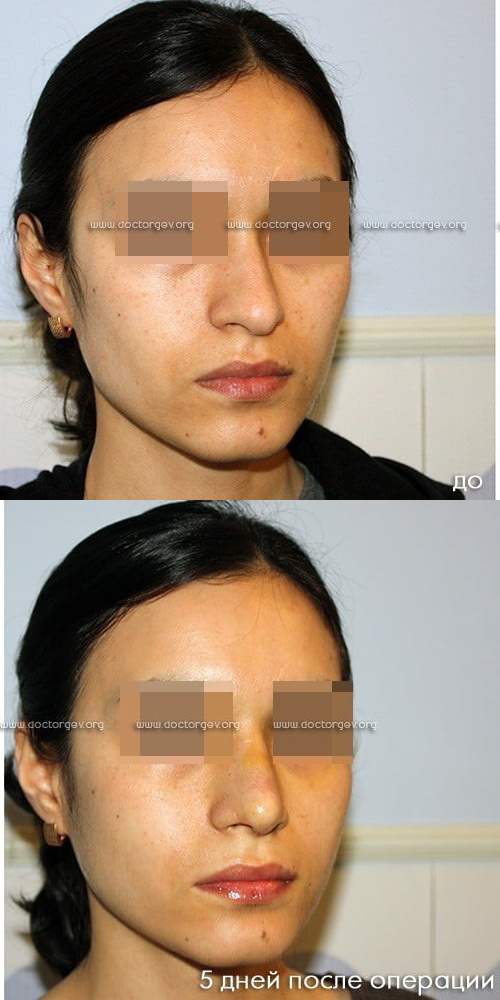

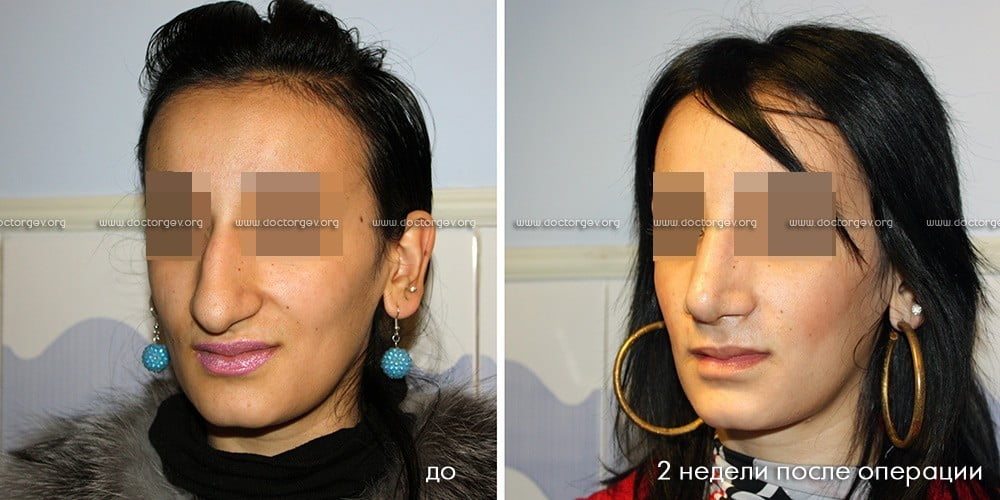
A young female patient came to me for a consultation experiencing significant aesthetic and functional discomfort. The main dominant feature of her face was a large, disproportionate nose that completely disrupted the harmony of her other features.
Initial clinical picture
During the “Before” clinical examination, I noted the following anatomical features:
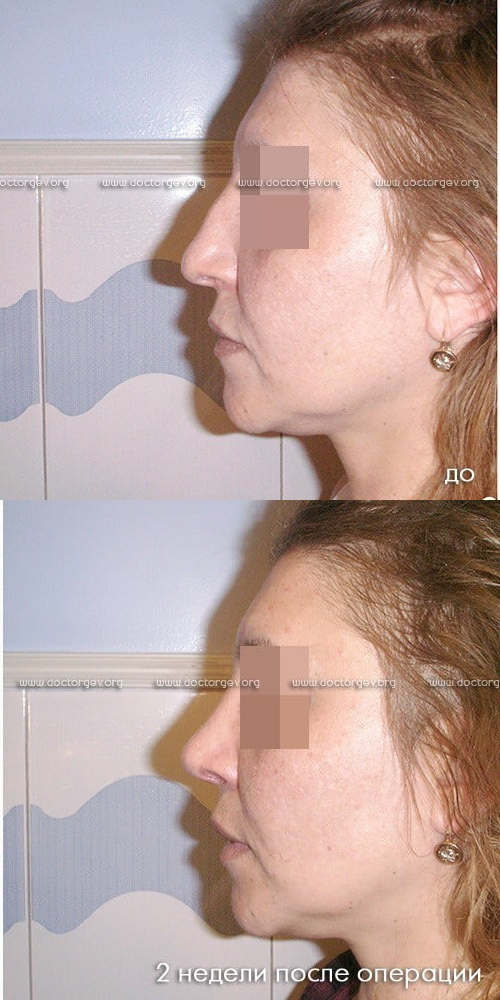
- In profile and three-quarters: a massive bony-cartilaginous hump was identified, combined with a significant drooping (ptosis) of the nasal tip. Because of this, the nose appeared excessively long and hook-shaped. This structure visually weighed down the middle third of the face, gave the expression a harsh look, and added extra years to the patient’s appearance.
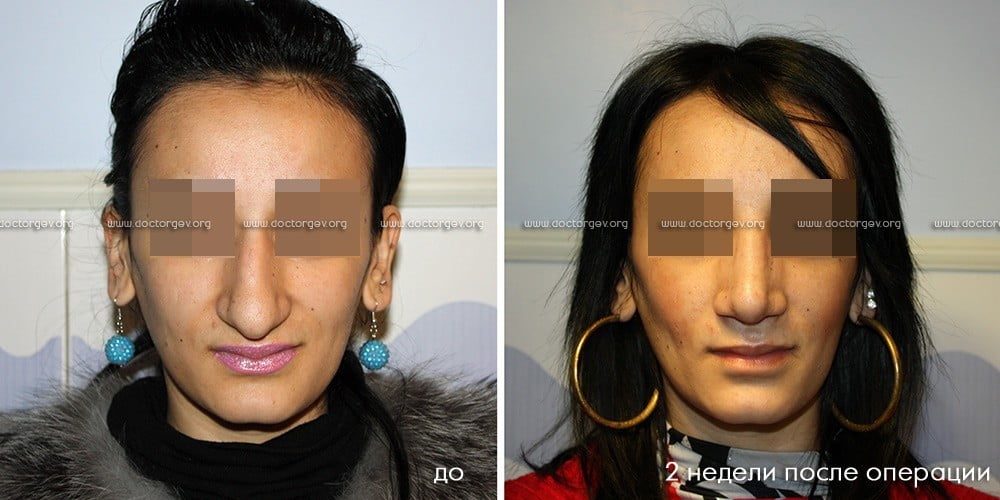
- In front view: the nasal tip looked flat and wide, and asymmetry of the alar cartilages was visualized. In addition, a deviation of the nasal axis was observed.
- Functional status: the patient complained of constant nasal congestion. Examination revealed a severe septal deviation, significantly narrowing the airways.
Surgical objectives and course of the operation
My key objective was to perform a simultaneous operation: to restore full nasal breathing and radically change the aesthetics of the nose, making it feminine, neat, and in harmony with the face.
The work ahead was extensive and required a gentle approach to the tissues:
- Septoplasty: As the first step, I corrected the deformed cartilaginous and bony parts of the nasal septum to completely open the airways.
- Hump reduction: I carefully lowered the nasal bridge, removing the excess bony-cartilaginous structures and shaping a smooth, even, and graceful transition from the bridge to the tip.
- Tip modeling and rotation: The excessive length of the nose was eliminated. I lifted (rotated) the nasal tip, fixed it in its new position, and narrowed the cartilages of the terminal section, making it more defined and miniature.
- Axis reconstruction: Using precise osteotomy, I realigned the position of the nasal bones, returning the nose strictly to the central axis of the face.
Result 2 weeks after the operation
The “After” photographs show a very early result — just 2 weeks since the operation. Pronounced postoperative swelling still persists on the face (especially in the tip and bridge area), which will gradually subside over several months.
Nevertheless, a colossal difference is visible already. We managed to completely get rid of the heavy hump and hook-shaped form. The bridge of the nose became straight and smooth, and the slightly lifted, neat tip opened up the face, making the gaze softer and the entire look surprisingly delicate, light, and youthful. Nasal breathing, despite early rehabilitation swelling, has already begun to recover. The patient is happy to see the first fruits of our transformation, and we will evaluate the final, even more sculpted result closer to one year.