
A patient came in for a consultation with a rather complex and, unfortunately, common problem in my practice — the need for secondary intervention. After a previous unsuccessful correction attempt, she faced not only aesthetic dissatisfaction but also pronounced functional impairments that significantly reduced her quality of life.
Initial Anatomical Features
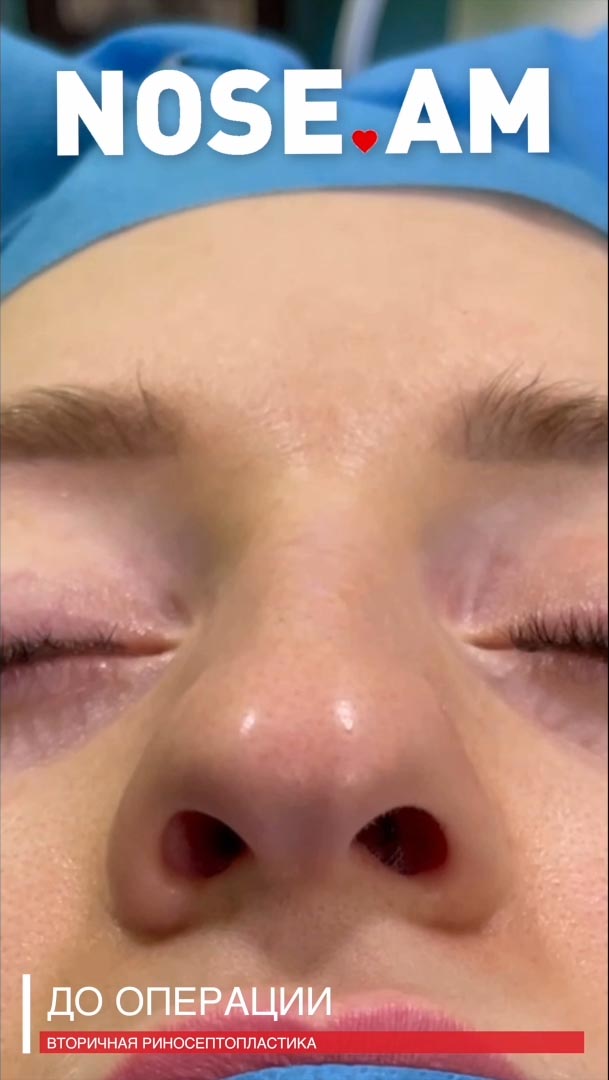
During a thorough examination and analysis of the initial “Before” data, I noticed a severe deformation of the cartilaginous framework. The first thing that caught the eye was the total deviation of the nasal septum in the caudal section: the cartilage literally blocked the nasal passage, making full, free nasal breathing almost impossible. The aesthetic picture also required extensive work: the nasal tip was deformed, lacked proper projection, and appeared wide and drooping, which visually weighed down the face and gave it a tired look. The nostrils were critically asymmetrical, and irregularities were observed on the nasal dorsum. The situation was complicated by the presence of scar tissues from the previous intervention and the patient’s rather thick, porous skin, which always requires a truly meticulous, jewel-like approach from me as a surgeon when forming elegant lines.
Surgical Procedure
I performed an open hybrid secondary rhinoseptoplasty. Such operations are always an architectural challenge. I had to not just change the shape, but literally rebuild a reliable support framework for the nose, working under conditions of altered anatomy. My primary task was to perform a radical septoplasty: I straightened the septum to fully restore physiological breathing. Then, millimeter by millimeter, I reassembled the nasal tip, giving it the correct vector and support so that even under the pressure of heavy skin, it would maintain its refinement.
Result
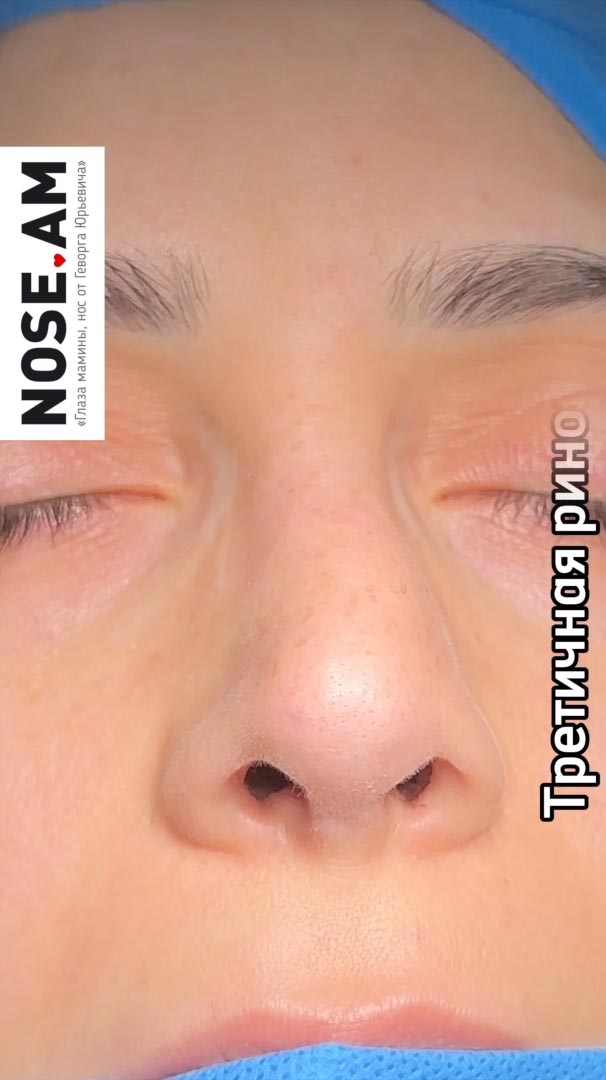
The “After” result speaks for itself. I managed to completely eliminate the asymmetry: if you look at the projection from below, the nostrils now look perfectly even, and the airways are absolutely free. The nasal dorsum acquired a noble, straight line without a single flaw. The nasal tip became neat and proportional, gaining that slight, natural upturn that instantly erased traces of fatigue from the face, making the appearance fresher, younger, and more harmonious. The biggest reward for me is knowing that my patient can now breathe freely and look at her reflection in the mirror with a sincere smile.