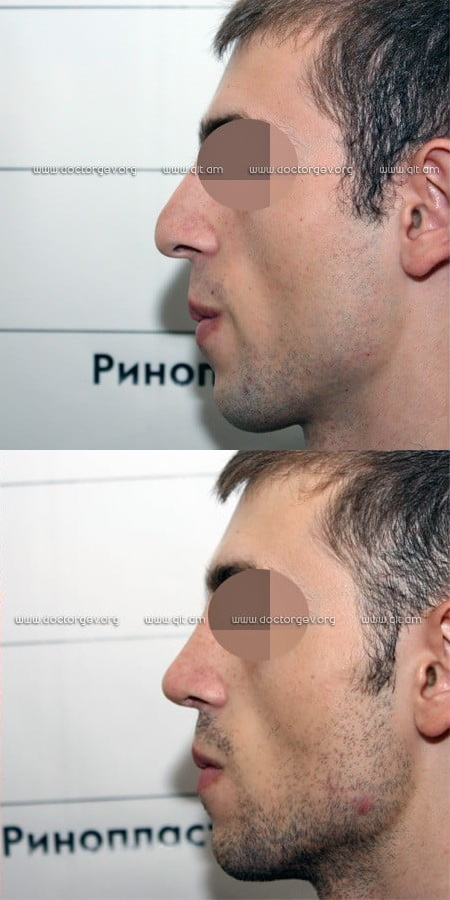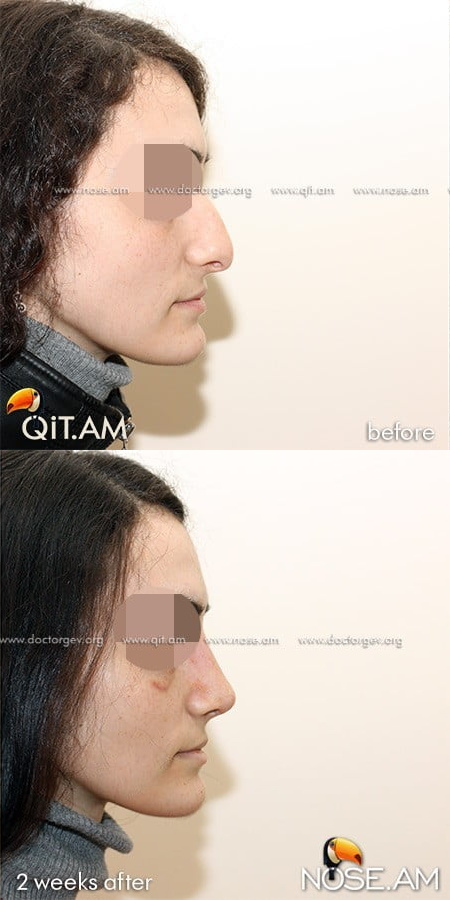

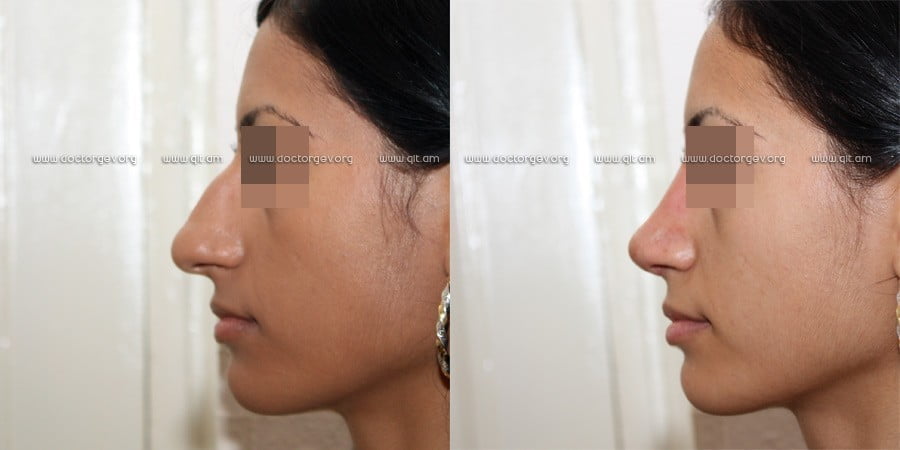
A young woman scheduled an initial consultation because she was experiencing severe psychological discomfort due to nasal disproportions. The disruption of profile harmony deprived her features of femininity and visually weighed down her entire face.
Initial Anatomical Data (“Before” Photo)
During the analysis of the initial anatomical data, I identified key features that required surgical correction:
- Large osteocartilaginous hump: a high and convex nasal dorsum prominently dominated the profile, creating a masculine and harsh silhouette.
- Drooping nasal tip: the tip pointed downward, which, combined with an acute nasolabial angle, visually elongated the nose and gave the face an older, fatigued appearance.
- Functional deficit: such nasal architectonics with a drooping tip are almost always accompanied by a deviated septum and narrowing of the internal nasal valve, which was confirmed during the examination — the patient complained of constant congestion.
Surgical Objectives and Procedure Details
My main goal was to perform complete facial beautification by harmonizing the nasal proportions while preserving its individuality and ensuring flawless breathing function. The surgery required a delicate reduction of the nasal dorsum projection so that the line would turn out perfectly straight and natural, without an “over-operated” look.
During the rhinoseptoplasty, I restored the correct anatomical shape of the internal septum, completely resolving the breathing issue. Next, I carefully removed the hump, shaping a smooth, refined feminine profile. The nasal tip was delicately elevated (rotated) and securely fixed in a new, aesthetically balanced position.
Surgical Result (“After” Photo)
The surgical result in the “After” photo clearly demonstrates the silhouette changes. We managed to achieve a stunning effect:
- The profile became elegant, soft, and harmonious.
- The new nasolabial angle opened up the face, giving it a pronounced rejuvenating effect and lightness.
- Excessive harshness of expression was completely erased, and the facial features began to look refined.
The patient is incredibly happy: she got rid of her long-standing insecurity, enjoys looking at herself in the mirror, and, equally importantly, is finally breathing easily and deeply.