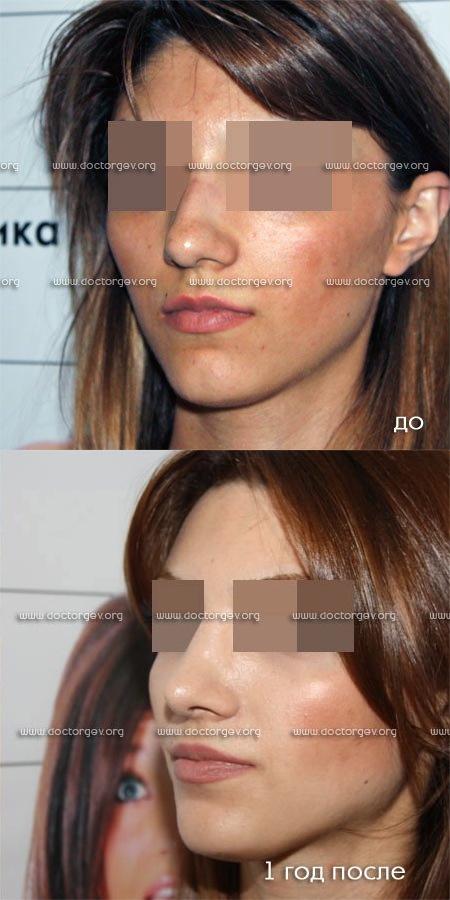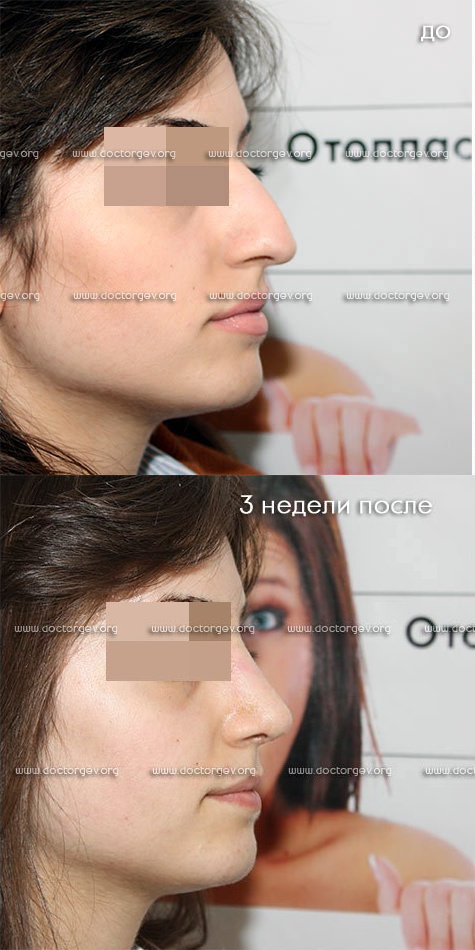

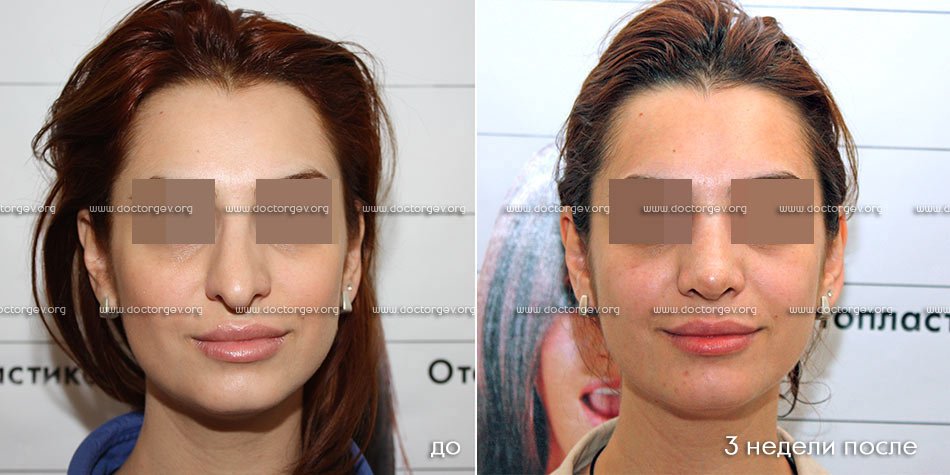
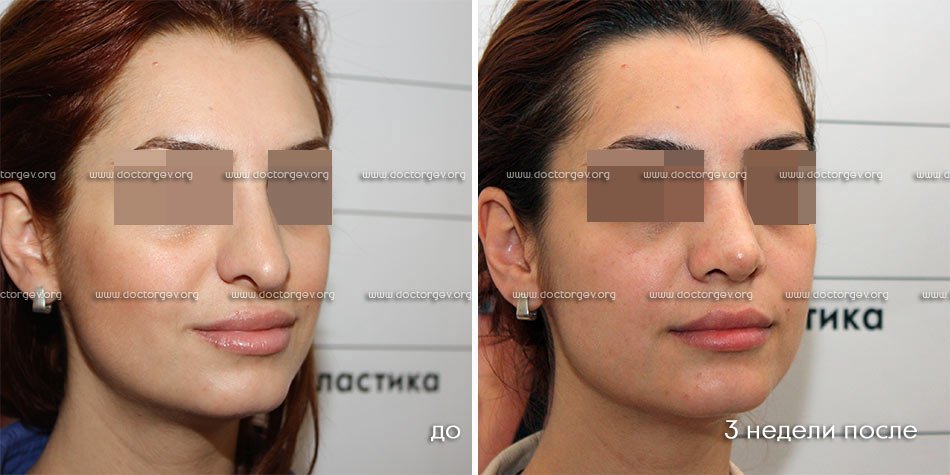
A young female patient scheduled a consultation with me, seeking both aesthetic and functional correction. She was dissatisfied with her large, excessively prominent nose, which she felt made her facial expression overly harsh and deprived her profile of refinement. Additionally, an internal structural deviation obstructed free nasal breathing, causing constant discomfort.
Initial anatomical features (“Before” photo)
When analyzing the patient’s face from the front and three-quarter views, I identified several key anatomical features that required correction:
- Nasal bridge: a high, sharp osteocartilaginous hump was present, disrupting the smooth lines of the face.
- Nasal tip: was excessively long, bulky, and droopy, which visually weighted down the middle third of the face and created an illusion of aging.
- Nasal axis: from the front view, a slight asymmetry and uneven width of the bridge were noticeable.
- Skin: of moderate thickness, sufficiently elastic, which is a good prognostic factor for tissue contraction during the rehabilitation period.
Surgical procedure and objectives
My goal was to create a neat, soft, and completely natural feminine nose that would harmonize with the patient’s delicate lips and open gaze.
During the surgery, I performed a precise resection of the osteocartilaginous hump and a gentle osteotomy to narrow the nasal bridge and return it to a strictly central position. The main volume of work was focused on the lower third: I reshaped the nasal tip cartilages, reduced its excessive projection (length), and altered the rotation—carefully lifting the tip to form a beautiful, aesthetically correct nasolabial angle. Simultaneously, I performed a septoplasty, straightening the septum to restore full breathing.
Result at 3 weeks (“After” photo)
The presented “After” photographs were taken just 3 weeks following the surgical intervention. This is a very early stage for rhinoplasty, when the tissues still retain pronounced primary swelling (especially in the tip and bridge areas). Nevertheless, an excellent aesthetic result is already clearly visible:
- Elegant silhouette: the harsh hump has been replaced by a smooth, straight, and feminine nasal bridge.
- Neat tip: the nose is noticeably shorter, the tip is lifted, and the previous heaviness is gone.
- Softening of facial features: visually, the patient’s face looks softer, younger, and more harmonious. The nose blends perfectly into the overall proportions, no longer drawing undue attention.
Despite the remaining postoperative swelling, which will gradually subside over the course of a year, the patient is already breathing much better and is incredibly happy with her new, delicate look.