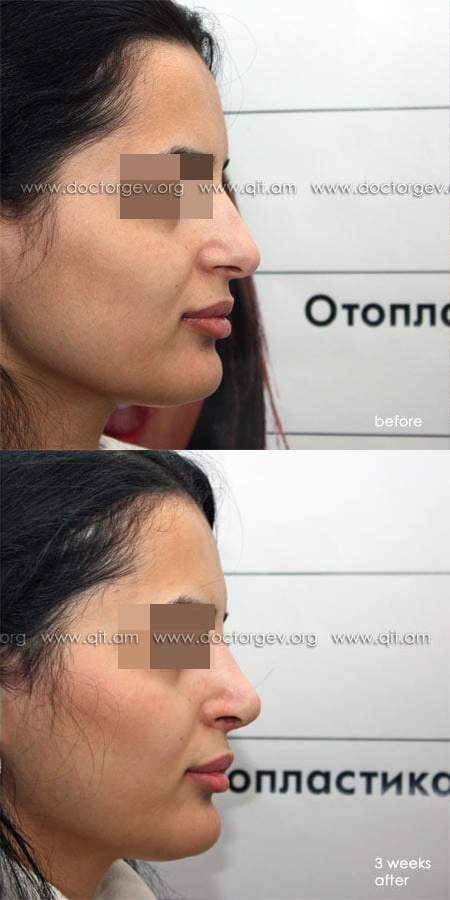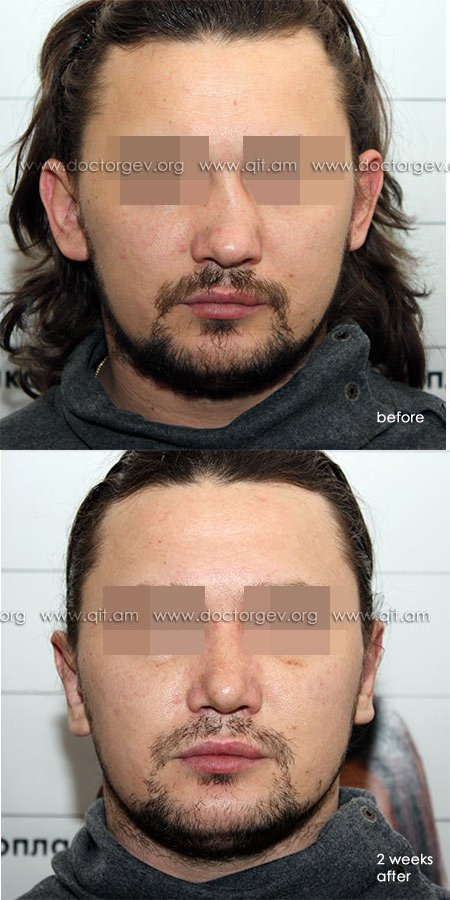

A male patient came to my consultation with a severe post-traumatic nasal deformity. The patient’s primary request combined both aesthetic and serious functional aspects: due to a severe deviation of the nasal axis, he had suffered from chronic nasal congestion for many years, barely able to breathe fully.
Initial Anatomical Picture (Before Surgery)
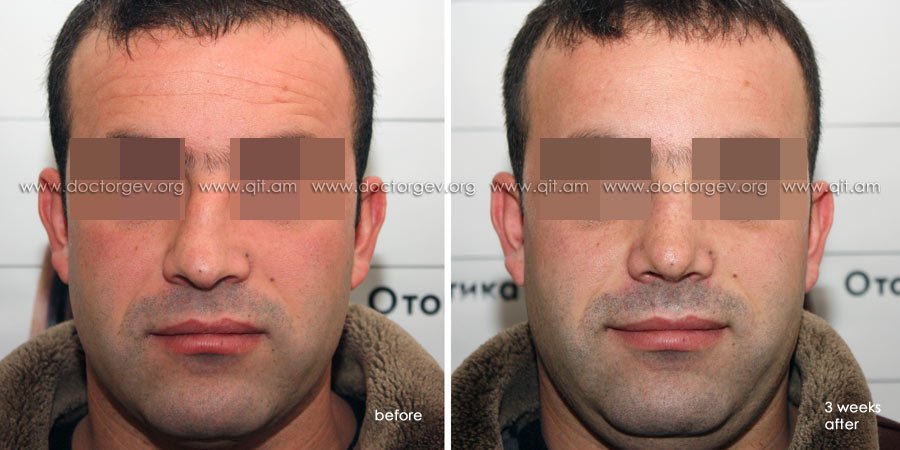
Upon frontal examination, the severe architectonics of the external nose was obvious, significantly disrupting overall facial symmetry:
- Nasal axis: A pronounced C-shaped deviation of the nasal dorsum with lateral displacement was identified. The bony and cartilaginous pyramids were severely deformed.
- Nasal tip: Shifted following the general axis of the face, appearing asymmetrical, flattened, and visually slanting to one side.
- Internal structures: Upon examination of the nasal cavity, I diagnosed a sharp septum deviation with a prominent spur completely obstructing one of the nasal passages, which caused the persistent breathing impairment.
My goal was to perform a simultaneous operation: straighten the internal nasal septum, completely restoring free breathing for the patient, and at the same time restore the correct geometry of the external nose while preserving masculine facial proportions.
Surgical Procedure and Objectives
Male rhinoplasty in cases of severe axial deviations is meticulous reconstructive work. First, I performed a septoplasty: corrected the deformed sections of the septum, removed bone spurs, and restored airway patency. The harvested cartilage material was carefully preserved for subsequent modeling.
In the second stage, I moved on to the external nose. To return the nasal dorsum to a strictly central position, a controlled bilateral osteotomy was performed. Realigning the bony framework, I relocated it into an anatomically correct position. Next, using the patient’s own cartilage grafts, I reconstructed and reinforced the nasal tip, centering it relative to the updated dorsum axis and leveling the alar bases.
Result After 3 Weeks
The postoperative photos capture an early result — just 21 days after surgery. Moderate swelling is still present on the face (especially in the nasal bridge and supratip area), which will gradually subside over the course of a year, making the lines even more defined.
Nevertheless, the result is immediately visible:
- The nose has become completely straight and taken a strictly central position on the face.
- Asymmetry of the nasal tip and nostrils has been completely eliminated.
- Facial features have become more balanced, refined, and masculine.
But most importantly, the patient began to breathe freely through his nose immediately after the removal of the internal splints. His quality of life has changed dramatically. Despite the early recovery period, the patient is incredibly satisfied with the achieved result, and the restoration of facial symmetry completely fulfilled our expectations.