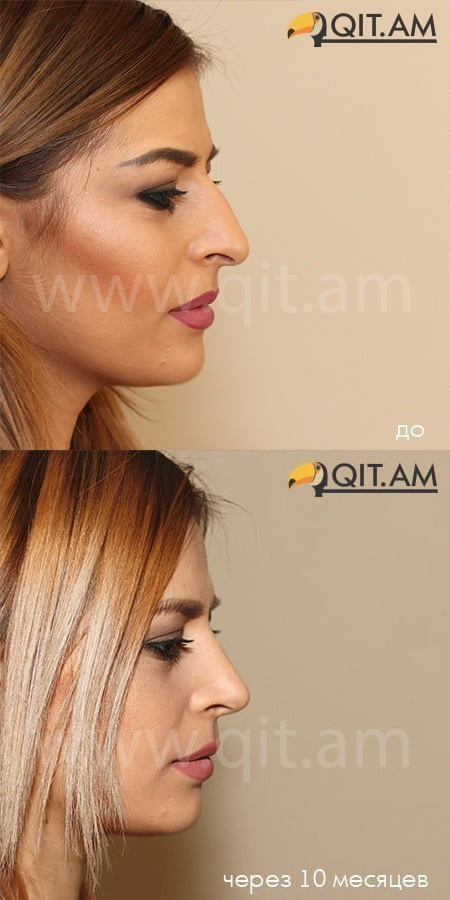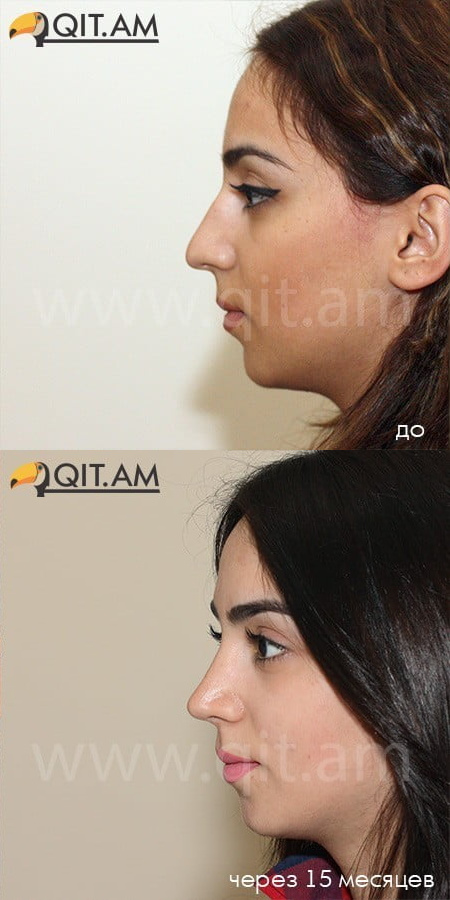

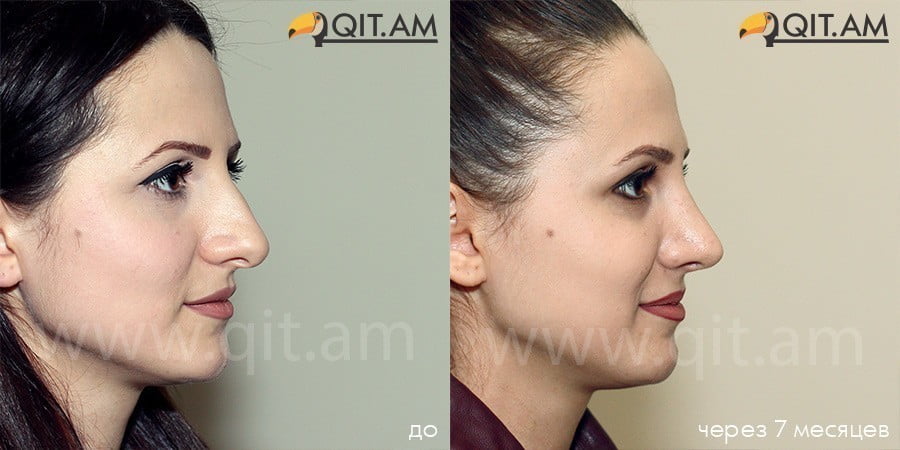
A young female patient came to my consultation requesting a comprehensive change in the shape of her nose. The main aesthetic concerns that bothered her were a large hump and a droopy nasal tip, which shifted even lower when smiling, making her facial expression look more severe and visually adding age.
Initial Clinical Picture
Upon detailed “Before” examination, I noted the following anatomical features:
- In profile: a pronounced osteocartilaginous hump was clearly visualized. The nasolabial angle was acute due to the pronounced ptosis (drooping) of the nasal tip. The line of the bridge appeared heavy and disrupted the overall facial proportions.
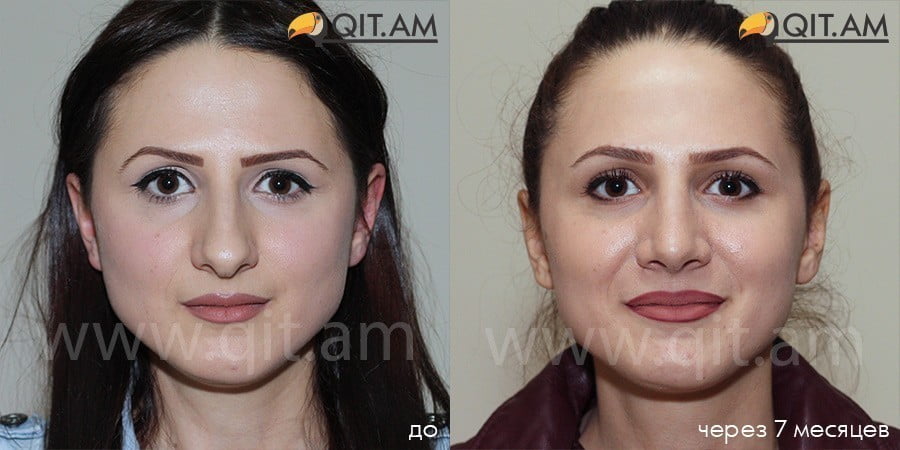
- In full face: a noticeable S-shaped curvature of the nasal axis (deviation) was determined, as well as asymmetry of the alae and the tip area. The nose looked wide in the middle and lower thirds.
- Functional state: severe deviation of the nasal septum predictably caused chronic nasal breathing difficulties for the patient, especially at night and during physical exertion.
Surgical Goals and Nuances of the Procedure
My main goal was to perform a combined rhinoseptoplasty — restoring the correct internal architecture of the nose to improve breathing and creating a natural, soft feminine profile.
The work required the highest precision. First, I performed the functional stage — septoplasty, straightening the septum and clearing the airways. Then I proceeded to aesthetic modeling: delicately removed the hump, avoiding excessive resection to preserve the strength of the bridge. I paid special attention to the nasal tip: the excess volume of cartilage was corrected, and the tip itself was rotated upward and securely fixed in a new, anatomically correct position. To align the nasal axis in full face, a precise osteotomy was performed. The patient’s skin is quite thick, so it was important for me to build a reliable cartilaginous framework that will eventually ensure a beautiful and defined outline of the tip.
Result After 7 Months
In the “After” photographs taken 7 months later, we see a magnificent intermediate result (the final formation will be completed by one year, but the main changes are already obvious).
The bridge of the nose became absolutely straight, elegant, and symmetrical in full face, and the axis deviation was completely eliminated. In profile, the nose now has a noble, straight silhouette with a neat, slightly elevated tip. The opened nasolabial angle made the patient’s face look visually younger, lighter, and more harmonious, emphasizing the beauty of her eyes and lips. But the main thing is that the patient got rid of nasal drops, her nasal breathing became completely free, and she feels incredibly confident and happy.