
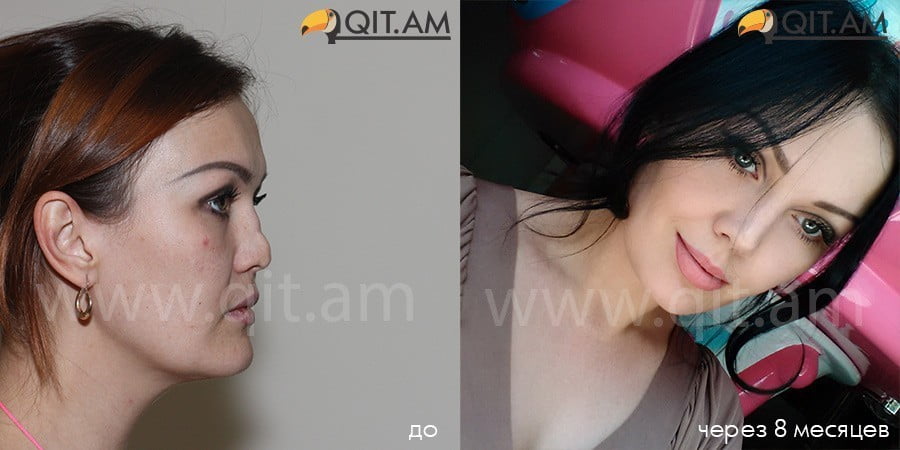

A patient with an extremely complex history came for a consultation: she had already undergone two nose surgeries performed in another country by different surgeons. Revision interventions in plastic surgery are always a challenge, requiring ultimate concentration and vast experience from the doctor. The results of previous operations led to severe aesthetic and functional deformities that we had to address.
Initial Anatomical Features (Before Surgery)
Evaluating the condition of the tissues before the surgery, I faced the classic consequences of over-resection of cartilaginous structures:
- Anatomical framework: The nasal bridge was almost completely destroyed and “collapsed,” making the nose look unnaturally short in profile.
- Nasal tip: Completely lost its support, became deformed and looked flattened, disrupting the balance and proportions of the face.
- Functional impairments: Due to aggressive past interventions, the internal structures and the nasal septum were totally deviated and damaged. The patient had practically lost the ability to breathe normally through her nose, which caused her immense discomfort every day.
Surgical Course and Objectives
This highly complex reconstructive surgery lasted 5 hours. My primary objective was to recreate the destroyed supporting framework of the nose literally from scratch.
Given the total deficit of “building” material inside the nasal cavity, I decided to use autografts:
- I carefully utilized the scarce remnants of her own nasal septum.
- For proper reshaping of the nasal bridge and tip, I harvested cartilage from the patient’s right auricle through an inconspicuous incision.
Using exclusively the patient’s own tissues allowed us to avoid the risks of rejection and achieve the most natural and stable result.
Result After 8 Months
Since the patient lives abroad, she sent me her personal photo, which is why the angle of the “After” picture deviates slightly from our standard clinical protocols. However, even in this photo, a tremendous difference is visible.
Eight months after the surgery, we see a completely different face. I managed to restore the correct anatomical proportions of the nose, shape a beautiful, straight bridge line, and give a neat form to the tip. The facial features softened, and her former femininity and natural harmony returned.
But the most important achievement of this five-hour work is hidden inside — we have completely restored free, full nasal breathing. The patient got rid of long-standing problems and finally feels absolutely happy.