
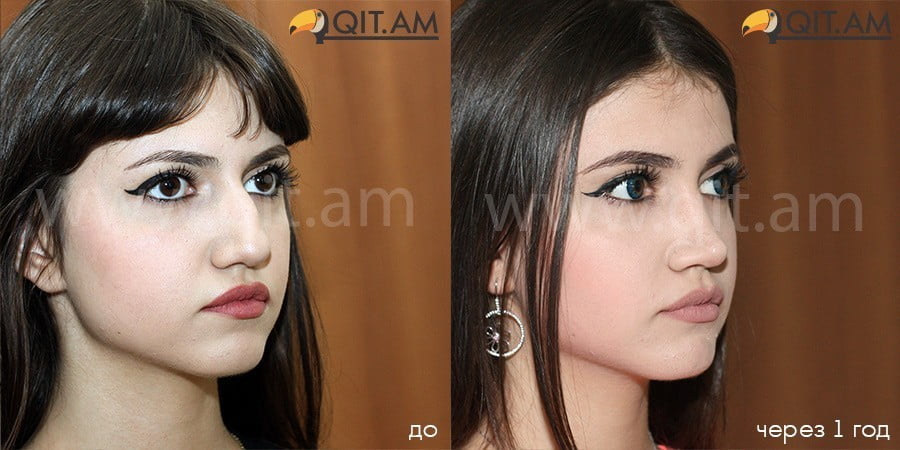
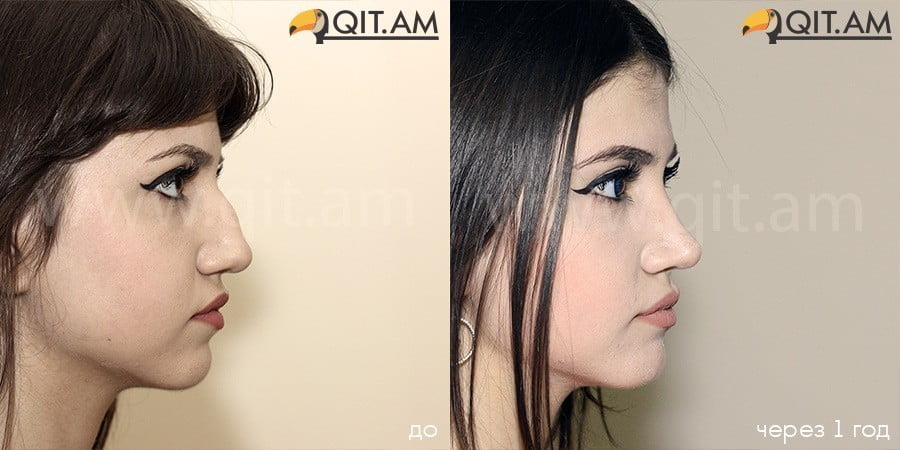
A young woman consulted me with classic complaints regarding aesthetic dissatisfaction with the shape of her nose. During the initial examination, we discussed in detail which specific features disrupted facial balance and outlined a plan for a comprehensive reconstruction.
Initial Anatomical Presentation (Before Surgery)
When analyzing the face in various projections, I identified several key features that required surgical intervention:
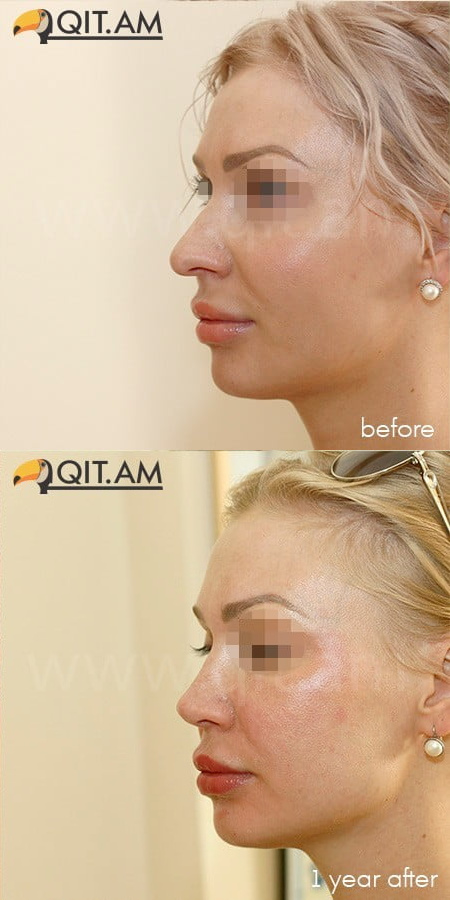
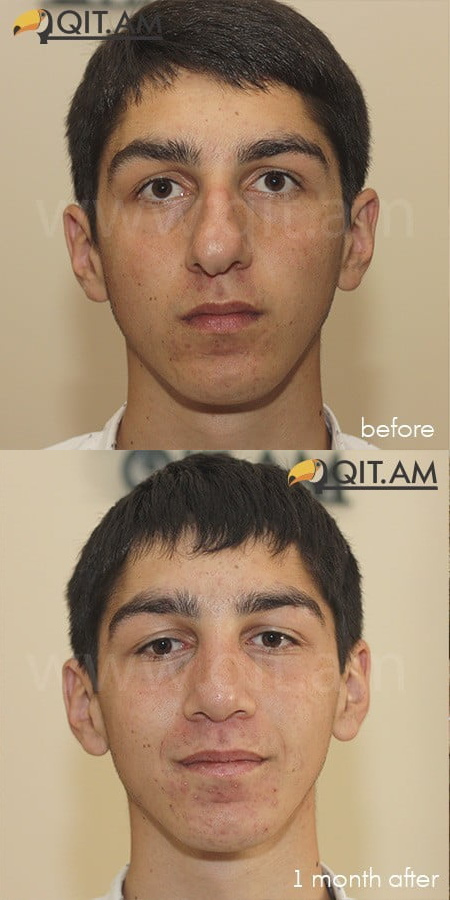
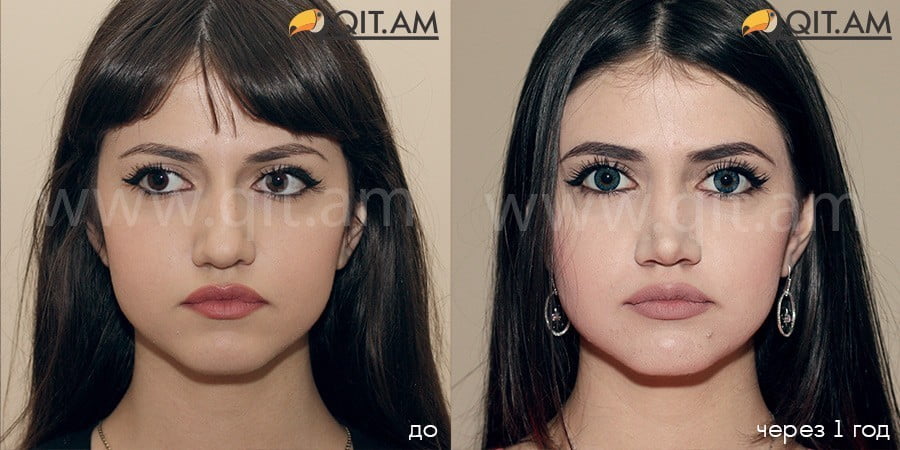
- Nasal dorsum: In profile, a pronounced, high osteocartilaginous hump was clearly visible. Furthermore, a slight S-shaped deviation of the nasal axis was noticeable in the frontal view, which is almost always associated with a deformity of the internal septum and, consequently, impaired proper nasal breathing.
- Nasal tip: It was quite massive, voluminous, and slightly drooping downwards. This effect was exacerbated during smiling and facial expressions, visually lengthening the central part of the face and giving the look an overly stern expression.
- Skin: The patient’s skin was of moderate density, which required jewelry-like precision from me when working with the underlying cartilage structures so that the new nasal framework would look natural, without harsh contours, yet clearly defined.
Surgical Course and Objectives
My work was aimed at simultaneously addressing both aesthetic and functional concerns (rhinoseptoplasty). In the first stage, I corrected the deviated nasal septum to completely clear the airways and restore symmetry.
Next, I proceeded with aesthetic modeling: I delicately removed the osteocartilaginous hump, creating a smooth, elegant dorsal line. The tip required special attention—I performed a resection of the excess lateral cartilage, narrowed it, lifted it, and securely fixed it in a new, anatomically correct position. This allowed us to eliminate the “heavy” nose appearance.
Results After 1 Year
At the follow-up examination twelve months later, we see a fully formed, stable result. The nose has become significantly smaller and more elegant, blending perfectly with the overall proportions:
- The nasal dorsum became straight and neat, with a soft transition to the tip.
- The nasal tip acquired a beautiful definition (clarity) and was lifted, revealing the correct nasolabial angle.
- The patient’s face began to look noticeably softer, gentler, and younger, while completely preserving individuality and natural facial expressions.
The functional outcome of the surgery is also flawless—nasal breathing has been fully restored. The patient feels wonderful and is completely confident in her attractiveness.