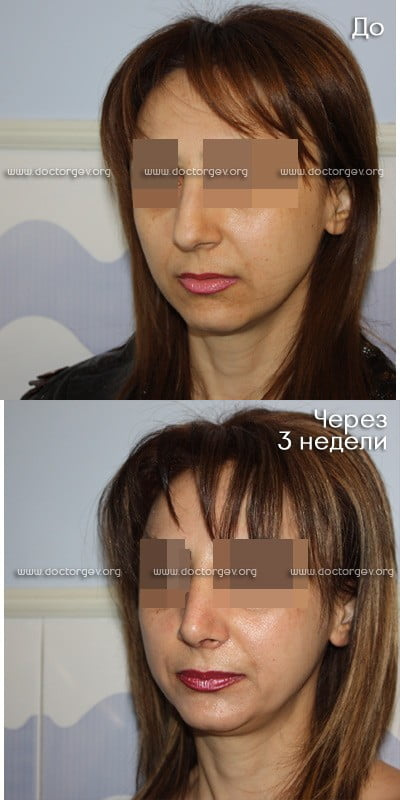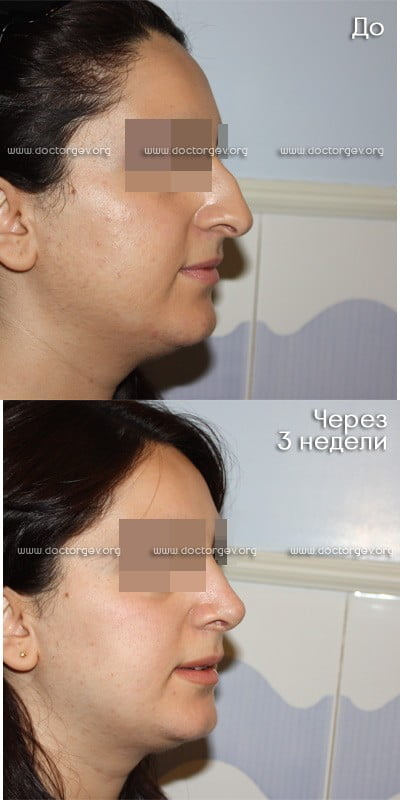

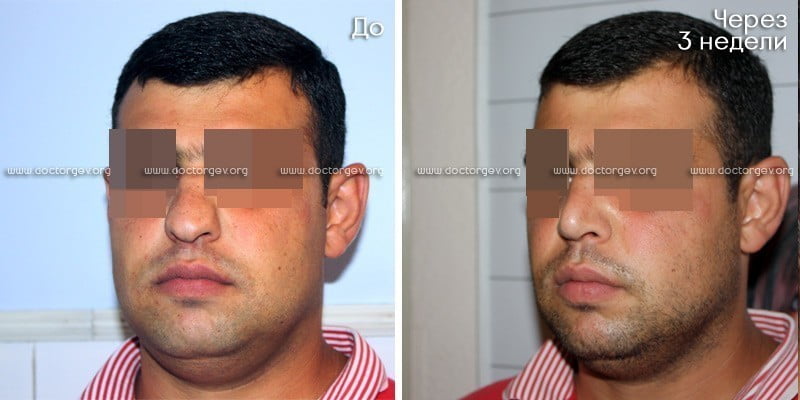
A man presented to me with a pronounced post-traumatic nasal deformity. This is a classic and one of the most challenging cases in my practice — male rhinoseptoplasty, where aesthetic impairments are directly linked to severe functional disorders. The patient could barely breathe through his nose, constantly experienced discomfort, and the pronounced asymmetry severely distorted his facial proportions, making his appearance look harsh and heavy.
My main goal was to fully restore the internal architecture of the nose, return full nasal breathing to the patient, and recreate a straight, masculine shape that would harmoniously fit his facial structure.
Preoperative Anatomical Analysis:
- Nasal axis and bridge: a severe post-traumatic deviation of the entire nasal axis was observed. The nose was literally shifted and “collapsed” to the side, and the osteocartilaginous part had a pronounced deformity with an asymmetric bony hump.
- Nasal tip: massive, severely displaced from the central facial axis, with pronounced asymmetry of the alar cartilages and loss of support.
- Skin quality: the patient has typically dense, thick male skin with a good blood supply. On one hand, it reliably conceals minor postoperative nuances, but on the other, it requires surgical precision when working with the cartilaginous framework and is prone to prolonged postoperative edema.
- Breathing function: the nasal septum was almost completely destroyed and deviated, blocking airflow. The patient had suffered from pronounced hypoxia for years.
Surgical Procedure and Nuances:
The case required extensive reconstructive work. At the first stage, I performed a complex septoplasty: virtually rebuilding and strengthening the cartilaginous part of the septum and modeling a reliable supportive framework. Then, I proceeded to closed rhinoplasty: performing a careful osteotomy to return the displaced nasal bones to a central, anatomically correct position. I eliminated the bridge asymmetry, narrowed it, and aligned the nasal tip, firmly fixing it in the center.
Postoperative Result (only 3 weeks after surgery):
The photographs show a very early result — only three weeks have passed. For this type of skin, this is the very peak of postoperative swelling, which will gradually subside over the next 6–12 months, making the contours of the nose even more refined and well-defined.
Nevertheless, the scale of changes is already obvious:
- The nose is fully returned to the central axis of the face, restoring flawless symmetry.
- The severe post-traumatic curvature of the bridge and nasal tip has disappeared.
- The face looks much more open, harmonious, and calm.
- But the most significant achievement, which brings me the greatest professional satisfaction, is that the patient took his first full, deep breath through his nose in years immediately after the removal of the splints.
Despite the early stage of rehabilitation, the patient already notes a colossal improvement in his quality of life and is completely satisfied with the first aesthetic changes.