
Introduction and Main Complaints
A beautiful young woman presented to my practice with a rather complex aesthetic and functional issue — pronounced nasal asymmetry.
Initial Anatomical Presentation
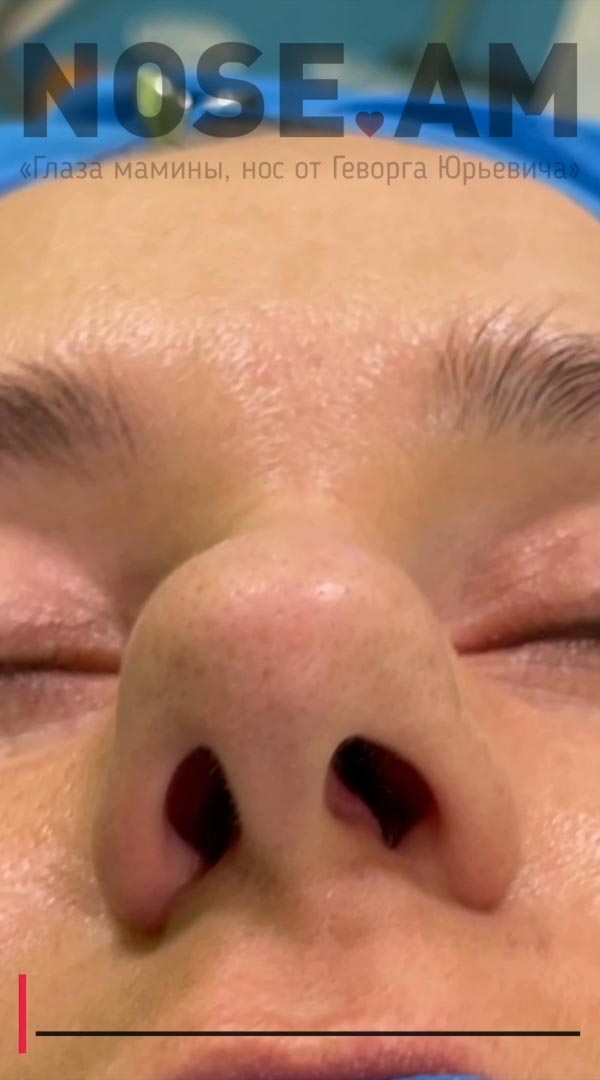
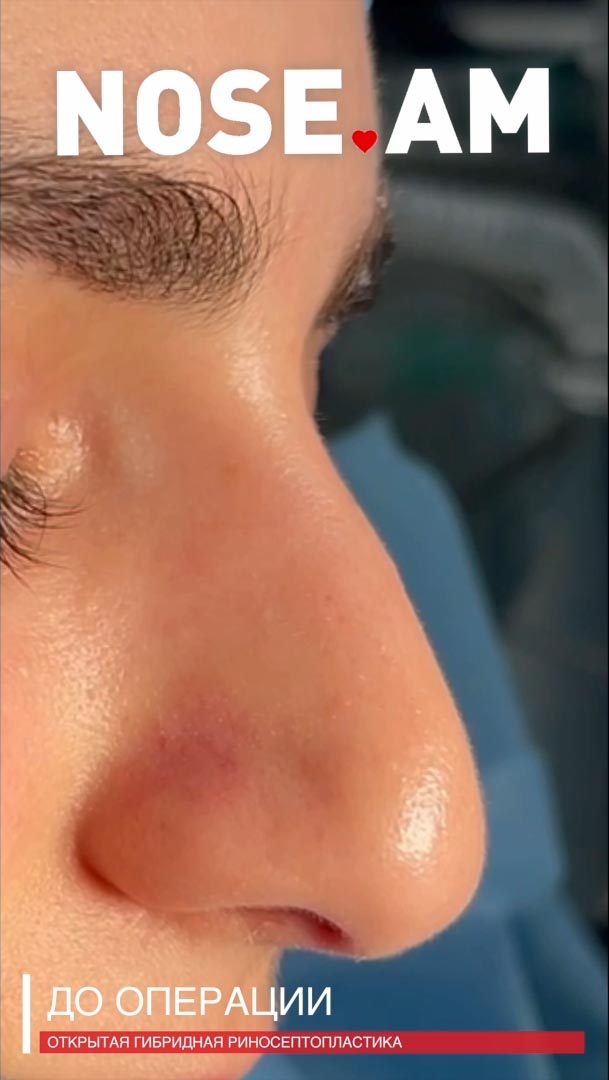
During the initial examination and analysis of the baseline data, I immediately noticed the deviation (displacement) of the caudal septum. Visually, in the “Before” photos, this manifests as a noticeable curvature of the columella and a stark difference in the shape, level, and size of the nostrils. The nasal tip was wide, heavy, and lacked refined anatomical definition, and the overall axis of the lower third of the nose was deviated. As a surgeon, I am well aware that such a deformation of the cartilaginous structures is not only a source of aesthetic insecurities but almost always a major obstacle to full nasal breathing. My patient truly required not just beautification, but high-quality functional correction.
Intraoperative Findings and Surgical Nuances
To address this set of challenges, I decided to perform an open hybrid rhinoseptoplasty. Open approach in this case was my primary tool: it provided me with an impeccable view and complete control over the anatomy for meticulous, symmetrical work on the cartilages. My task was not simply to narrow the nose, but literally to rebuild its architecture from scratch. During the surgery, I performed a thorough septoplasty, aligned the central axis, and reshaped the domes of the lower lateral cartilages. The patient’s skin is rather thick, so I needed to construct a highly defined and strong cartilaginous framework to ensure that the nasal tip would not lose its shape or droop in the future.
Outcome: Harmony and Functionality
In the “After” photos, taken right on the operating table, you can evaluate the outcome of my work. I succeeded in completely correcting the columellar deviation and achieving beautiful natural symmetry of the nostrils. The nasal tip became neat, structured, and refined, attaining the correct height and projection. But the most important achievement is that I fully restored the geometry of the nasal passages, restoring the patient’s free breathing. Even now, despite the postoperative swelling, it is visible how the new, harmonious nose has refreshed my patient’s face. I am very satisfied with the work performed and am confident that as rehabilitation progresses, the result will become even more elegant.