
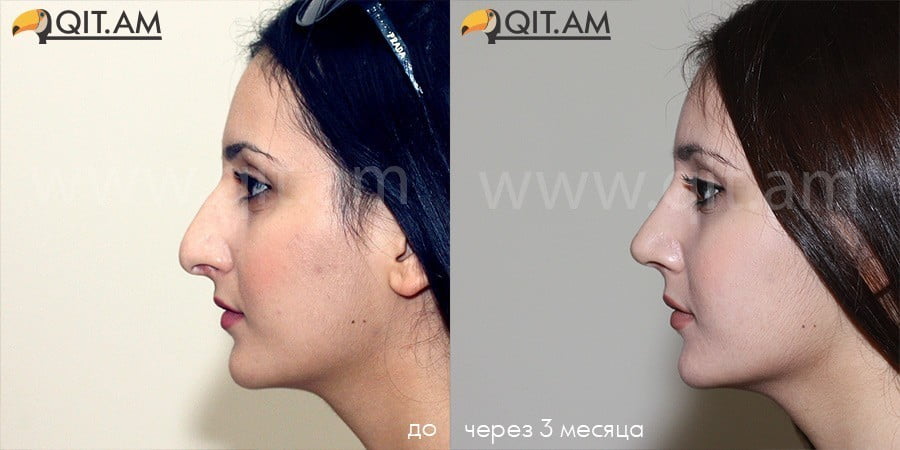
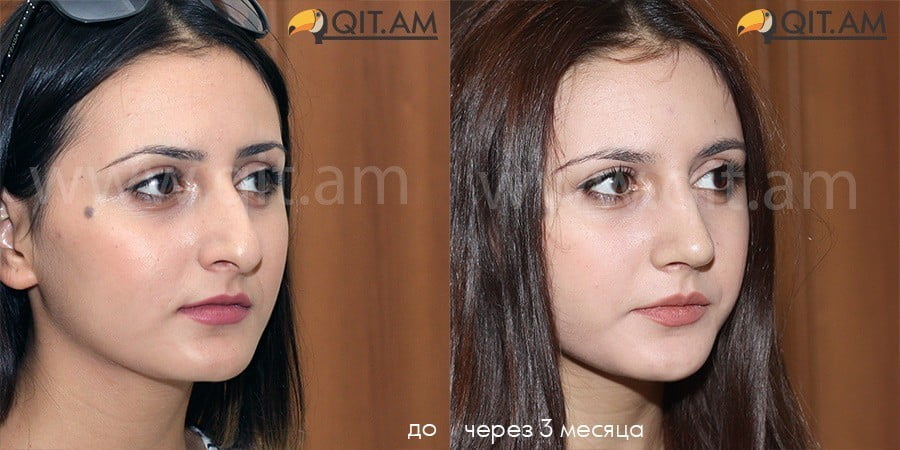
A young female patient of Caucasian appearance presented with classic complaints of facial aesthetic disproportion and associated problems with full nasal breathing.
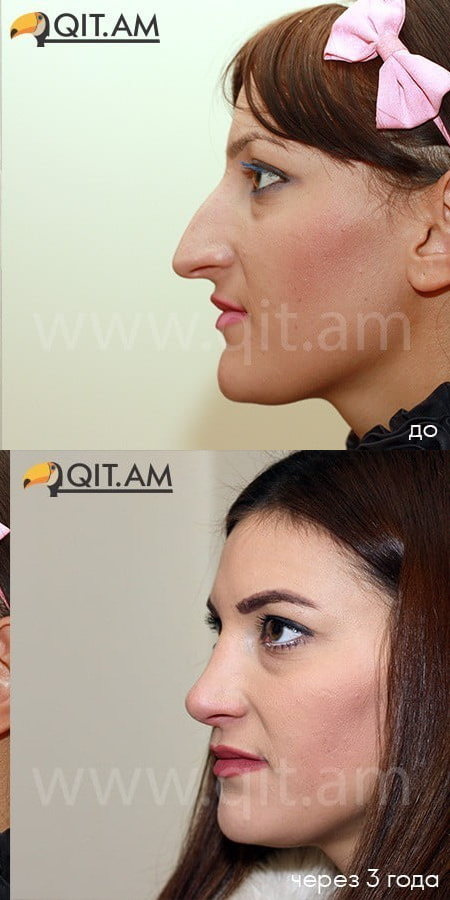
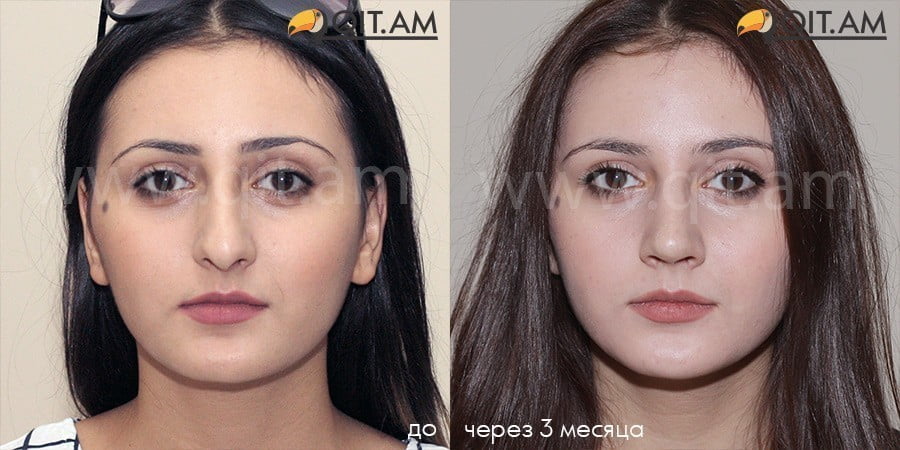
Initial anatomical features (“Before” photo)
During the initial examination and profile analysis, I identified several key anatomical nuances that required surgical correction:
- Nasal dorsum: a pronounced osteocartilaginous hump was identified, visually weighing down the middle third of the face. When viewed from the front, a slight widening of the bony nasal pyramid was noticeable.
- Nasal tip: was over-projected, elongated, and noticeably drooped downward. This created an acute, visually “harsh” nasolabial angle, giving the face a more severe and mature appearance.
- Skin: dense, moderately thick skin in the tip area. Working with this type of tissue always requires surgical precision: thick skin is reluctant to contract and can mask the refined contours of the cartilaginous framework, so the shaping of the tip must be as precise as possible.
- Septum: an internal deviation of the nasal septum was noted, leading to impaired aerodynamics and difficulty breathing.
Surgical procedure and objectives
My main objective was to remove the hump and delicately lift the tip, while preserving the patient’s individuality and ethnic charm, avoiding the “operated” nose effect.
During the surgery, I performed a careful removal of the osteocartilaginous excess of the nasal dorsum and narrowed the nasal bones using a precise osteotomy to shape beautiful lines from the front view. I paid special attention to the tip: performed rotation (lifted it) and altered its projection, shortening the nose. To fix the tip in a correct, stable position and prevent its drooping in the future, I used reliable cartilaginous grafts. Concurrently, a septoplasty was performed to fully restore free breathing.
Result after 3 months (“After” photo)
At the follow-up examination 3 months later, we can already observe an intermediate, yet highly indicative and stable result:
- The line of the nasal dorsum has become absolutely smooth and natural.
- The nasal tip has been lifted, forming a correct, open nasolabial angle. The excess length is gone, and the nose looks elegant and proportionate to the rest of the facial features.
- Despite the thick skin, the tip has acquired clear, beautiful contours.
Thanks to the change in the shape of the nose, the patient’s entire appearance has become softer, gentler, and more youthful, and her gaze more open. Nasal breathing is fully restored. My patient is very pleased with the initial results, while the process of final tissue maturation and skin contraction continues as scheduled.