
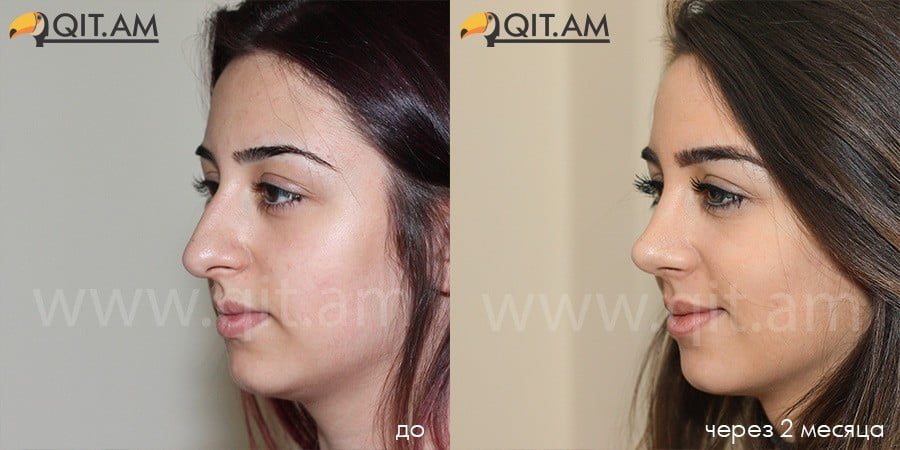
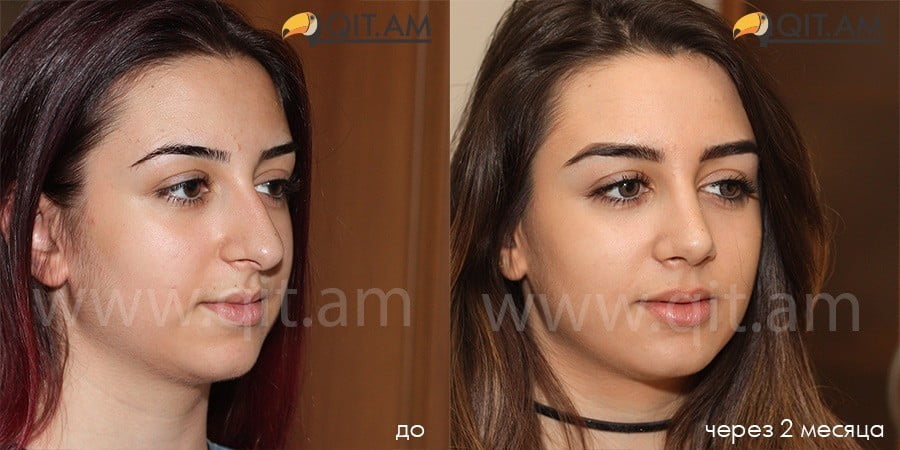
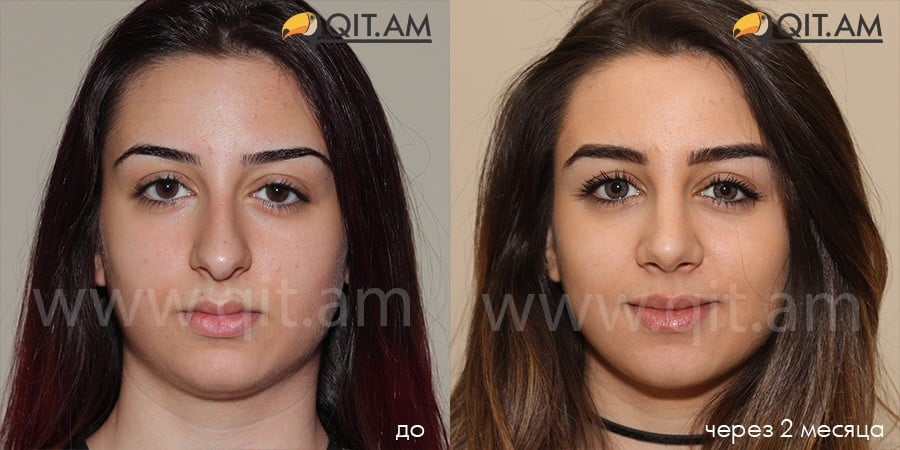
A young female patient approached me for a comprehensive aesthetic and functional correction. Her primary aesthetic concerns were related to a pronounced nasal asymmetry, a large hump, and a drooping, heavy tip. In addition to the external imbalance, a severe deviation of the nasal axis indicated concomitant problems with proper nasal breathing, which was confirmed during the examination — the patient required not only aesthetic but also functional correction (septoplasty).
Initial anatomical features (Before)
When analyzing the face from the front and profile, I identified several key objectives:
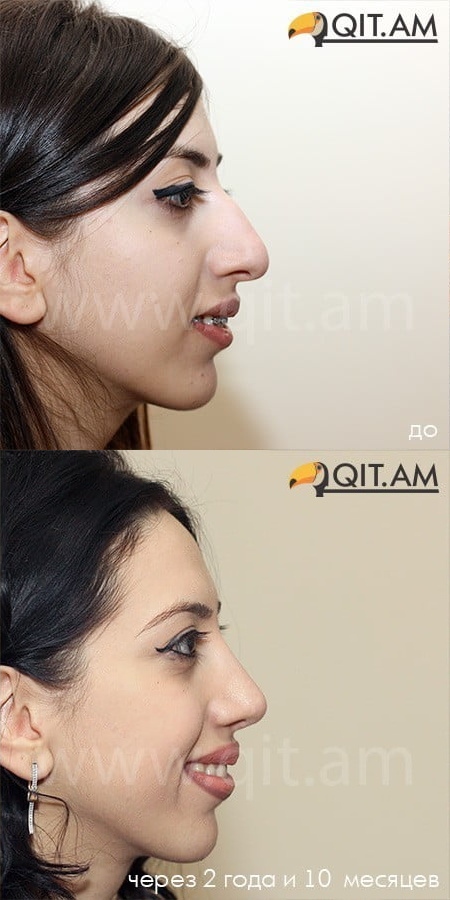
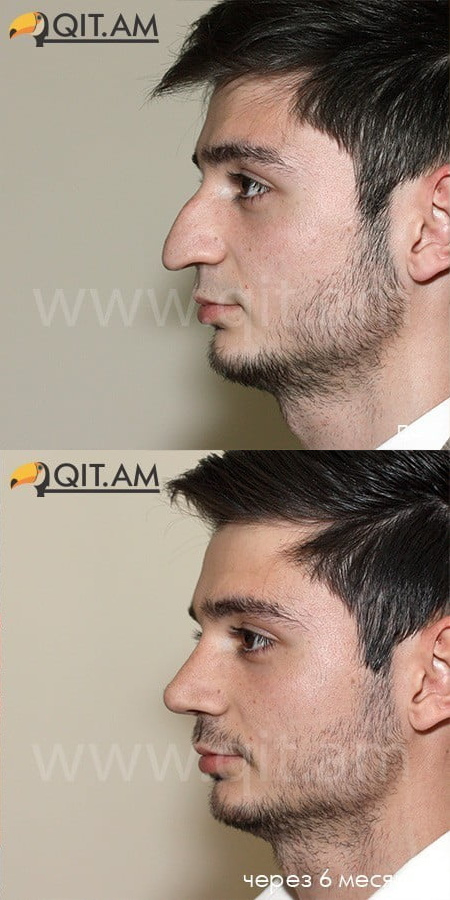
- Nasal dorsum: The presence of a high, rigid hump that visually weighed down the middle third of the face.
- Nasal tip: Drooping downward, lacking clear support and projection. When smiling or making facial expressions, the tip shifted even lower, giving the face a more severe, tired appearance.
- Axis and septum: Noticeable deviation (curvature) of the nose to the side, deforming the symmetry of the entire face and blocking the normal passage of airflow.
- Skin: The patient’s skin is of medium thickness and sufficiently elastic, which allowed for good tissue redraping but required meticulous work with the cartilaginous framework to avoid contour irregularities.
Surgical course and nuances
My primary goal was to return the nose to a central position, restore breathing, and soften the facial features, making them more feminine.
During the surgery, I performed a gentle septoplasty — aligning the nasal septum and restoring the airways. Then, I moved on to the aesthetic stage: delicately lowering the nasal dorsum, completely eliminating the osteocartilaginous hump and creating a smooth, elegant profile line. I paid special attention to the nasal tip: by altering the position and securing a stable fixation of the cartilages, I elevated it, giving it proper projection and well-defined, neat contours.
Result after 2 months (After)
The photographs show an interim result just 2 months after the surgery. Although a slight, natural swelling still persists at this stage, the changes are evident:
- The hump has disappeared, and the profile has become completely straight and refined.
- The nasal tip is neatly elevated, becoming more defined and lighter, which instantly “opened up” the face, making the look fresher and more youthful.
- The axis deviation has been corrected — the nose has taken a strictly central position, restoring symmetry to the face.
The patient’s face retained its individuality but began to look significantly more harmonious and softer. Most importantly, free nasal breathing has been completely restored, and the young woman is incredibly pleased with the first results of her transformation.